By: Mohammed A. Kromah/guest writer
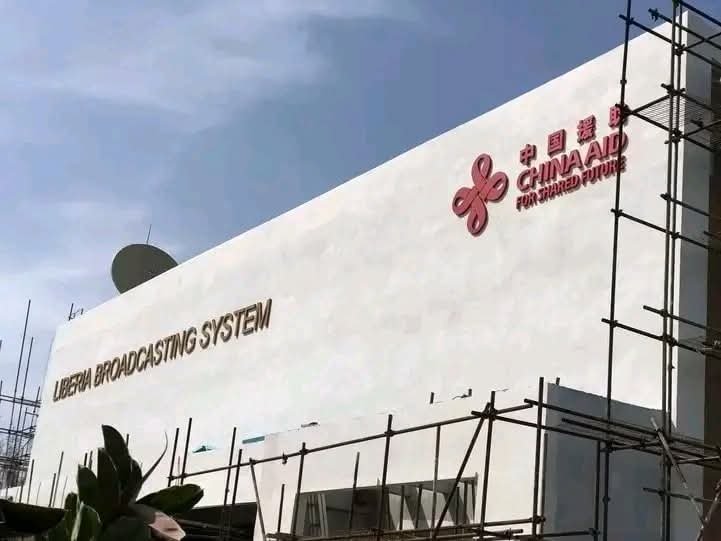
Monrovia, Liberia — The completion of the Liberia Broadcasting System’s (LBS) new US$5 million China-funded broadcasting complex has triggered a public debate over the project’s economic impact. Critics are questioning whether the investment produces meaningful employment or export revenue in a country grappling with high youth unemployment and weak manufacturing capacity.
The government recently announced the completion of the facility, noting that the complex will be officially commissioned and later turned over to Liberian authorities. Officials also disclosed that the building will be named after the late Charles Gbayon, a former LBS employee who died in the line of duty.
However, the announcement has drawn criticism from several Liberians who argue that constructing a new broadcasting structure adjacent to an existing facility is difficult to justify—especially when Liberia already operates from what they describe as a functional and well-established broadcasting campus.
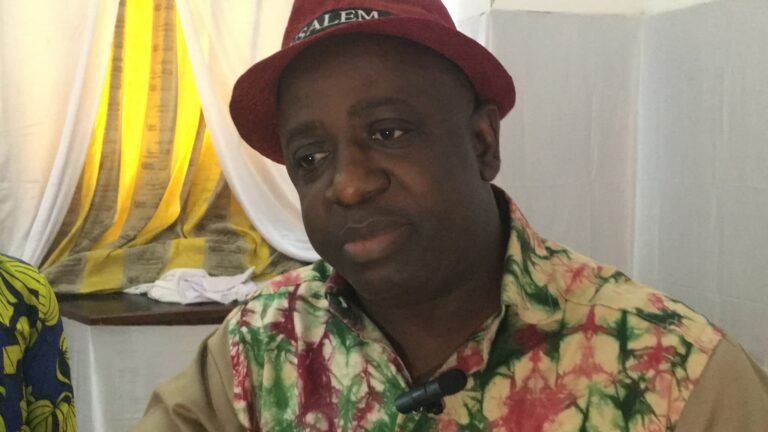
Speaking to this paper on Monday, Mohammed A. Kromah, who has been vocal about the issue on his official Facebook page, said the decision reflects misplaced national priorities.
“I see no reason for building a new complex when the money could have been used for productive investments,” Kromah said. “The country is already struggling with an employment crisis, yet no one is asking the US$5 million question: what else could that money have built?”
Kromah pointed to Liberia’s long history as one of Africa’s oldest rubber-producing nations, noting that the country exported approximately US$126 million worth of rubber in 2018.
“Our farmers know how to plant, tap, and harvest rubber. The trees are already in the ground. The labor exists. The land exists,” he said. “What’s missing is a rubber processing plant.”
According to Kromah, Liberian farmers currently sell raw latex at very low prices, only for it to be exported to Asia, processed into finished goods—such as buckets, slippers, hoses, and tires—and then shipped back to Africa at significantly higher prices.
“We pay twice: once when we lose the value through raw exports, and again when we import finished products,” he explained.
He argued that a US5millionrubberprocessingplantcouldsignificantlyalterthatdynamic,citingGhana’sNarubizRubberFactory,whichwasreportedlybuiltforUS2.1 million. That factory processes 20 tonnes of rubber daily, exports more than 6,000 tonnes annually, and generates nearly US$10 million in revenue each year.
According to figures shared by Kromah, the Narubiz plant employs 85 direct workers, with over 1,700 indirect jobs linked to outgrowers, harvesters, and transporters—impacting more than 1,300 people through a single investment.
He projected that a US5millionplantinLiberiacouldprocess40–50tonnesdaily,create150–200directjobs,generate3,000to4,000indirectjobs,exportupto15,000tonnesannually,andearnbetweenUS18–22 million in yearly revenue.
Kromah further cited current global rubber prices, which range from US1,550toUS2,380 per metric tonne, noting that even at conservative prices, such a plant could generate US$18 million annually.
“Liberia currently has only one rubber processing plant, privately owned by Jeety,” he said. “One man benefits. Yes, the country may receive some taxes and jobs, which is good, but a state-owned plant would mean state revenue.”
He added that a government-owned processing facility would provide guaranteed markets for smallholder farmers, retain jobs locally, stimulate domestic manufacturing, and generate export revenue for the national budget.
“Instead, we got a building,” Kromah said. “A building that produces no new jobs, requires electricity we don’t have enough of, maintenance we can barely afford, and staff we underpay. In 15 years, it will need renovation, and we’ll wait for another ‘gift.’”
Kromah also outlined what he described as a technically specified rubber processing plant suitable for supplying global tire manufacturers such as Michelin, Bridgestone, and Continental. According to him, US$5 million could cover equipment, facilities, a solar power supply, and working capital, with the plant paying for itself in less than a year.
On China’s role, Kromah argued that foreign-funded projects often align more with donor interests than recipient needs. “China imports raw latex, processes it in Chinese factories, and sells finished rubber goods back to Africa,” he said. “A Liberian processing plant would reduce that dependence. Why would they fund their own competition?”
He stressed that this was not an accusation, but an observation of how global trade works, adding that Liberia must take ownership of its development priorities.
“Country ownership means recipient nations lead and manage their own development agenda,” Kromah said. “Foreign aid should align with national priorities, strengthen local capacity, and be accountable to citizens—not leave us dependent.”
About the Author