The Author
By Pewu Y. Sumo
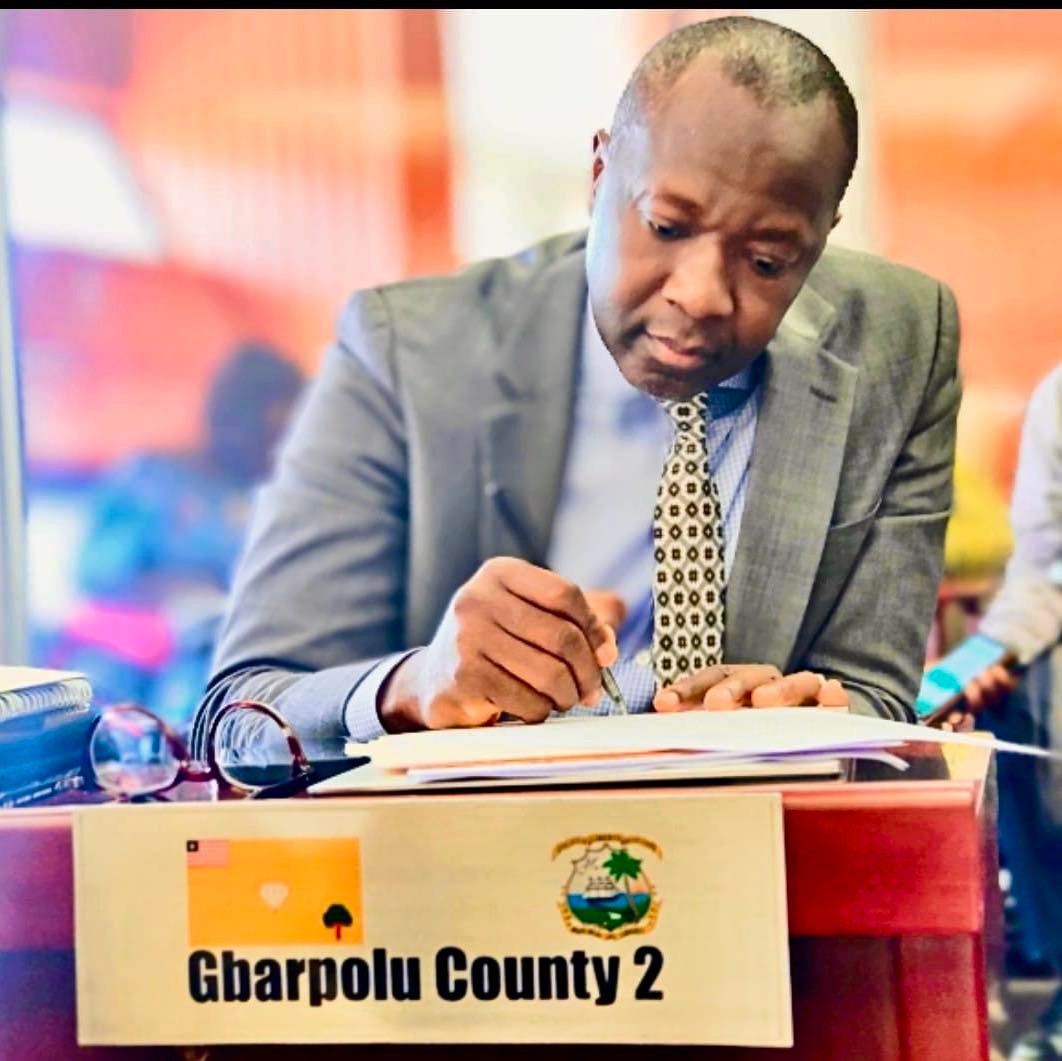
Monrovia, Montserrado County – In a powerful appeal that transcends political lines, Gbarpolu County Senator Amara Konneh is urging all Liberians to unite in support of securing a second Millennium Challenge Corporation (MCC) Compact. The Gbarpolu County Senator highlighted that Liberia’s eligibility for the multi-million dollar grant is at a critical juncture, citing a worrying decline in performance on the MCC’s annual scorecard.
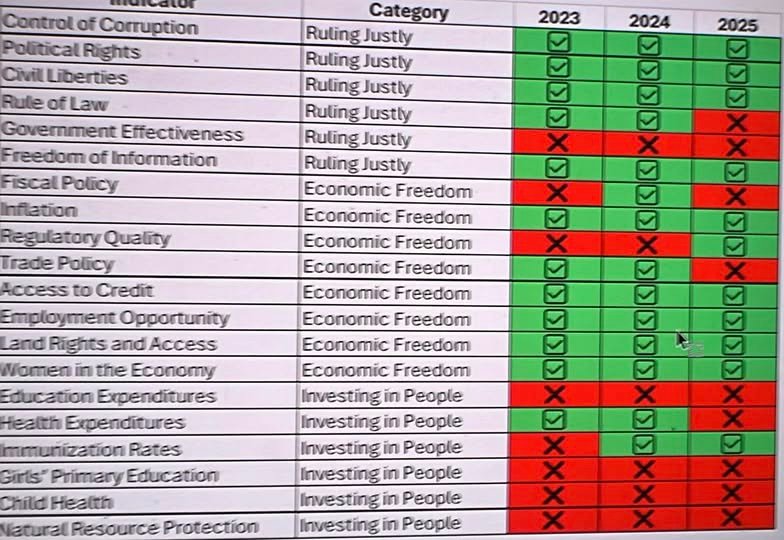
Senator Konneh in a Facebook post summarized Liberia’s performance on the MCC scorecard from 2023 to 2025.
A country must “pass” the scorecard to qualify for a Compact. Passing means: (i) Pass at least ten of the 20 indicators, with at least one pass in each of the three categories; (ii) Pass the Control of Corruption indicator; and (iii) Pass either the Civil Liberties or Political Rights indicator.
In reference to the recent 2024 U.S. Department of State Country Report on Liberia, Senator Konneh said, “As you can see in the matrix, we passed only 11 indicators in 2025 compared to 14 in 2024 and 12 in 2023”, Senator Konneh said, stressing that, “We nearly did not “pass” the scorecard in 2025 because we passed only the immunization rates indicator in the “Investing in People” category.”
He warned that Liberia must do better than 11.
Senator Konneh said President Joseph Boakai should focus on the ministries affecting these indicators and empower the Minister of Finance to coordinate efforts and ensure accountability for results.
The Liberian lawmaker post isn’t a critique of the current administration but a strategic roadmap.
“Every well-meaning Liberian, whether affiliated with the Unity Party (UP), the Coalition for Democratic Change (CDC), or any other group, should embrace the news about the MCC Compact because it focuses on overcoming the biggest obstacles to economic growth”, which Senator Konneh termed as ‘binding constraints’.
MCC compacts are developed through a rigorous analysis by MCC and country economists to identify key barriers to growth, typically focusing on 1 to 3 sectors. Common barriers include infrastructure deficiencies such as electricity, transport, water, and sanitation.
Shortfalls in social investments, particularly in health and education, can also limit labor supply and productivity.
In economies where agriculture plays a significant role, low productivity in that sector can hinder growth. While identifying which obstacles can be challenging to address, the MCC aims to concentrate its money on the issues that most significantly affect growth. Addressing these issues requires substantial planning, dedicated personnel, and resources—especially people and time—and often exceeds the standard limits of government staffing capacities.
“While some may wish for the government to fail in its current efforts to secure a second Compact, it’s essential to recognize that failures affect everyone, including future political contenders”, Senator Konneh said.
The first Unity Party Government signed Liberia’s inaugural Compact in 2015 when the Gbarpolu lawmaker was Minister of Finance and Development Planning, which the CDC implemented. However, the MCC’s engagement with Liberia ended in 2021, and governance challenges prevented the negotiation of a second Compact.
Senator Konneh said many Liberians did not feel the impact of the first Compact, particularly due to persistent electricity issues from management to operations.
He asserted that improvements are underway under a new leadership led by a technocratic managing director with decades of economics and regional leadership experience and networks.
“The current UP Government, with President Boakai leading engagement efforts, which started long before he was inaugurated, is attempting to revive the Compact, receiving significant support from the MCC Board”, Senator Konneh said.
The Gbarpolu Senator said such efforts from the current administration is crucial because the MCC funds Compacts only in countries with sound policies, warning that, “We must not become complacent, as the 2025 scorecard indicates”.
“This time, we must ensure the second Compact addresses updated binding constraints and delivers tangible benefits to citizens”, he warned, appealing that, “Let’s support a successful MCC Compact for Liberia! We will do our part through advising and public education, and garner support for it in Washington, DC.”, Senator Konneh said.
About the Author