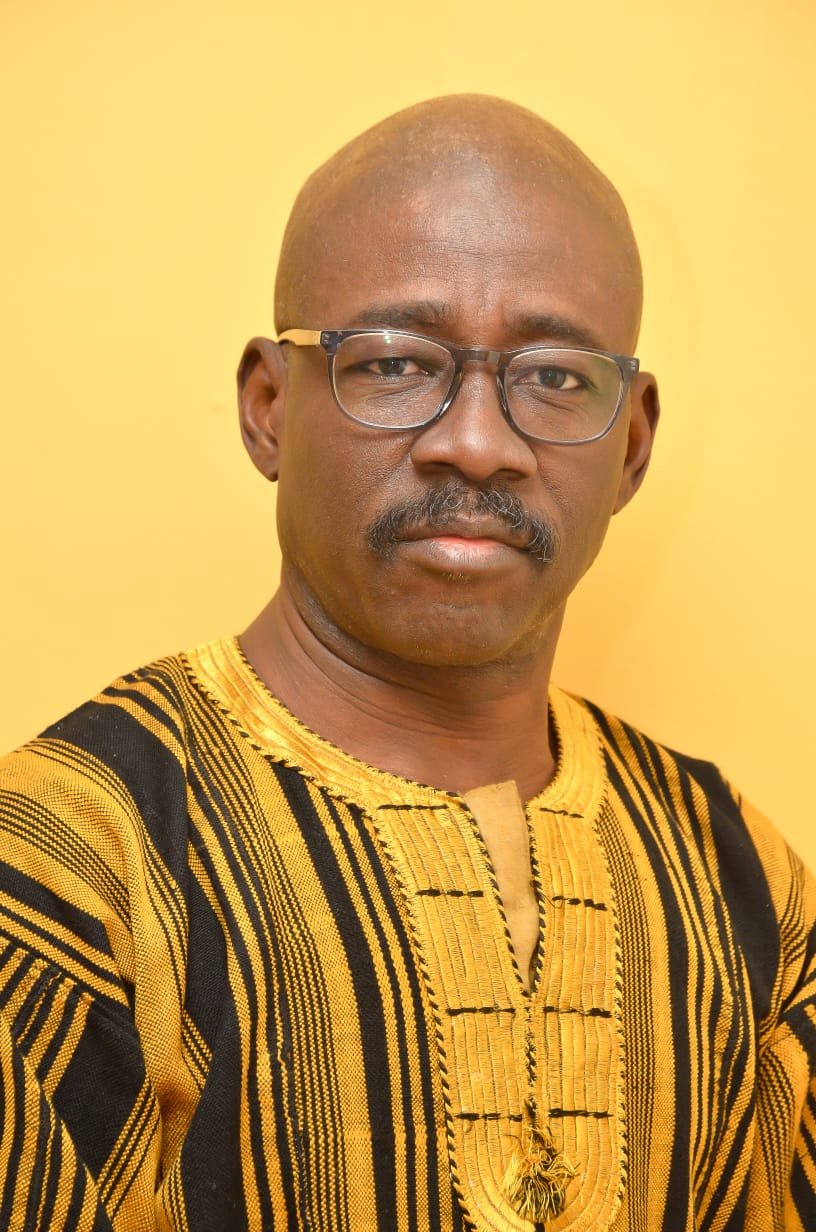
Mr. Jenekai D. Lansanah
By: Mr. Jenekai D. Lansanah
Executive Summary
Criminal acts such as systemic corruption, impunity, and poor governance that plagued Liberia have not been eliminated despite minor reforms in the recent past. World integrity ratings support this scale: Liberia received 27/100 points according to the 2024 Corruption Perceptions Index (CPI) created by Transparency International and was ranked approximately between 135 and 141 out of 180 countries, not substantially different from 2023.
This is a sign of constant dangers and low responsibility. Anti-corruption in Liberia has advanced and fallen behind during the period 2018 to 2025. In 2022, the Liberia Anti-Corruption Commission (LACC) was granted new prosecutorial powers, thus allowing it to file cases without seeking the permission of the Ministry of Justice.
In 2025, President Joseph Boakai suspended over 450 officials on grounds of their inability to come out and declare assets, and this is a move that indicated stricter measures on compliance. In a parallel practice, the General Auditing Commission (GAC) has been able to unveil pervasive financial irresponsibility in the ministries and agencies that has resulted in the high-profile suspension of a Central Bank Governor in 2024. Still, there are gaps. A significant percentage of audit results do not get timely follow-up, the authorization to act on officials is often not acted upon, and the corruption perception is high amongst citizens.
The civil society organizations, including CENTAL, point out that the end of impunity and enhancement of enforcement processes are primary factors in ensuring that Liberia can convert the short-term success into long-term success of integrity and justice.
Methodology and Sources This report presents a synthesis of institutional, civil society, and media-based evidence to consider corruption, impunity, and governance failures in Liberia between 2018 and 2025.
As an institutional source, the Liberia Anti-Corruption Commission (LACC) laws, annual, and quarterly reports, and laws and reports of the General Auditing Commission (GAC), including audit catalogue and annual reviews, are used.
These give formal information on financial anomalies and institutional reaction. Civil society and transparency reports have been based on the findings of the Corruption Perceptions Index (CPI), the Transparency International reports, and the Center for Transparency and Accountability in Liberia (CENTAL) press briefs and reports, which provide independent evaluations of governance and integrity.
The reporting of news and investigations by the Associated Press, Reuters, FrontPage Africa, ISS Africa, Al Jazeera, and the U.S. Treasury OFAC sanctions, as well as notices, provides real-time disclosures of scandals, prosecutions, and international accountability actions.
The report focuses on both the patterns and trends in the 2018-2025 timeline to evaluate both areas of weakness within the system and up-and-coming revisions. Legal–Institutional Framework and Recent Reforms Liberia has also put in place various oversight institutions to deal with corruption, but its record has been partial.
The leading institution is the Liberia Anti-Corruption Commission (LACC). A 2022 amendment gave the LACC direct prosecutorial authority, eliminating the need to rely on the 90-day window of review by the Ministry of Justice (LACC, 2025). This reform aimed to lower political interference and accelerate prosecutions.
The Commission reiterated its intention to make use of these powers in 2025 and asked to establish a special anti-corruption court managing more complicated cases more effectively.
The 2024 annual and quarterly reports provided by LACC outline the continuing investigations, education, and the national asset-declaration program. Enforcement, however, has been haphazard, and there is generally strong official resistance to disclosure or amending disclosures.
In this vein, the General Auditing Commission (GAC) is the constitutionally independent auditor of Liberia, to supplement the LACC. It also generates financial, compliance, performance, and IT audit reports within the ministries, departments, and agencies.
Based on the more recent reports on 2023-2024, such as the audits of the Liberia Immigration Service and the Maritime Authority, the scope of systematic weaknesses, financial anomalies, and skimpy implementation of audit recommendations can be revealed (The Liberian Contributor, 2025).
There are other pillars used in oversight, like the Public Procurement and Concessions Commission (PPCC) and the Financial Intelligence Agency (FIA).
However, these pillars are woefully strained in terms of resources and enforcement, and thus have minimal effects. Corruption Patterns and Trends Corruption in Liberia has a long history and is related to the post-war delicacy, the decentralization of power structures, weak structures, and the patronism web. In the last ten years, the country has ranked high as a poor performer in international indices.
The 2023 Corruption Perceptions Index (CPI) ranks Liberia at 25/100, one of the country’s lowest ever scores, according to Transparency International (Ayoola et al., 2024). The score increased by a few points in 2024 to 27/100, the first improvement over a period of seven years, although it still placed the country in the lower end of the global rank (135- 141 over 180 countries) (Ayoola et al., 2024).
With civil society members and CENTAL to the fore, it is important to note that this marginal improvement is not a fundamental reversal but an interim adjustment because Liberia continues to decline in the long term since 2014.The post-war situation of governance also contributes to the problem of anti-corruption.
In spite of the symbolic measures toward accountability undertaken by Liberia, to date, ratifying the establishment of a War and Economic Crimes Court in April 2024, impunity can still be seen as pervasive at governmental levels. Numerous officials involved in graft do not lose influence, and structural reforms are very slow to come. A culture of impunity discourages citizens from trusting government institutions and instead normalizes corruption instead of penalizing it.
Cumulatively, these trends point out that the integrity issues in Liberia are structural, and enhanced actions and political will are needed. Manifestations of Impunity and Injustice The inconsistency between foreign coercion and domestic responsibility is still one of the most appalling governance shortfalls in Liberia.
On August 23, 2022, the U.S. Department of the Treasury Office of Foreign Assets Control (OFAC) imposed sanctions on three senior Liberian officials, Minister of State Nathaniel McGill, Solicitor General Sayma Syrenius Cephus, and National Port Authority chief Bill Twehway, accusing them of being involved with the diamond trade in the country (U.S. Department of the Treasury, 2025). They were charged with bribery, misappropriation of assets, and misuse of public office to make gains.
The sanctions received high initial praise on the international stage as a firm action, but the record of follow-through domestically was spotty. Suspensions and resignations were by far the most common actions, but prosecutions and asset recovery have been low, indicative of a culture unwilling to fight those in high places.
Auditor General Evidence: Systemic Control Failures The General Auditing Commission (GAC) is an Audit institution (with constitutionally empowered authority) that is charged with full-time independent oversight of public finances in Liberia. Within the past numbers and audit postings of recent reports, it showed a recurring trend of financial mismanagement, poor internal controls, and anomalies within the ministries, departments, and agencies (MDAs). As an example, entity-level audits of the Liberia Immigration Service (2017-2022) and the Liberia Maritime Authority (2020-2023) recorded gross failures in expenditure controls, procurement processes, and management of revenues (Liberia Immigration Services, 2025).
Audits of donor-funded projects such as GAVI Health System Strengthening (HSS) funds, and USAID projects were replete with issues of record-keeping, irregular procurements, poor documentation, tainting accountability, and cast doubt on donor confidence. With frequent publication of such reports, one repetitive issue has been that GAC findings are not often enforced.
The Commission presents detailed recommendations, but implementation by the MDAs on the corrective actions is either slow or irregular. Most institutions respond slowly to audit queries, and this makes irregularities a yearly habit (Samiolo et al., 2023). The backlog in the GAC alone speaks to weak follow-up mechanisms serving to negate the auditing deterrent effect.
In other instances, recommendations may be accepted and not followed, which may be due to capacity or political obstacles. In addition to gaps in institutional oversight, the existence of corruption in Liberia is also supported by poor leadership and failure in governance. The most notable case is budgetary discipline.
In September and December 2024, government spending was reported to be higher than the authorised FY 2024 budget ceilings, even though earlier, the Liberia Anti-Corruption Commission (LACC) had warned of just that (Koinyeneh, 2025). Such overrunning entailed ineffective fiscal management, minimal censorship of the state expenditure, and negligence of fiscal restraint- a demonstration of inadequacy in terms of leadership to drive governance standards. There have also been controversies in the electoral governance.
The National Elections Commission (NEC) drew criticism regarding the purchase of medical thermometers worth about US$182,000, which was deemed as too high by many people (Dodoo, 2021). NEC officials involved were dismissed following an investigation of the matter by LACC. Nevertheless, the matter was worsened when NEC personnel subsequently insisted on the independent review of the Commission’s financial affairs.
These controversies illuminate not only the existence of irregularities in the procurement procedures but also a deep-rooted leadership accountability crisis in an institution that forms a substantial part of the Liberian democratic legitimacy. The larger reputational expenses of such failures were to be seen in the political transition of 2023-2024.
Critics have stated that the view that corruption and bad governance have infected much of political life in Liberia substantially affected the credibility of the George Weah administration, a factor that led voters to be dissatisfied with the electoral results and made voters distrust the leadership of the state (Anfaara et al., 2024). The Eden can be further indicated through Al Jazeera coverage, where the missteps in governance turned into political liabilities that strengthened the belief that leadership either condoned corrupt actions or did not care. 2024–2025 Enforcement Actions & Signals The years 2024 and 2025 may have constituted a critical juncture in the history of the anti-corruption infrastructure in Liberia, where institutional and political will are being put to the test to determine whether the status quo of impunity can be seriously broken.
One of the main changes was made when the renewed emphasis of the Liberia Anti-Corruption Commission (LACC) pursued direct enforcement. Bureaucratic delays have historically dulled accountability; in early 2025, the Commission made clear through public statements that its statutory authority to file cases in court, bypassing the bureaucratic delays, would be used (Haeder & Yackee, 2025).
Provided it is pursued regularly, this pathway can ultimately lead to reversing the cycle of the investigative reports being in abeyance without prosecution and therefore provides a strong message of deterrence to public officials.
This focus on enforcement was strengthened during a visit by President Joseph Boakai to Liberia in February 2025, where he suspended over 450 officials, mainly because they failed to declare assets under the Code of Conduct (Dahm, 2025). Compared to past regimes in which asset declarations were regarded as mere formalities, the time-limited suspensions expected to comply with the norms provided by Boakai sent a message that norms of disclosure are not negotiable.
The impact of this mass action went beyond the people who participated in it: it also showed the readiness of the executive to enforce integrity mechanisms and the weakness of compliance culture in the Liberian public sector. As a precursor to taking action instead of waiting until scandals played out, a tone was established that asset declaration laws could no longer be merely de facto but enforced.
The General Auditing Commission (GAC) was also used in indicating new levels of accountability. A GAC-commissioned audit in July 2024 would result in the suspension of the Central Bank Governor after reports of irregular financing activities and excess expenditures that ran between 2018 and 2023 (The Liberian Investigator, 2024).
This was especially remarkable since it involved an institution that ranks at the top in terms of fiscal governance, which is characterized by remoteness of the effects. However, transparency and citizen oversight are also a key part of the battle, as without these, the fight is based solely on enforcement measures, which are only half the battle. In the Transparency International Corruption Perceptions Index (CPI) 2024, it is recorded at 27 out of 100 (up by a point compared to 2023, but it is lower than the world average) (Koeswayo et al., 2024). Notably, this has seen the country decline in a net score of ten points since 2014, which underlines the pace of structural maladies that can only be addressed through spontaneous efforts.
In Liberia, the national TI chapter – the Center for Transparency and Accountability in Liberia (CENTAL) emphasised that the slight CPI increase must not obscure lingering retrogression. On several occasions, CENTAL has expressed the view that there is no chance that corruption risks in Liberia would be eliminated unless a more profound change is developed in terms of judicial efficiency, procurement system, and financing of political parties.
This is a point that has been advocated by civil society. During an event organized on International Anti-Corruption Day, in 2024, CENTAL spoke publicly to condemn impunity as the Achilles heel of the Liberian administration environment, and the actual problem is not the lack of laws, but the lack of the professional prosecution of an individual who can be prosecuted.
The statement made by CENTAL also highlighted that the judiciary is an essential bottleneck because of its small capacity, the political forces in the decision-making process, and late adjudication wears out the deterrence of anti-corruption policies (CENTAL, 2025). The key to transparency in civil society, in this sense, is not just the availability of information but also the ability of information (including information based on an audit, asset declaration, or investigative journalism) to eventually result in sanctions and subsequent reform of the system.
In this regard, the transparency architecture of Liberia is more a symptom of positive advances and weaknesses. Suspensions of asset declarations were a sign of political readiness to act, and showed that a high number of noncompliances exist. CPI is an objective reflection with measurable indicators, but the long progressive decrease is a warning that gradual improvement with modification of the institution is not enough.
The interventions of civil society reflect a critical reality. Enforcement signals in 2024-2025, however, must develop into permanent accountability systems or otherwise run the risk of being remembered as more ephemeral measures serving a symbolic purpose.
In unison, the 2024-2025 enforcement cues and the transparency narrative indicate a nation that is standing at a juncture. Liberia has shown it can take resolute measures against corruption, but only continued political will, a strong judiciary, and an educated populace that knows how to demand answers can be the true answer to how far these steps can be transformed into long-term change.
Case Studies (Illustrative)OFAC Sanctions (2022) Domestic Follow-Up Mixed In August 2022, the U.S. Treasury Office of Foreign Assets Control (OFAC) designated as sanctioned three of its senior officials, none of whom holds a government address, namely Nathaniel McGill (Minister of State), Sayma Syrenius Cephus (Solicitor General), and Bill Twehway. He or they were charged with bribery and misappropriation of state assets as well as abuse of office.
The sanctions compelled suspensions, and had reputational costs, but more lasting domestic sanctions, such as criminal prosecutions, asset seizures, or permanent ineligibility, are rare. The episode reiterated the dependence of Liberia and other countries that are yet to establish accountability internally through pressure from foreign countries.
Procurement Controversy at NEC (2021-2024) The National Elections Commission (NEC) was criticized for the purchase of a US$182,000 thermometer during the COVID-19 pandemic. The Liberia Anti-Corruption Commission (LACC) recommended the dismissals due to the procurement procedure. Such problems in governance had yet to be addressed by 2024, when NEC employees themselves published a demand for an independent audit.
The case shows the way that corruption risks lead to democratic integrity and the way investigations end with internal deficiency even after the investigation, which depicts poor application of remedial efforts. Audit of Central Bank (2024)A 2024 General Auditing Commission (GAC) special audit of the Central Bank of Liberia (CBL) for 2018 to 2023, highlighted issues of loan violations, illegal spending, and poor fiscal oversight. President Boakai subsequently acted upon this by suspending the CBL Governor in July 2024.
This episode illustrated how executive action on the audit findings can drive trust and that even mighty institutions are not beyond scrutiny when compared to other instances where GAC reports remained abandoned and not acted upon.
Why is there Impunity Such episodes notwithstanding, there continues to be systemic impunity. First, case flow is behind caseload: the new prosecutorial capacity of the LACC is handicapped by inadequate forensics, witness protection, or a lack of a Special Anti-Corruption Court. Second, there remains an audit-sanction gap: GAC continues to find failures, but there is slow administrative and judicial follow-up that diffuses deterrence.
Third, the dynamics of the political economy, elite bargains, and patronage networks discourage action on reform, since punishing corrupt officials can tip coalitions. External sanctions cannot substitute domestic accountability ecosystems because they have exposure capabilities only. Recommendations Enforcement Architecture Establish a Specialized Anti-Corruption Court with specialized judges, simplified procedures, and sentencing guidelines in order to increase the speed of trials and to minimize backlogging.
Increase resource LACC prosecutions through increased forensic, investigative, and case management capabilities; and offer tenure protections to investigators and prosecutors to avoid political interference (Gottschalk, 2024). Enhance the asset declaration regime with automation of filings, strict real deadlines, and posting of non-compliance dashboards.
The February 2025 suspensions of President Boakai must be transformed into a permanent compliance mechanism, not a one-off crackdown. Closing the Audit-Action Loop Spread statutory deadlines to effect GAC recommendations, to mean that ministries and agencies should file action plans. Chronic non-compliance ought to be reported to Parliament as a matter requiring oversight hearings.
Budget releases based on pilot performance, linked in part to evidence of achievement in making audit recommendations, particularly among high-risk MDAs, of clearing-up accounts with an allocation of quarterly Treasury funds based on pilot performance. Public Finance Reform and Procurement Make the use of e-procurement a norm and demand that the beneficial ownership of all contracts of more than a specified amount be disclosed.
The audits on sensitive bodies such as the NEC should be carried out independently every year. Establish medium-term fiscal principles, including real-time expenditure controls, to avoid situations such as budget overruns that were noted late in 2024 (International Monetary Fund. African Dept., 2024).
Transparency and Civil Society Make co-productions with CENTAL and other civil society agents, institutional, such as joint reviews of CPI drivers and sector-specific risk maps (police, health) regularly. This kind of ability to cooperate enhances the external monitoring and makes transparency a part of the governance culture.
Conclusion
The results of the last several years in Liberia are the most favorable ones, as the increased number of prosecutorial powers of the LACC, trial suspensions following the headlines concerning assets declarations, and liabilities that were initiated based on GAC audit are all indubitable evidence of anti-corruption trends in the country. Such moves are an indication that they are prepared to deal with impunity. However, corruption has become very dire, and as long as reform does not come hand in hand with the instigation of clear penalties, close follow-ups of the results of an audit, and purer procurement systems, the cycle of unfairness will continue. The justice chain, investigation, prosecution, judgment, and asset recovery are to be resourced comprehensively and be free of political influence so that it can deliver. Setting up a special corruption court will not only increase the speed of resolving cases but also display a firm intention in addressing grand corruption. Similarly, stricter implementation of the advice given during an audit and more action to engage civil society monitors will make sure reforms are not superficial.
References: Anfaara, F. W., Lawson, E. S., & Luginaah, I. (2024). Similar health emergencies, different commitments: Comparative strategies to end Ebola and COVID-19 in “post-conflict” Liberia. Social Science & Medicine, 365, 117609. https://doi.org/10.1016/j.socscimed.2024.117609 Ayoola, A. O., Ojo, S. A., & Oluwaseun Kugbayi. (2024). The fragility of democracy in Africa: Are military coups d’état a never-ending issue? PanAfrican Journal of Governance and Development, 5(2), 80–104. https://www.ajol.info/index.php/pajgd/article/view/279186 CENTAL. (2025). CENTAL Writes Open Letter to President Boakai on Anti-Corruption . Cental.org.lr. https://cental.org.lr/index.php/documents/media-center/news/item/131-cental-writes-open-letter-to-president-boakai-on-anti-corruption Dahm, M. (2025). Discovering the Roots of Terror: Understanding the Relationship Between Terrorism and Corruption. Digital Showcase @ University of Lynchburg. https://digitalshowcase.lynchburg.edu/utcp/349/ Dodoo, L. (2021, December 24). Liberia: LACC Indicts NEC Chair, Court Issues Writ for Her Arrest But She’s Reportedly in Flight. FrontPageAfrica. https://frontpageafricaonline.com/news/liberia-lacc-indicts-nec-chair-court-issues-writ-for-her-arrest-but-shes-reportedly-in-flight/ Gottschalk, P. (2024). Investigating and prosecuting white-collar and corporate crime: Challenges and barriers for national police agencies. Journal of Economic Criminology, 3, 100051–100051. https://doi.org/10.1016/j.jeconc.2024.100051 Haeder, S. F., & Yackee, S. W. (2025). Embattled Past, Uncertain Future: Law, Science, and Policymaking at the US Food and Drug Administration. Annual Review of Law and Social Science. https://doi.org/10.1146/annurev-lawsocsci-062124-122046 International Monetary Fund. African Dept. (2024). Liberia: Request for a 40-Month Arrangement Under the Extended Credit Facility-Press Release; Staff Report; Staff Supplement; and Statement by the Executive Director for Liberia. IMF Staff Country Reports, 2024(309), 1. https://doi.org/10.5089/9798400291852.002 Koeswayo, P. S., Handoyo, S., & Hasyir, D. A. (2024). Investigating the Relationship between Public Governance and the Corruption Perception Index. Cogent Social Sciences, 10(1). https://doi.org/10.1080/23311886.2024.2342513 Koinyeneh, G. C. (2025, February 28). Liberia: Gov’t Exceeds FY 2024 Budget Limit Despite LACC Warning. FrontPageAfrica. https://frontpageafricaonline.com/news/liberia-govt-exceeds-fy-2024-budget-limit-despite-lacc-warning/ LACC. (2025, April 10). LACC Embraces New Powers, Pushes for Passage of Specialized Anti-Corruption Court | Liberia Anti-Corruption Commission. Lacc.gov.lr. https://lacc.gov.lr/media/press-releases/lacc-embraces-new-powers-pushes-passage-specialized-anti-corruption-court Liberia Immigration Services. (2025). Liberia Immigration Service | Liberia. Lis.gov.lr. https://lis.gov.lr/ Samiolo, R., Spence, C., & Toh, D. (2023). Auditor Judgment in the Fourth Industrial Revolution. Contemporary Accounting Research, 41(1). https://doi.org/10.1111/1911-3846.12901 The Liberian Contributor. (2025, April 14). Liberia Maritime Authority tops audit compliance ranking — GAC. THE LIBERIAN INVESTIGATOR. https://liberianinvestigator.com/news/liberia-maritime-authority-tops-audit-compliance-ranking-gac/ The Liberian Investigator. (2024, July 30). President Boakai Suspends CBL Governor Aloysius Tarlue Following GAC Audit Report. THE LIBERIAN INVESTIGATOR. https://liberianinvestigator.com/update/president-boakai-suspends-cbl-governor-aloysius-tarlue-following-gac-audit-report/ U.S. Department of the Treasury. (2025). Treasury Sanctions Senior Liberian Government Officials for Public Corruption. U.S. Department of the Treasury. https://home.treasury.gov/news/press-releases/jy0921
About the Author:
Mr. Jenekai D. Lansanah is a candidate for a Master of Public and Nonprofit Administration (MPNA) Metropolitan State University Minnesota, USA. He holds a Master of Business Administration Degree (MBA) in Management, Cuttington University Graduate School and Professional Studies, Congo Town, Monrovia. He earned a Bachelor of Science (BSc) in Economics from A.M.E. Zion University College, Monrovia, Liberia.
Mr. Lasanah is an experienced former Assistant Minister at the Ministry of Post and Telecommunications. He is also the Founder of the Jenekai Dabla Lansanah Foundation, U.S.A.
About the Author