By Pewu Y. Sumo
MONROVIA — In a major move toward fiscal transparency, Liberia’s top financial authorities held a joint press conference today to address the explosive findings of a recent General Auditing Commission (GAC) report.
The audit, titled “Compliance Audit Report on the Government of Liberia Revenue Collection and Reconciliation Processes for the Period July 1, 2018 to December 31, 2024,” has exposed deep systemic vulnerabilities, unauthorized withdrawals, and massive reconciliation gaps across the nation’s revenue chain.
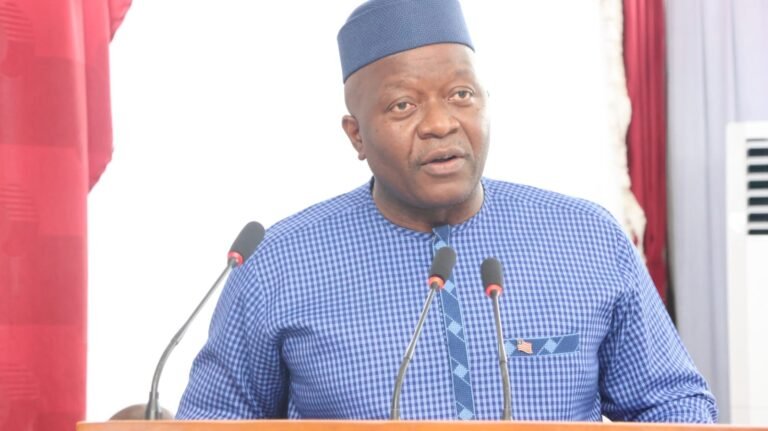
The Ministry of Finance and Development Planning (MFDP), the Liberia Revenue Authority (LRA), and the Central Bank of Liberia (CBL) in a joint press conference in Monrovia confirmed they have fully endorsed the report. They also announced that President Joseph Boakai was notified of the audit findings and has agreed to forward the findings to the Ministry of Justice and the Liberia Anti-Corruption Commission (LACC) to determine if criminal fraud took place.
The Genesis: How the Discrepancies Were Found
According to officials, the red flags were first raised internally. In late 2024, the MFDP, LRA, and CBL detected growing mismatches between the revenues recorded in the Tax Administration System (TAS) and the actual cash deposited into the Government’s Consolidated Revenue Account at the CBL.
Recognizing the threat to public trust, the Minister of Finance formally requested an independent investigation by the Auditor General on January 6, 2025.
“As custodians of public trust, we could not—and would not—ignore these concerns,” the institutions said in a joint press statement.
The GAC, which was already auditing the years 2018–2023, agreed to expand its scope through December 31, 2024, to ensure a complete and credible assessment of the country’s finances.
Key Findings of the GAC Audit Report
The meticulously executed audit highlighted severe vulnerabilities and operational deficiencies in how Liberia tracks its money. The audit identified critical loopholes including systemic discrepancies—which involved widespread mismatches between revenue recorded in Transitory Bank Accounts (TBA), the Tax Administration System (TAS), and the General Revenue Account (GRA) as well as Customs & Tax Mismatches—which also involved clear variances in data between the Automated System for Customs Data (ASYCUDA) and the Liberia Integrated Tax Administration System (LITAS).
Other areas included the unauthorized withdrawals and highly irregular reversal transactions discovered within Transitory Bank Accounts and the General Revenue Account, including delayed remittances—which involved commercial banks failure to perform timely cash “sweeps” (transfers) of government revenue from temporary transit accounts into the main state account.
Sweeping Reforms and Enforcement Actions
According to the joint statement from the MFDP, LRA and CBL, rather than waiting for the final report to be published, the government’s financial leadership began quietly implementing strict new controls over the last year.
To prevent further revenue leakage, all three institutions charged with managing Liberia’s financial affairs—executed a comprehensive overhaul of the system.
According to the authorities, actions have been taken through reforms and are currently ongoing.
They stated that banking accountability has been taken through revised agreements with commercial banks governing transitory accounts.
Banks must now submit daily sweep reports to the MFDP and CBL.
Also, in an ever evolving digital universe, digital upgrades are in effect through upgraded customs software to ASYCUDA Version 4.4, enabling direct electronic integration with commercial banks for automated, transaction-level validation.
The joint statement also highlighted system integration, one that is ongoing—with authorities actively working to link LITAS, SIGTAS, ASYCUDA, and IFMIS to allow for real-time reconciliation across all government revenue systems.
The MFDP, LRA and CBL said they are also tightening institutional oversight, which involves mandatory quarterly reconciliation exercises between the three institutions to catch and resolve variances early.
Bringing in Expert Reinforcements
Meanwhile, in a significant development, the government revealed it is in the advanced stages of hiring reputable private sector firms to patch technological vulnerabilities.
Among those being engaged is John S. Morlu LLC, headed by Liberia’s fiercely independent former Auditor General, John S. Morlu, II. Officials noted they deliberately waited for the GAC’s final data so that Morlu’s firm and others could design targeted technological solutions to permanently seal the gaps.
Next Steps: Justice and Accountability
The joint leadership praised the GAC audit team for their “professionalism, diligence, and courage” in tackling a highly complex and sensitive investigation.
With the audit now in the hands of anti-corruption watchdogs and state prosecutors, the focus shifts from financial cleanup to legal accountability. Financial leaders closed the conference by reaffirming their unwavering commitment to cooperation, vowing that anyone found guilty of defrauding the Liberian people will face swift justice.
About the Author