By Pewu Y. Sumo
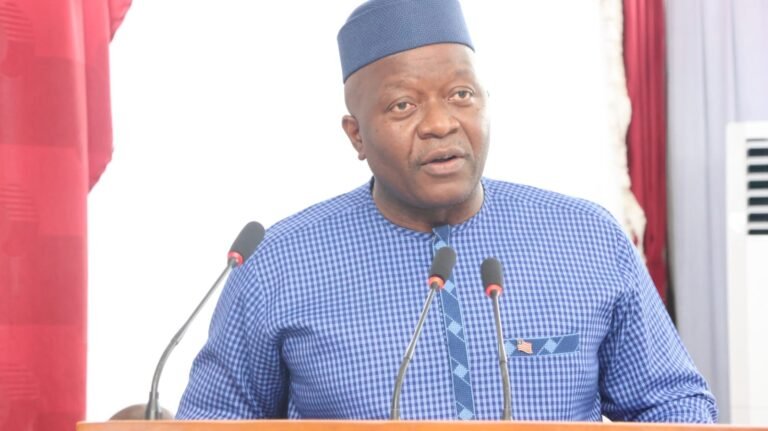
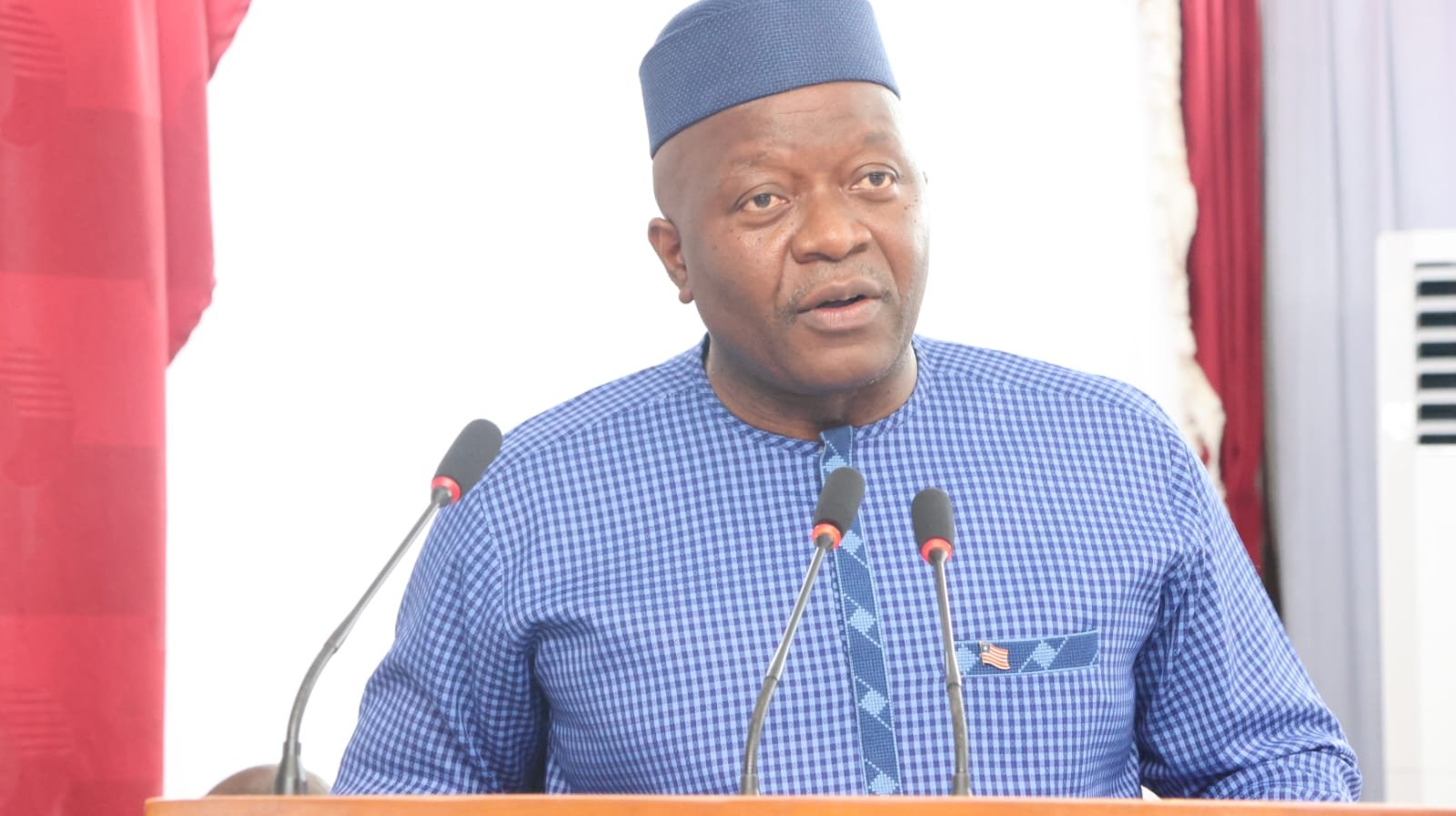
MONROVIA — Signaling a major shift toward national self-reliance, Finance and Development Planning Minister Augustine Kpehe Ngafuan announced that the Government of Liberia has taken over 90% of the funding for the judiciary’s flagship training program.
Speaking on Friday, July 17, 2026, at the graduation ceremony for Cycle 5 of the Professional Magistrate Training Program (PMTP), Ngafuan revealed that previous cycles of the 16-year-old initiative relied heavily on international donors, including the German, Swedish, and U.S. governments.
“Today, Cycle 5 stands as a monumental milestone of sovereign ownership,” Minister Ngafuan told the audience gathered on the ground floor of the Temple of Justice in Monrovia. “This is clear evidence that Liberia is ready to pay for its own institutional progress, secure its own peace, and invest directly in the intellect of its public servants.”
A Massive Budgetary Boost for Justice
The Finance Minister detailed a sweeping multi-year financial strategy designed to modernize the nation’s legal infrastructure under President Joseph Nyuma Boakai’s ARREST Agend a for Inclusive Development.
According to Ngafuan, the government has aggressively increased the judicial budget over a three-year period.
In 2023 the budget of the Judiciary stood at a baseline of US$ 18.5 million, meanwhile, in 2026 it increased by 80% to US$ 33.3 million.
Ngafuan emphasized that an under-equipped court cannot fearlessly defend the public interest. The increased funding is already being directed toward constructing circuit court facilities, supporting rural magisterial courts, and digitizing legal records across Liberia’s 15 counties.
Restoring and Upgrading Judicial Pay
Addressing past challenges with public sector compensation, the Minister noted that the government has prioritized restoring the remuneration packages of the Supreme Bench and subordinate court judges to “pre-harmonization levels.” Upward pay adjustments have also been implemented for magistrates and general judicial workers.
“President Boakai often says when we pretend to pay, people will pretend to work,” Ngafuan remarked. “Those who work in public service… must therefore be paid decently and timeously.”
Aligning with the Judiciary’s 2026–2030 Strategic Plan
The Finance Minister pledged the government’s continued backing for the newly crafted Strategic Plan of the Liberian Judiciary (2026–2030). The ambitious roadmap, lauded by Ngafuan, focuses on five core pillars including expanding access to justice by increasing legal coverage across all 15 political subdivisions; Reducing case backlogs by implementing an Electronic Case Management System (ECMS) in all circuit courts; strengthening independence and ethics through strict enforcement of the Code of Moral and Ethical Conduct; modernizing operations of the Judiciary by introducing e-filing, virtual hearings, and digital research databases and building public trust by launching court-user satisfaction surveys and publishing regular “State of the Judiciary” reports.
Ngafuan noted that a robust judiciary is fundamentally tied to Liberia’s economic baseline. “We can design the most brilliant economic frameworks… but if the rule of law is weak, if property rights are insecure, and if an ordinary citizen or investor cannot count on swift, impartial justice, our entire economic baseline rests on sinking sand.”
“Sharpness Without Integrity is a Menace”
The graduation ceremony successfully deployed 64 newly trained magistrate trainees into Liberia’s foundational court tiers, specifically targeting rural and underserved leeward counties.
In a direct and candid charge to the graduates, Minister Ngafuan warned them of the intense political, social, and financial pressures they will face on the bench, urging them to resist corruption.
“A sharp lawyer or judge with integrity is a blessing to society. A sharp lawyer or judge with no integrity is a menace to society,” Ngafuan warned, using the metaphor of a sharp cutlass that can either be used to cultivate a farm or commit a crime.
“Do not punish the weak or the poor because they have no protector, and do not excuse the powerful because they have a name,” he added. “The black robe, the seal, the title, and the gavel mean nothing if the person wearing or holding them has no integrity.”
A Changing Judiciary
Defending the administration’s record against critics who claim progress has been slow, Ngafuan concluded by highlighting how much the legal sector has evolved since early 2024.
“What is clearer than crystal is that the Judiciary President Boakai met on January 22, 2024, is not the same Judiciary that we see today,” the Minister said. “Today is better than yesterday; and… the Judiciary’s tomorrow will be better than its today.”
About the Author