By Pewu Y. Sumo
MONROVIA, LIBERIA — At a time when the global development landscape is undergoing a profound transformation, Liberia is holding its ground, reporting robust economic expansion and demanding a shift in how international partners engage with the African continent.
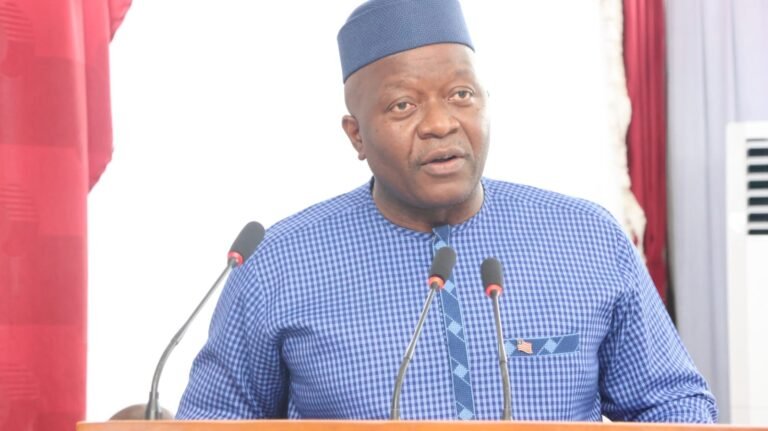
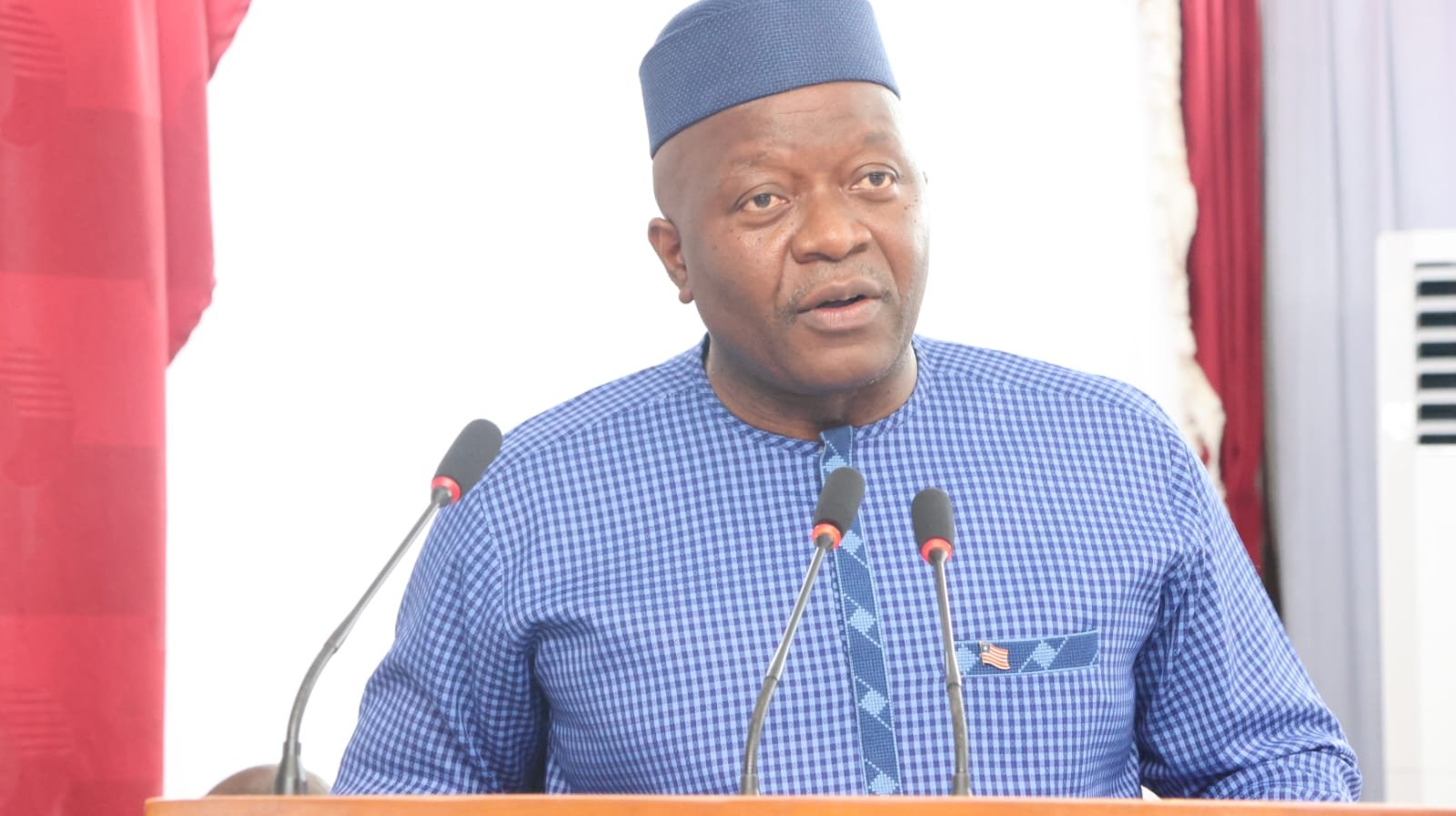
Speaking at the opening of the 2026 United Nations Country Team (UNCT) Annual Retreat, Liberia’s Minister of Finance and Development Planning, Hon. Augustine Kpehe Ngafuan, delivered a powerful message detailing the country’s fiscal resilience, its ongoing national development plan, and a stern call for accountability from international donors.
The high-level retreat, themed “Catalyzing Impact & Collective Action in a New Development Reality: Through the UN Cooperation Framework 2026–2030,” brought together key national and international stakeholders. Dignitaries in attendance included UN Resident Coordinator Ms. Christine N. Umutoni, Minister of Foreign Affairs Her Excellency Sara Beysolow Nyanti, and UN Under-Secretary-General and Special Advisor on Africa, Cristina Duarte.
Overcoming Funding Shocks and Promoting Inclusion
Minister Ngafuan opened his address by expressing deep gratitude to the United Nations and development partners for standing by Liberia during a volatile transition period. He explicitly highlighted the anxieties that surrounded a major USAID funding drawdown occurring just weeks after the launch of the government’s flagship ARREST Agenda for Inclusive Development (AAID).
Despite the abrupt withdrawal creating significant uncertainty, Ngafuan noted that the “support, solidarity, flexibility, and continued commitment” of international partners enabled Liberia to weather the storm. He also lauded the UN for its technical and financial backing of Liberia’s third Voluntary National Review, recently presented at the UN High-Level Political Forum in New York.
However, the Minister issued a blunt warning against the changing nature of global aid, noting that development assistance is rapidly giving way to models centered purely on trade and investment. While acknowledging these new avenues, Ngafuan warned that they must not override human equity.
“These shifts must not cause us to veer from the fundamental principle that has guided international development for decades: the Principle of leaving no one behind,” Ngafuan declared. “We must discourage rugged individualism in our development landscape.”
Economic Growth Targets Outperformed
Defying global economic headwinds, Ngafuan presented a series of strongly positive macroeconomic indicators covering the period from January 2024 to June 2026, pointing to strengthened tax administration and strict fiscal reforms as the primary drivers of recovery.
Between January 2024 and June 2026, Liberia’s real GDP growth climbed from 4.0% to 5.5%, bringing the country closer to its 2029 target of 6.0%. During this same period, the nominal GDP expanded from US4.8 billion to US5.64 billion, placing it firmly on the path toward a medium-term target of US6.5 billion. Reflecting these broad economic gains, individual income also saw steady improvement as GDP per capita rose from US861 to US$964.
Ngafuan emphasized that these numbers prove Liberia is actively doing its part by stabilizing institutions, expanding domestic resource mobilization, and curating an attractive space for private investment.
“Not an Act of Charity”: A New Vision for Africa
Pivotally, the Finance Minister challenged global frameworks that view developing nations strictly through a deficit lens, emphasizing that foreign engagement must pivot from altruism to strategic collaboration.
“Africa should never be viewed simply through the lens of need. It should be recognized for its immense potential,” Ngafuan stated. “Ours is a continent rich in natural resources, endowed with a youthful population, and full of innovation and opportunity. Those who invest in Africa today are investing in one of the world’s greatest engines of future growth. Partnership with Africa is therefore not an act of charity—it is a strategic investment in our shared global future.”
Demanding Financial Transparency and Predictability
Turning directly to the execution of the UN Cooperation Framework (2026–2030) and the ARREST Agenda, Ngafuan made a direct appeal to international partners to move away from fragmented initiatives and towards measurable, transparent action.
To achieve this, the Ministry of Finance is explicitly asking development partners to provide clear declarations of the total financial support intended for the ARREST Agenda’s implementation period, alongside specific breakdowns detailing which pillars, flagship programs, counties, and localized projects the funding will support. Furthermore, the ministry is calling for regular progress updates mapping out achievements, bottlenecks, and measurable outcomes—a move designed to prevent overlapping initiatives, identify true financing gaps, and ensure mutual accountability.
Concluding his address, Ngafuan reminded the delegation that history would judge the assembly not by the quantity of strategy meetings or signed frameworks, but by tangible poverty reduction and social transformation.
“Development is not measured by the amount of money committed, but by the lives that are transformed,” he concluded. “This is our moment to prove that, even amid unprecedented global uncertainty, genuine partnership can still transform nations.”
About the Author