The Author
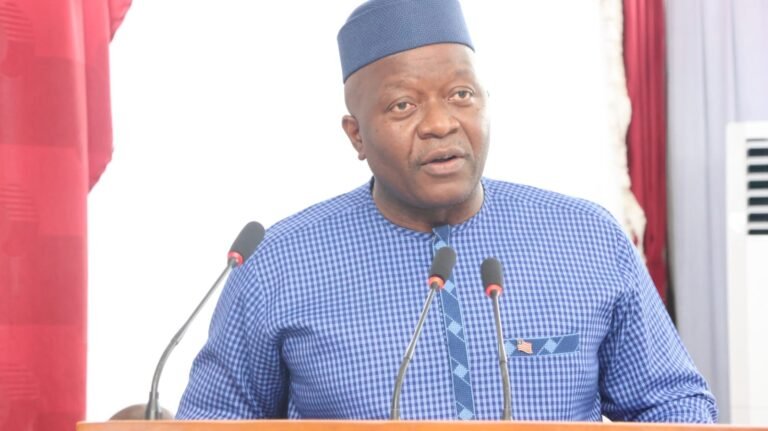
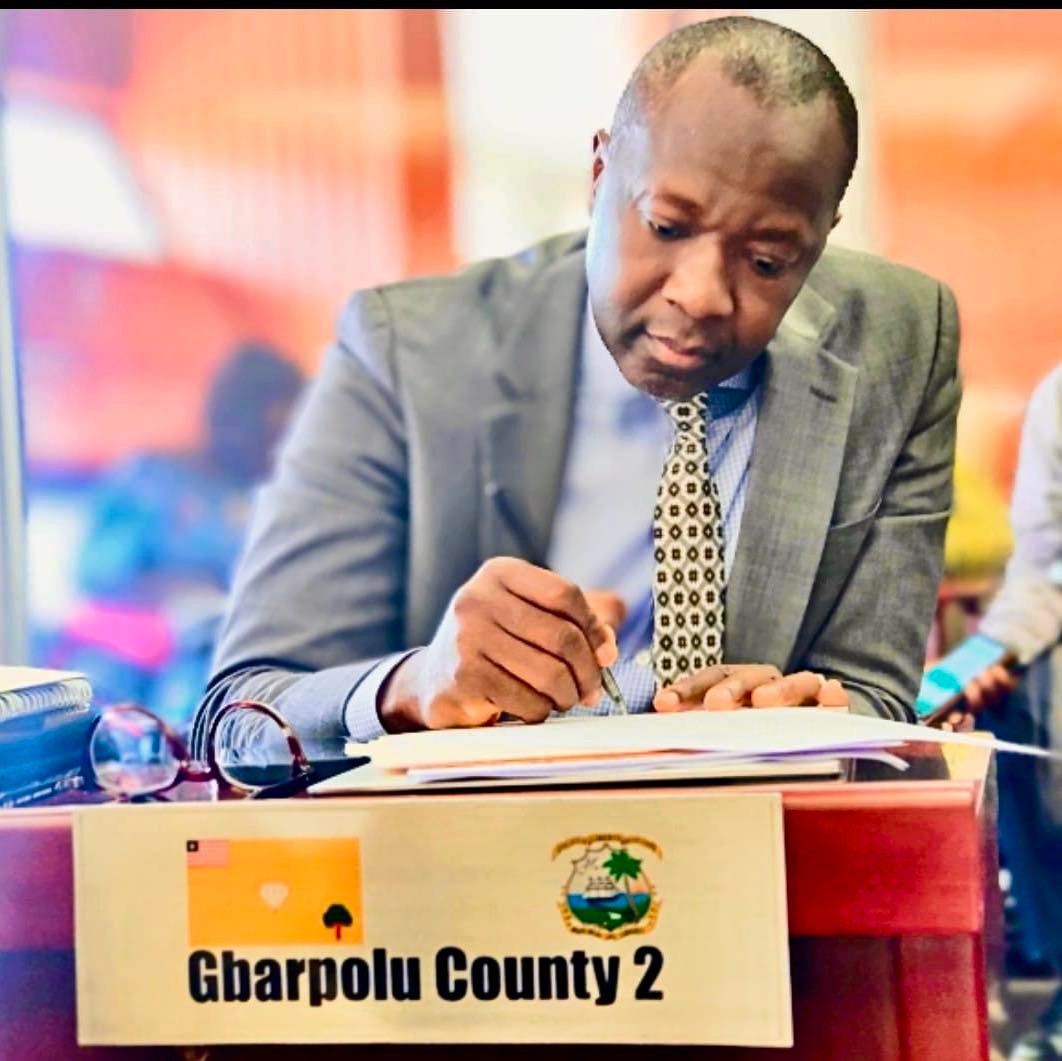
By Amara Konneh, Senator, Gbarpolu County
This morning, I am thinking about the University of Liberia (UL). Yesterday, a friend shared a video showing the Liberia National Police clashing with UL students who were demanding the resignation of Dr. Layli Maparyan, the university’s new president.
Although I did not attend the UL, I view it as the cornerstone of higher education in Liberia, responsible for developing our nation’s leaders, professionals, and those who drive change, particularly in the political arena. The challenges facing UL are significant but not insurmountable. Addressing them will require strong leadership, adequate funding, and systemic reform. Below are my reflections based on my experience working with university and government stakeholders during my time as Finance Minister.
When the late Dr. Emmet Dennis became president of UL in 2008, the government’s financial support stood at just $4.5 million, which barely covered faculty salaries for the academic year, despite their already modest compensation. Salary payments were irregular, and a significant backlog of arrears existed, owed to UL employees and vendors. These factors contributed to the irregular openings and closings of the UL. As a consequence, the majority of students overstayed at the UL in terms of the number of years they attended rather than the actual number of semesters they attended. By the fiscal year 2012–13, during my tenure as Minister of Finance, the government’s support to the UL in terms of actual disbursements had increased to $10.3 million. This critical infusion of funds enabled much-needed salary adjustments and improvements in student welfare across the campus. This led to the reintroduction of the tri-semester program (three semesters in an academic year), which enabled overstayed students to complete their degree requirements and graduate.
The 2014 Ebola outbreak forced the closure of UL and other educational institutions. As the government mobilized to contain the crisis, our Ministry of Finance and Development Planning (MFDP) partnered with Dr. Dennis and his team to enhance financial accountability and reporting systems. A key outcome of our collaboration was the appointment of Mr. Garswa P. Jackson, now Auditor General, as Vice President for Fiscal Affairs at UL. Together, we addressed issues of delayed faculty salaries and medical student stipends by establishing dedicated budget lines to ensure that students could focus on their studies without financial disruptions, supported by MFDP.
By the 2015–16 budget year, my last fiscal year as Finance Minister, UL’s appropriation had risen to $15.1 million, achieving a 100% disbursement rate. With the support of the UL Board of Trustees and President Ellen Johnson Sirleaf, Dr. Dennis successfully regularized faculty salaries, restoring calm to the campus and stabilizing the academic calendar.
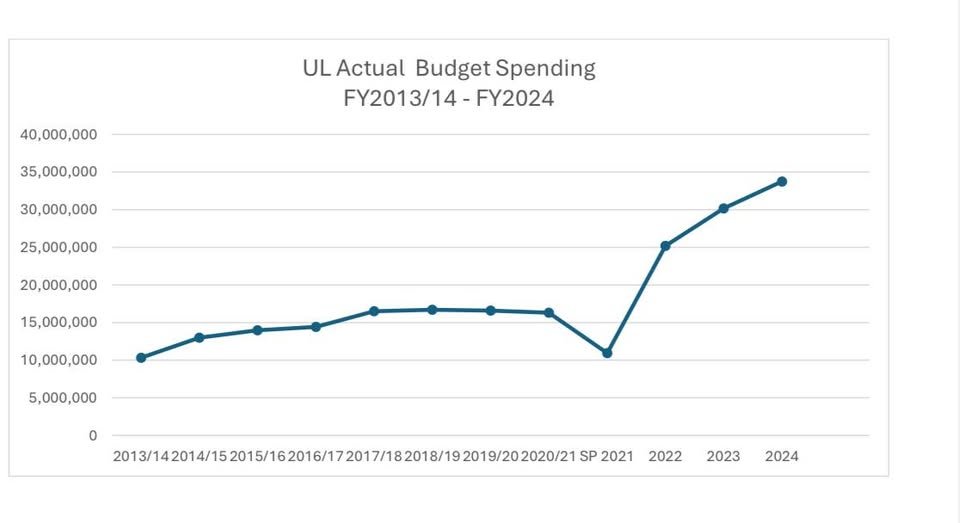
A significant shift in UL’s funding occurred after the 2018 transition. The Unity Party (UP) administration appropriated $16.1 million, but the Coalition for Democratic Change (CDC) administration increased actual budget performance to $16.5 million by the end of the budget year. By the time the CDC administration left office in 2023, UL’s spending had surged to $30.1 million, a notable increase, even after accounting for the tuition-free policy. This increased budgetary appropriation went towards funding recurrent expenditures at the expense of capital expenditures. However, this raises an important question: Has this increase in funding led to meaningful improvements in faculty compensation, teaching quality, and student services? I have attached the graph of the UL’s actual budget spending from 2012 to 2024. The dip reflects the special budget year of six months (July-December 2021) when it was transitioned to a calendar year budget format.
UL faces new challenges under Dr. Maparyan’s leadership today, and I empathize deeply with her situation. Despite years of rising enrollment, successive administrations have failed to expand infrastructure or modernize the curriculum to meet Liberia’s evolving skill needs. Since the 1980s, no new building has been erected on the Capitol Hill campus of the UL — save for the ramshackle CPAV and Stage — thereby putting pressure on the available infrastructure. The campuses remain in disrepair, which is an urgent priority. Additionally, the curriculum predominantly focuses on political science and public administration, with limited offerings and low teaching quality in market-driven fields such as technology, healthcare, education, and engineering. These gaps are pronounced; even two decades after our civil war, Liberia still struggles to replace volunteer educators with qualified teachers, despite having a Teachers College at UL. The University also struggles to attract and retain holders of terminal degrees.
Dr. Maparyan now faces the daunting tasks of regularizing salaries once again, revitalizing infrastructure, and reimagining the curriculum for the 21st century. It is undoubtedly a tall order. Nevertheless, I believe the UL can rebound if it secures an effective leadership team, predictable funding, bold reform, and strong support from President Boakai, Board of Trustees, which includes representation from the Legislature, and its alum community. This will require a steadfast commitment to investment, strategic vision, and a shared belief in the transformative power of education. It will also necessitate a direct approach to combating corruption, the elephant in the room.
We must now reflect on our priorities:
• Should overhauling infrastructure take precedence over stabilizing faculty salaries?
• Can the government alone sustain UL, or must we engage the private sector and diaspora?
• How do we ensure that increased spending leads to measurable educational outcomes?
. How can the UL leadership protect public resources?
These are not merely policy questions; they are moral imperatives. UL’s future is intertwined with Liberia’s.
UL cannot accomplish this alone. Collaborating with global universities, NGOs, and private companies can provide the funding and expertise necessary to introduce new teaching methods, research opportunities, technology solutions, and internship programs that link students with regional job opportunities. While ECOWAS and the AU have hundreds of job openings, few Liberians apply. I wish Dr. Maparyan all the best in her endeavors.
About the Author