[By: Pewu Y. Sumo]
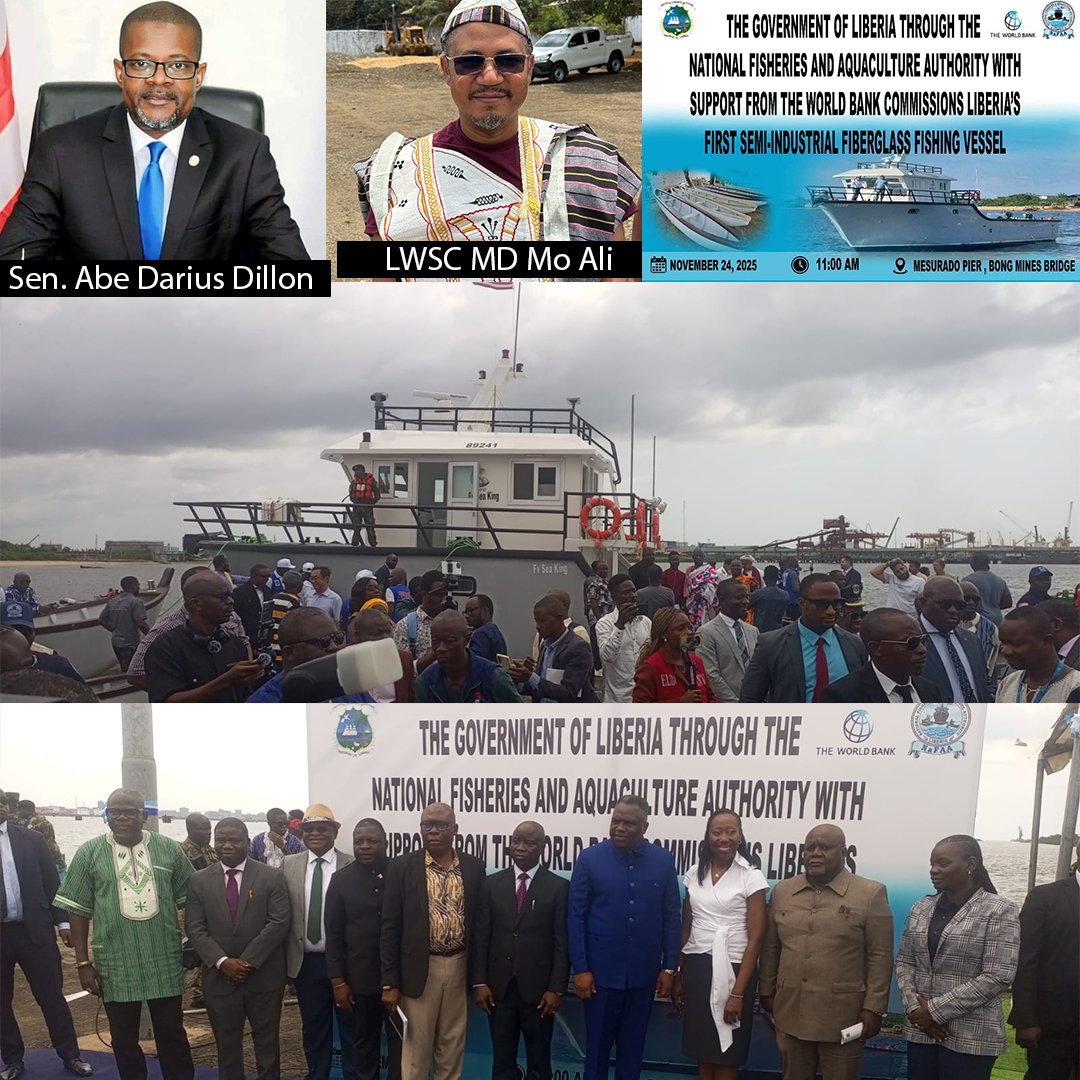
Just over 24 hours since Vice President Jeremiah Kpan Koung admitted the government’s failure to provide jobs for its citizens nearly 23 months into office, two officials of the ruling Unity Party Alliance (UP-Alliance) have questioned the silence of the opposition. Liberia Water and Sewer Corporation (LWSC) Managing Director Mohammed Ali and Montserrado County Senator Abraham Darius Dillon have specifically questioned the quiet of the Coalition for Democratic Change (CDC), which remains by far the government’s biggest critic.
While LWSC MD Mo Ali was quick to throw a jibe at the CDC as “distant half lot neighbors who have run out of substantive issues to criticize,” Senator Dillon, a member of the UP-alliance in the Upper House, took to his official Facebook handle on November 25, 2025 in a similar vein. He stated:
“We are in dry season and LEC is still active and stable, and even expanding to more communities and counties. Buh ley negative news seekers (oppositions and critics of the ruling UP government) will nan talk-kay.”
The two officials, though operating in separate branches of government, appear to be individuals who appreciate debate and an ever-keen critical opposition, even when they (critics) seek a calm political environment for once. Their current stance is that the politically calm atmosphere indicates critics have nothing to speak about.
However, the reality remains that a very critical issue is yet to be fully addressed by the administration of President Joseph Nyuma Boakai: The lack of jobs—as admitted by Vice President Koung—is the glaring issue that disproves the claim of “no substantive issue for criticism” by Sen. Dillon and MD Ali. Their arguments signify a dangerous sign that complacency is likely to sway the current administration off its current track.
VP Koung’s Admission: The Undeniable Issue
The lack of jobs continues to be a major topic of discussion even if this administration provides 20,000 jobs over the next four years of its stewardship, given that the current ‘minimum wage’ of US $150.00 remains an impediment, as it cannot meet the reality of a family of three in Liberia today.
As expressed by VP Koung during his address at the commissioning ceremony of Liberia’s first semi-industrial fiberglass fishing vessel at the Mesurado Pier on Monday, November 24, 2025:
“Mr. Finance Minister, as we wait for the World Bank, our partner, it takes time, between 2-3 years; our people are not waiting, this government was elected for six years and two years have gone. We are striving and doing well but one of our weaknesses is job creation,” VP Koung stated.
He called on the current administration to tap into the fisheries sector to provide jobs, calling it “a low hanging fruit we must take advantage of and take it now.”
A Call for Drastic Investment
Amid applause, the Vice President boldly admitted the government’s shortcoming and outlined a concrete solution. Acknowledging that the new vessel, known as ‘Sea King,’ has a capacity of about 30 crews, he suggested that investing in at least 50 additional vessels could provide significantly more jobs for Liberians.
To achieve this, he proposed that a cut of US$25 million from recurrent expenditure in the proposed FY 2026 draft national budget—which is currently at the House of Legislature for scrutiny—could be a significant first step. The VP appealed to the marine vehicle producer to consider a discounted price of about US$500,000.00 per unit, should the government raise the $25 million for the purchasing, noting that a single vessel is believed to cost about US$800,000.00.
The Risk of Complacency
Though Vice President Koung acknowledged the “on ground” reality of the job crisis, both Senator Dillon and MD Ali appear to be concerned only with the quiet political atmosphere. Their arguments clearly demonstrate that the silence of critics and the opposition community could likely induce complacency fatigue in a government that remains heavily challenged with changing the current status of ordinary Liberians.
Ultimately, the Vice President’s call to urgently cut $25 million from recurrent expenditure to invest in the fisheries sector is an action-oriented response to the substantive issue of job creation. The necessity of this drastic proposal fundamentally invalidates any claim that critics have run out of things to discuss.
About the Author