[By Guest writer]
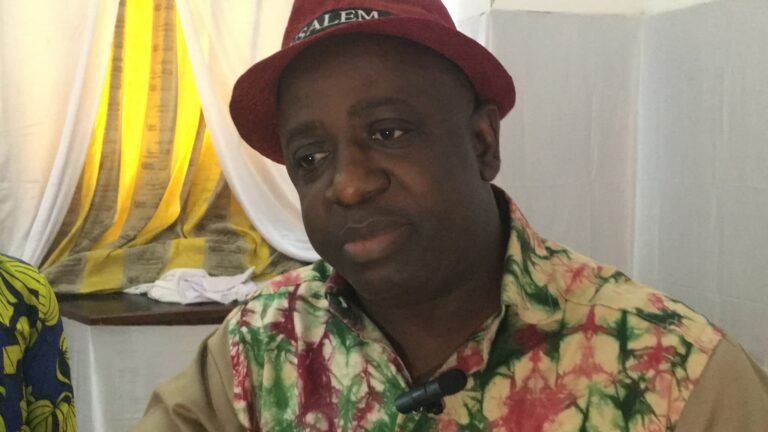
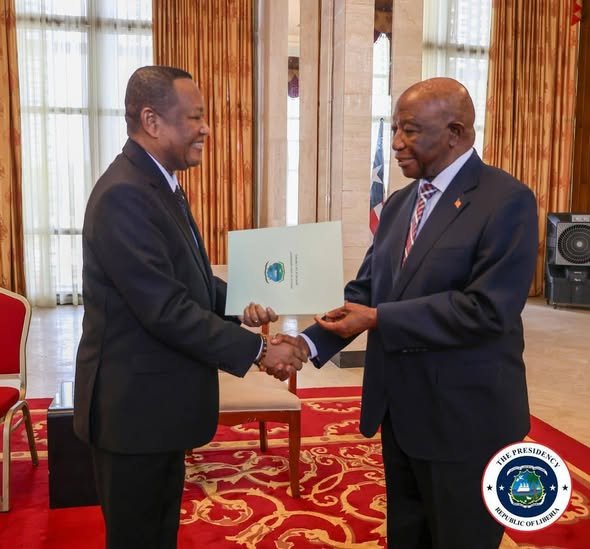
Maryland, USA — It was a crisp autumn night in the city of Greenbelt in Maryland, USA, when the Liberian diaspora gathered under the banner of the Association of Liberian Journalists in the Americas (ALJA). The convention hall buzzed with nostalgia, pride, and the unmistakable cadence of Liberian voices reconnecting across borders. Among the distinguished guests stood two of Liberia’s finest: Finance boss, Augustine Kpehe Ngafuan and Information Minister Jerolinmek Matthew Piah. Minister Ngafuan was the keynote speaker, and his presence was not merely ceremonial—it was deeply personal.
Clutching a prepared speech, partially delivered with heartfelt pauses and spontaneous emotion, the finance minister took the podium. His voice, steady yet tinged with reverence, carried the weight of memory and gratitude. The speech, titled “The Positive Impact of the Media on Me During My Formative Years,” was more than a reflection—it was a tribute.
He began with a story. Not of policy or economics, but of a man—his father, the late Dennis Ngaima Ngafuan. A man who, despite never finishing high school and earning meager wages, invested daily in the power of information. “My father,” the Minister recalled, “would spend his last dime every day to buy at least two newspapers. He also bought a small Sony radio.” The audience leaned in, captivated by the image of a humble man arming his children with knowledge in a zinc shack in Logan Town.
The Minister painted a vivid picture of his childhood—of April 12, 1980, when Liberia’s political landscape was violently upended. That moment, he said, shattered his innocence and ignited a relentless curiosity. His father responded not with silence, but with newsprint and broadcast. He borrowed money to buy a black-and-white television, just slightly larger than a laptop screen, so his children could watch “Action News” on the Liberia Broadcasting System.
“Intently following the media during those formative years,” he said, “put me in a practical school where I learned a whole lot in addition to what I learned in A.B. Tolbert Elementary School and Booker Washington Institute.” The audience nodded, many recognizing the names and places that shaped their own journeys.
Minister Ngafuan spoke of the titans of Liberian journalism—Rufus Darpoh, Stanton Peabody, Kenneth Y. Best, Phillip Wesseh, Tom Kamara—whose words sharpened his diction and broadened his worldview. He recalled the voices of Charles Gbenyon, Kwame Clement, Welma Mashinini, Jestina Gibson, Olivia Shannon, and Victoria Christopher, whose eloquence on ELTV’s “Action News” refined his pronunciation and articulation.
“I am what I am today,” he declared, “because of the very positive impact the Liberian media had on me in my formative years.” He invoked John Locke’s concept of tabula rasa, describing his young mind as a blank slate on which the Liberian media inscribed wisdom, awareness, and purpose.
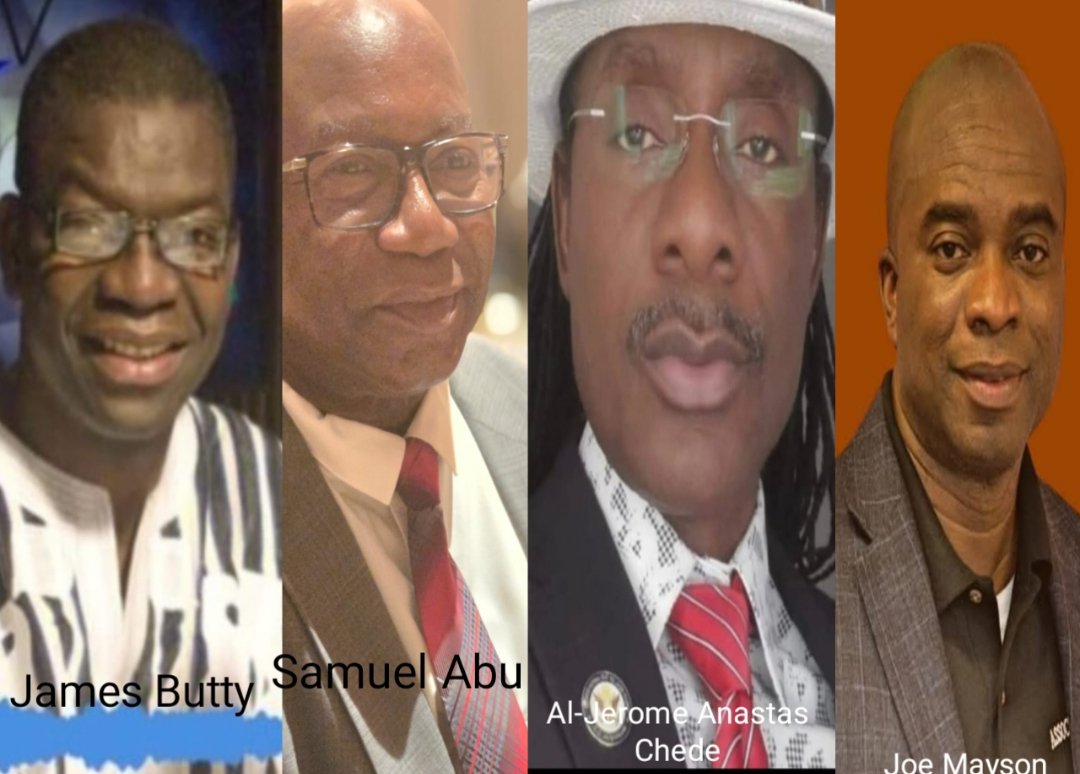
Included in his speech but not read out because of time, Ngafuan noted : “As I stand here and see some of you in this hall—veterans James Butty, Al-Jerome Anastas Chede, Sam Abu, Moses Sandy and Joe Mason—I doff my cap to you in profound appreciation for play pivotal role in shaping Liberia’s narrative through war, peace, and reconstruction”.
The finance minister continued, “You don’t just do a good job for the media entity with which you work, but you help mold future professionals and leaders. You do a good job for the entire society.”
The speech resonated deeply. It was a reminder that journalism is not merely the act of reporting, it is the act of shaping minds, nurturing dreams, and preserving truth. And in that Maryland hall, the echoes of ink and airwaves found their rightful place in the heart of a grateful nation.
About the Author