Liberia is taking decisive steps to re-enter the international coffee market as production of its indigenous species, Coffea liberica, gains momentum across several counties.
The initiative is spearheaded by the Liberia Agriculture Commodity Regulatory Authority (LACRA)—the government agency responsible for regulating coffee, cocoa, and other agricultural commodities. It aims to revive the national coffee sector and position Liberica coffee as a premium export product on the global stage.
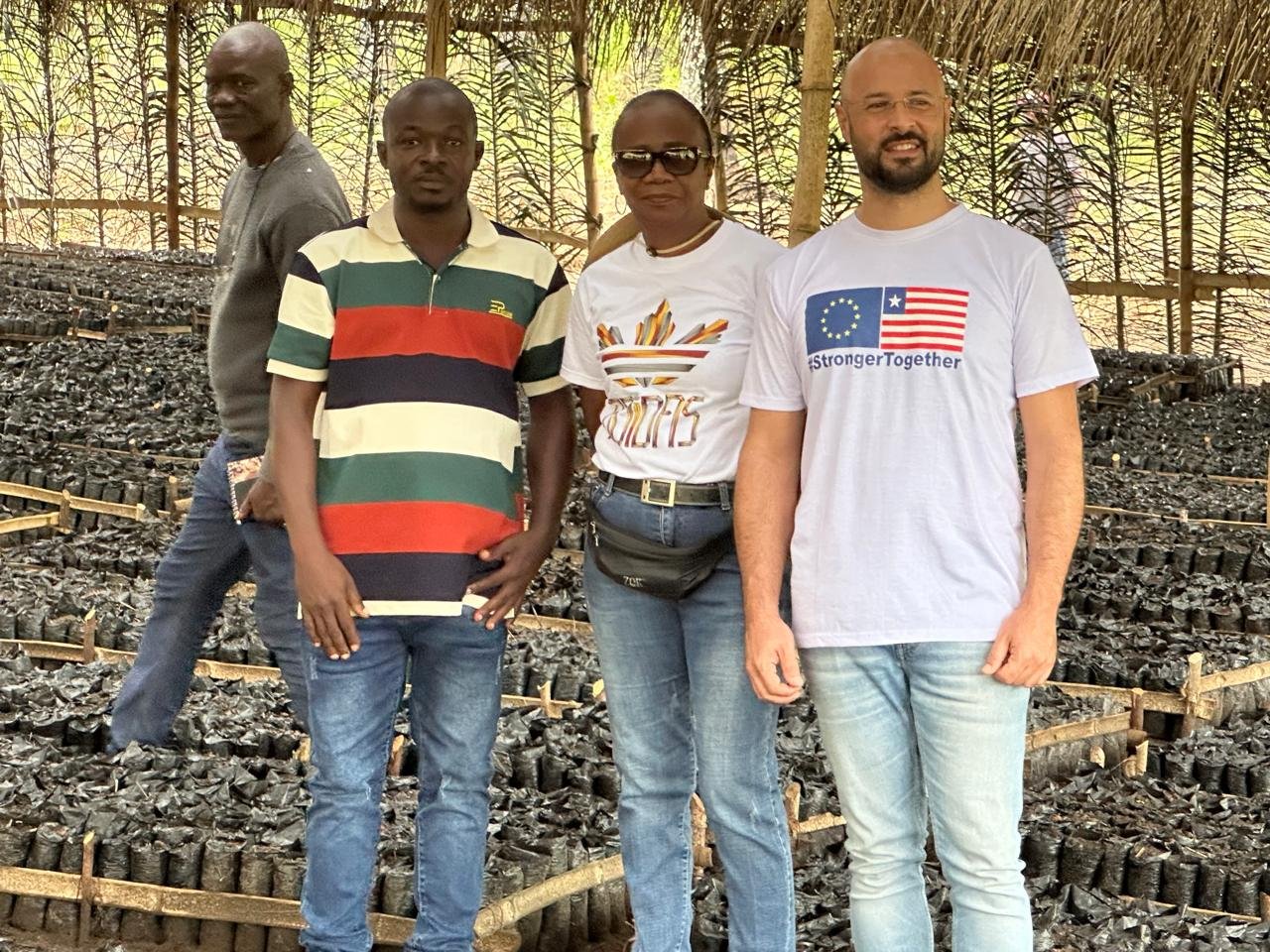
As part of this project, large-scale coffee nurseries have been established in Bong, Nimba, and Lofa Counties, marking a major milestone in rebuilding the industry. These nurseries are designed to supply high-quality seedlings to local farmers, thereby boosting national production and strengthening the entire coffee value chain.
During a site visit to a nursery in Bong County on February 3, 2026, LACRA’s Deputy Director General for Operations and Technical Services, Alpha Gongolee, provided an update on the progress. He reported that all sites are now operational, with shade houses constructed and polythene bags prepared for seedling development.
Mr. Gongolee attributed the rapid progress—completing construction and preparation in less than three months—to the effective coordination and commitment of LACRA and its partners.
The site visit included key development partners such as Seeds4Liberia, the European Union (EU), the International Institute of Tropical Agriculture (IITA), and officials from the Ministry of Agriculture. Speaking for the Ministry, Deputy Minister for Technical Services Solomon Williams praised LACRA’s “strategic and timely intervention,” noting that coffee production has the potential to generate employment and drive Liberia’s agricultural transformation.
Representatives from the European Union applauded the progress but urged LACRA to prioritize environmental responsibility. They emphasized the need to sensitize farmers on sustainable planting practices to safeguard forested areas as cultivation expands.
Once fully developed, the seedlings will be distributed to farmers across the three counties. During the visit, partners sampled the coffee, testifying to the distinct flavor profile and unique aroma that set Liberica apart from the more common Arabica and Robusta varieties.
About the Author