[By Pewu Y. Sumo]
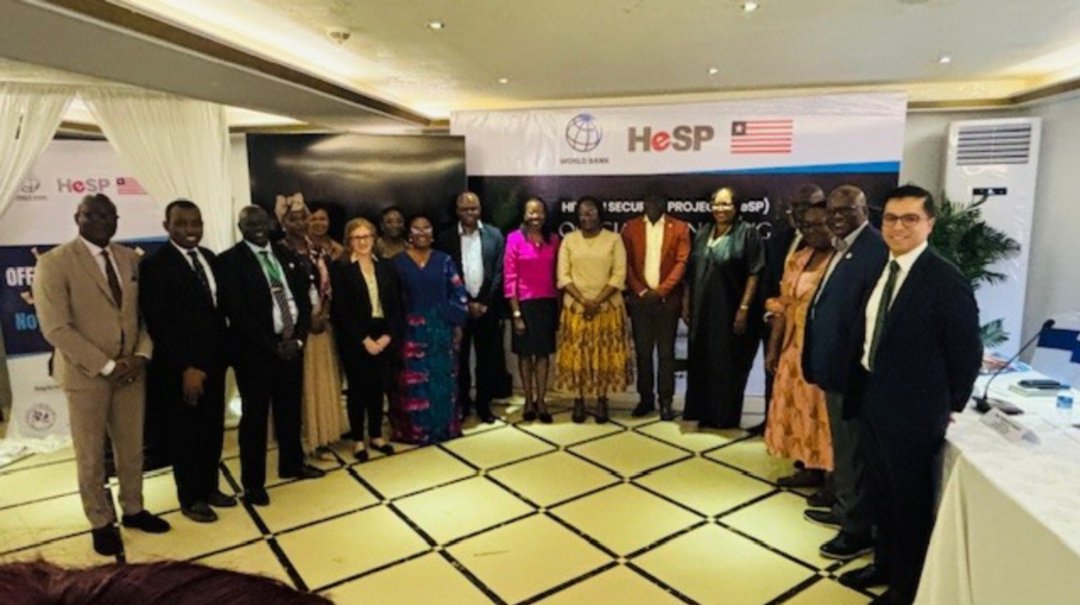
Monrovia, Liberia – The Government of Liberia, in partnership with the World Bank, officially launched the Liberia Health Security Program in Western and Central Africa (HeSP Liberia) today, Monday, November 10, 2025, marking a significant step toward bolstering the nation’s capacity to prevent, detect, and respond to public health emergencies.
The Liberia component of the Health Security Program is valued at US$18 million and is a transformative, multi-sectorial initiative set to be implemented by the Ministry of Health, the National Public Health Institute of Liberia, the Ministry of Agriculture, and the Environmental Protection Agency.
Building on a Decade of Partnership
In her remarks at the launch, World Bank Liberia Country Manager Georgia Wallen highlighted the new investment as a continuation of a decade-long partnership aimed at strengthening Liberia’s health security.
“Today’s gathering shows our collective commitment to building a strong coalition towards better health security in Liberia,” Ms. Wallen stated. She recalled the crucial support provided during the 2014 Ebola outbreak through the Ebola Emergency Response Project (EERP) and the subsequent Regional Disease Surveillance Systems Enhancement (REDISSE) Project, which pioneered the use of the One Health approach (focusing on human, animal, and environmental threats) in the region.
Most recently, the Liberia COVID-19 Project helped mitigate the impact of the pandemic and enhanced the national vaccine delivery system.
Preparing for New Threats
The HeSP program is directly aligned with the government’s ARREST Agenda for Inclusive Development, which aims to build on past gains while addressing persistent challenges.
Ms. Wallen noted that Liberia remains vulnerable to new threats related to “Deforestation, Climate Change and Antimicrobial Resistance (AMR).”
She emphasized that the US$18 million HeSP investment is designed to fortify the country’s capacity to prevent, detect, and respond to public health emergencies of all kinds, thereby reducing economic disruptions and safeguarding the livelihoods and health of Liberians.
Ms. Wallen, identified effective collaboration as “the secret to the project’s success.”
She urged all implementing agencies—the Ministries of Health and Agriculture, the NPHIL, and the EPA—to work closely together, stressing that “Delivering results for the Liberian people will depend on your effective collaboration.”
Ms. Wallen specifically called for immediate, strong, and effective cooperation to deploy HeSP resources to help contain the ongoing Mpox outbreak in Liberia, which she described as a “significant current concern.”
She also called on all development partners to harmonize their implementation strategies to avoid duplication and fragmentation of funding, stating, “Given the global reduction in development aid for health, working together is more important than ever.”
The launch of HeSP Liberia underscores the nation’s commitment to prioritizing health security as a cornerstone of its long-term development strategy.
About the Author