[By Danicius Kaihenneh Sengbeh]
ABSTRACT
I attended the 7th WATAF Policy Dialogue and 21st General Assembly in Freetown, Sierra Leone in September, where tax leaders, policymakers, and experts from across West Africa met, not for a ‘talkshop’, but for a serious conversation about Africa’s fiscal future. In this reflection, I share my observations, lessons, and takeaways from the sessions that tackled domestic revenue mobilization, fair taxation, and the region’s shared resolve to build stronger, digital-driven tax systems. From the energy in the halls to the honesty in the conversations, I argue that Freetown wasn’t just another meeting, it was a wake-up call for action.
THE FREETOWN GATHERING THAT MATTERED
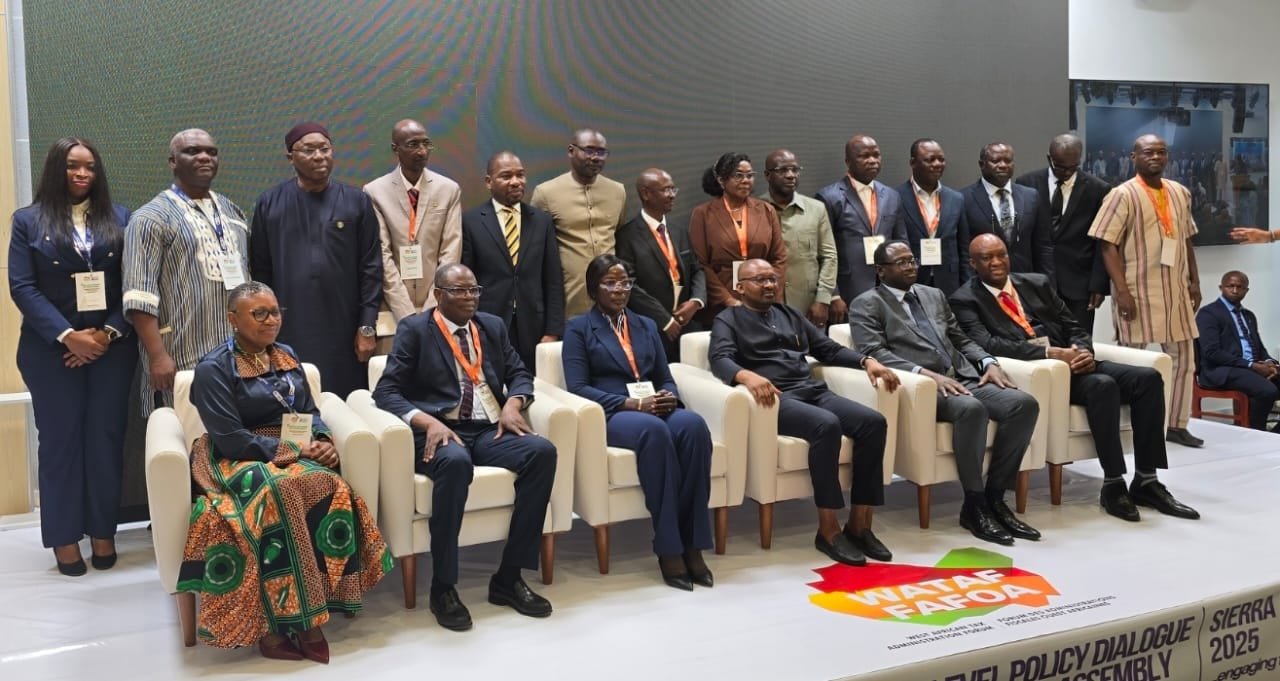
Almost one month has slipped by since the curtains fell on the 7th West African Tax Administration Forum (WATAF) 7th High-Level Policy Dialogue and the 21st General Assembly, held in the stately halls of the Foreign Service Academy on Tower Hill, in Freetown, Sierra Leone. Yet, while the banners have come down and we, the delegates, have returned home, one thing remains clear — and may echo for decades to come: the gathering of hundreds of West African tax experts, policymakers, and development partners from across Africa and beyond was no ordinary conference.
It wasn’t free time in Freetown. For five intense days, the nerve center of the hilly West African city became a hub of energy, intellect, and determination. Seasoned tax administrators, economists, policymakers, and civil society leaders turned what could have been another routine conference into a laboratory of ideas and commitments. There, we confronted the urgent questions of West Africa’s fiscal muscles and future. Discussions revolved around domestic resource mobilization, digitalization, tax reform, institutional building, and regional collaboration.
A CALL FOR FISCAL SELF-RELIANCE
From the opening statements to the closing pledges, the message was consistent and urgent: West Africa’s economic destiny depends on its ability to fund its own development. It became unmistakably clear to us that as external resources continue to dry up at an astronomical pace, the time for self-reliance is now. The evolving mandate was that countries across the region must begin to dig deep — creatively, boldly, and efficiently — into their own domestic resource pockets to generate the revenues needed to finance their growth and pursue shared regional, continental, and global development goals.
Throughout the week, one melody rose above the rest and echoed through the halls of the Foreign Service Academy. That melody was the resounding call for governments to adequately support their revenue authorities. Whether it came boldly from speeches of the Commissioners General of The Gambia (Yankuba Darboe) and the National Revenue Authority of Sierra Leone (Jeneba Bangura), or was reinforced with researched statistics by the Commissioner General of the Liberia Revenue Authority (James Dorbor Jallah), the message was unmistakable. It echoed in the opening remarks of Sierra Leone’s Vice President (Dr. Mohamed Juldeh Jalloh), was affirmed by the WATAF Council Chair (Talato Eliane Djiguemde-Ouedraogo), and woven into the address of the WATAF Executive Secretary (Jules Tapsoba). Together, these voices created the unifying rhythm of the Dialogue.
That melody fairly resonated in every panel discussion, resurfaced during lunch breaks and coffee chats, and even lingered on the bus rides to and from the conference venue. The call refused to fade. It was a persistent reminder that sustainable development begins with empowered tax institutions. When these institutions are adequately resourced and strengthened, all other measures such as digitization, public awareness for compliance, and the effective enforcement of tax laws naturally fall into place.
WHEN THE DIALOGUE KICKED OFF
The Dialogue officially opened on Tuesday, September 16, but the real groundwork had been laid a day earlier. Behind closed doors, members of the WATAF Council gathered for the 21st General Assembly — a meeting that quietly set the tone for the days ahead. In that meeting of September 15, the Council met to review the 2026–2028 Work Plan submitted by the WATAF Secretariat, the engine that drives the organization’s daily operations. Meanwhile, the Council, made up of six Commissioners General, is the heartbeat of WATAF’s decision-making — shaping the tax administration agenda across West Africa. Following thorough deliberations, the Council’s approved recommendations were presented to the General Assembly for final endorsement on September 17. The approved Work Plan now stands as a blueprint to strengthen institutions, modernize systems, and deepen coordination among member revenue authorities — a collective roadmap for a stronger regional tax administration.
Executive Secretary Jules Tapsoba and Council Chair Madam Talato Eliane Djiguemde-Ouedraogo would both be elated by this milestone: a collective endorsement of their vision and leadership. The Council’s approval set WATAF firmly on the path toward fulfilling its forward-looking mandate: to invest time, resources, and energy in building stronger tax systems capable of driving sustainable domestic revenue mobilization across the region.
The next day, the atmosphere shifted to one of inspiration and resolve. Council Chair Djiguemde-Ouedraogo observed that the Dialogue came “at a critical time for West Africa,” as countries strive to align their fiscal systems with ECOWAS Vision 2050, Agenda 2063, and the Sustainable Development Goals (SDGs). With strong political will, firm institutional commitment, and trust from the private sector, she emphasized, the region can unlock billions in domestic revenue despite its many challenges.
THEMES, TENSIONS, AND TURNING POINTS
It wasn’t leisure time in Freetown. Across panels, breakout sessions, and informal discussions, several powerful themes reverberated:
First, the era of heavy reliance on donor funds is rapidly fading. Participants were unanimous that sustainable development demands stronger domestic revenue bases, built on effective, fair, and transparent tax systems. Yet tax systems cannot thrive on rules alone; they require citizen trust. Transparency, equity, and simplicity emerged as non-negotiable pillars for fostering voluntary compliance.
In an age defined by digital transformation, delegates called for modernized tax administrations, robust legal frameworks, and cutting-edge digital infrastructure — from seamless data-sharing systems to e-invoicing and digital payment platforms.
Regional solidarity surfaced as another core message. West African countries must tackle challenges collectively — through peer learning, exchange of best practices, and unified responses to illicit financial flows. WATAF, as the regional anchor, reaffirmed its commitment to championing these efforts in its next three-year strategic plan.
Finally, inclusion of the informal sector was recognized as vital. With large segments of West African economies still informal, delegates emphasized the need to bring these sectors into the tax net carefully, progressively, and humanely, ensuring the most vulnerable are not overburdened. On this point, Sierra Leone’s Vice President Dr. Mohamed Juldeh Jalloh captured the essence perfectly during his keynote: “broadening Africa’s tax base without overburdening citizens.”
WHAT WAS ACHIEVED — AND WHAT LIES AHEAD
The Freetown Dialogue produced concrete outcomes and renewed momentum. Delegates endorsed WATAF’s 2026–2029 Work Plan, centered on institutional strengthening, capacity building, digital integration, and transparency. We, delegates, issued a joint Outcome Statement calling for scaling up domestic revenue mobilization amid declining donor assistance.
We proposed actionable strategies — from e-invoicing and mobile tax payments to improved compliance enforcement and judicial support for revenue cases. One striking example came from The Gambia’s Commissioner General, Yankuba Darboe, who shared how guaranteeing the Gambia Revenue Authority (GRA) a fixed 4.5% share of national revenue for operations spurred efficiency, staff motivation, and digitization — leading to record revenue growth. His case reinforced a key message: investing in revenue authorities is not a cost; it’s an investment in national progress.
REFLECTIONS AND FINAL THOUGHT
As the Dialogue drew to a close, Liberia Revenue Authority Commissioner General James Dorbor Jallah delivered a stirring reflection. He described taxation not merely as a technical matter but as “a pillar of sovereignty, good governance, and inclusive growth.” His challenge to delegates was clear: “As we depart Freetown, let us carry with us a shared conviction — that by standing together, strengthening our institutions, and deepening collaboration, we can build tax systems that not only raise revenue but also inspire trust and fuel transformation.”
WATAF Chair Talato Djiguemde-Ouedraogo echoed this sentiment, calling the Dialogue “timely, productive, and foundational” for the next phase of domestic resource mobilization. She emphasized that the commitments made in Freetown must now translate into action — reforms at home that align with continental development frameworks, particularly those of the African Union and the SDGs.
As I look back, I argue that Freetown, in September 2025, was not merely a venue — it was a crucible of commitment and collaboration. The breakthroughs did not come only from formal sessions, but also from hallway conversations, over coffee, and in candid exchanges of both success and struggle. Progress, after all, grows from honest dialogue as much as from policy papers.
If the passion and commitments witnessed in Freetown evolve into real reforms — stronger institutions, transparent systems, and renewed public trust — then this Dialogue will be remembered as the moment when West Africa reaffirmed its resolve to finance its own future.
As the dust settles, a few hard questions still echo in my mind:
- Will governments finally increase investments in their tax institutions?
- Will policies move beyond rhetoric to real reform?
- Will taxpayers feel the fairness and transparency they have long been promised?
Freetown laid down the words, the plans, and the promises. Now comes the harder task of turning those commitments into systems that work, revenues that sustain, and trust that endures. It was a stirring reminder that Africa’s economic liberation will not be funded from abroad, but built — tax by tax, reform by reform — from within. Freetown was the start of something bigger — a moment when words met will, and where the journey toward fiscal self-reliance found new life. It was never a free time being in Freetown.
Danicius is the Manager for Communication, Media, and Public Affairs at the Liberia Revenue Authority, and Chair of the African Tax Media Network — a network that brings journalists and tax communicators together to tell the African tax story. You can reach him via WhatsApp on +231777586531 and dakasen1978@yahoo.com.
About the Author