Paynesville, Liberia — The Federation of Building Trades Association of Liberia (FEBUTAL Inc.) has called on the Government of Liberia (GoL) to adopt a sustainable and employment-centered strategy in the utilization of the recently acquired 285 pieces of heavy construction equipment, commonly referred to as yellow machines.
While commending the government for the procurement of the equipment as part of efforts to improve road infrastructure and public works nationwide, FEBUTAL cautioned that the absence of a structured management framework could result in long-term financial strain on the state.
The federation noted that Liberia has previously experienced difficulties in maintaining government-owned machinery due to limited technical capacity and weak operational systems. It recalled that similar challenges occurred following the importation of heavy equipment during the late 1990s, when large fleets of trucks and machinery deteriorated rapidly because of inadequate maintenance and oversight mechanisms.
FEBUTAL recommended that the Government of Liberia, through the Ministry of Public Works (MPW), establish a National Equipment Pool in collaboration with the Association of Liberian Construction Contractors (ALCC).
Under the proposed arrangement:
Registered Liberian contractors would be granted access to the equipment to execute government-funded projects.
Contractors would assume responsibility for routine maintenance while gradually reimbursing the government for the capital investment.
Technical partners, including Chinese engineers, could be engaged to support equipment management, maintenance standards, and accountability systems.
According to FEBUTAL, this approach would prevent the misuse of state-owned machinery for private purposes and ensure that the equipment is utilized exclusively for public infrastructure development.
The federation warned that failure to implement such a framework could lead to:
Misapplication of public assets
Reduced operational lifespan of the equipment
Absence of financial returns on government investment
Decline in domestic technical capacity
Increased burden on taxpayers
Historical Context
FEBUTAL also referenced its long-standing advocacy for increased participation of Liberian contractors in national construction projects. The organization recalled that in 2004 it, along with the Association of Liberian Construction Contractors, supported national political reforms aimed at strengthening domestic contractor capacity.
In February 2006, then Vice President Joseph N. Boakai delivered the keynote address at an ALCC leadership installation ceremony in Du Port Road, during which the late ALCC President, Foday M. Kamara, Sr., formally appealed for the enactment of a construction law designed to promote local contractor participation in government projects.
That legislative initiative was eventually enacted into law in 2022, mandating that public works projects be awarded to Liberian contractors while the Ministry of Public Works maintains oversight responsibility.
FEBUTAL stressed that the full implementation of this law remains critical to national development objectives.
Employment and Economic Impact
The federation highlighted the high rate of unemployment in Liberia and the economic challenges facing local contractors, who are required to renew operating licenses, meet tax obligations, and sustain employment for thousands of construction workers nationwide.
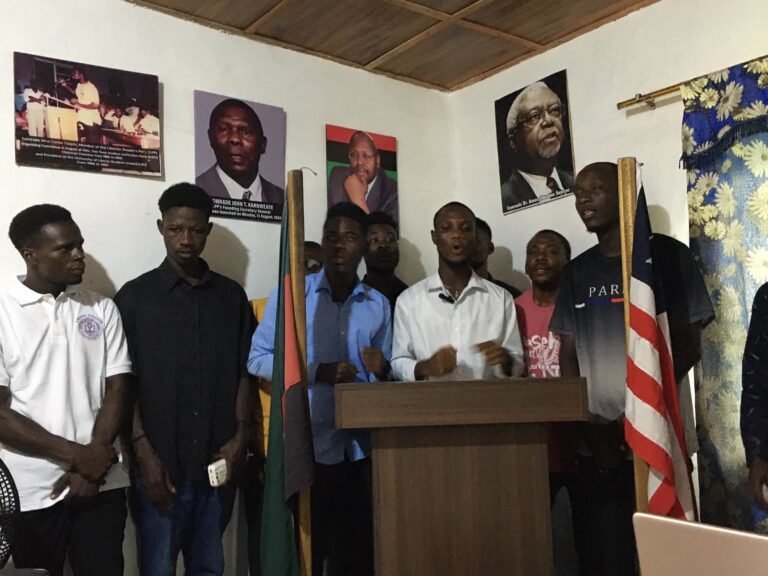
FEBUTAL called on Liberian contractors, members of the Liberia Chamber of Technical Services (LICTECHS), and construction professionals to formally petition the government to ensure that the yellow machines are made accessible to Liberian companies registered with the Ministry of Public Works.
According to the federation, this policy shift would generate employment across all 15 counties, stimulate economic activity, and promote infrastructure development driven by Liberian expertise and labor.
FEBUTAL reaffirmed its commitment to lawful and constructive advocacy. The organization recalled that in October 2003, hundreds of its members peacefully petitioned the House of Representatives to demand increased employment opportunities for Liberians on government projects and to challenge the marginalization of smaller domestic contractors.
“The development of Liberia must be led by Liberians,” the federation stated.
“The strategic use of national assets must prioritize local capacity, employment, and long-term economic sustainability.”
About the Author