By Pewu Y. Sumo
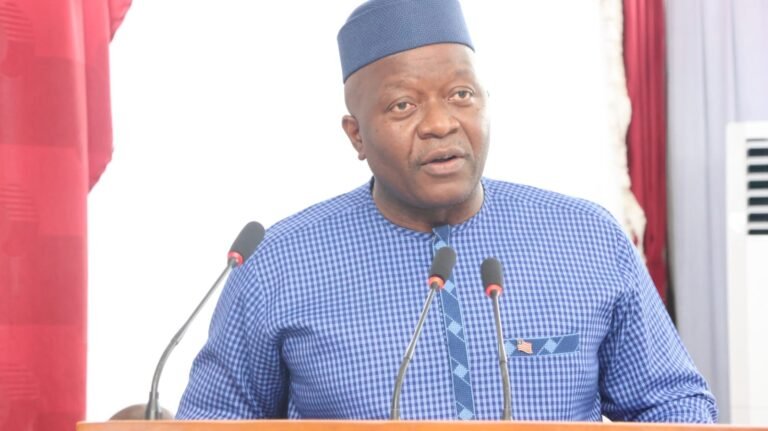
Monrovia – Finance and Development Planning Minister Augustine Kpehe Ngafuan, speaking today at the launch of the Concept Note development for Liberia’s second MCC Compact in Monrovia, challenged the Compact Development Team to adopt a “Usain Bolt mentality” as Liberia seeks to address its energy deficit through potential MCC funding.
The team, hired through what the Minister described as a rigorous and transparent competitive process, is tasked with developing the Concept Note for the Millennium Challenge Corporation (MCC) funding.
Minister Ngafuan underscored that while the private sector is the engine of growth, it cannot run without reliable power. He confirmed that the government has strategically decided to direct potential MCC funding toward addressing the nation’s energy constraints.
“The private sector is the engine of growth, but energy is the engine of the private sector—if we do not solve our energy problem, we will stagnate progress in the private sector,” Min. Ngafuan stated.
“The biggest cost-driver for most businesses is the cost of power,” he noted. “If we make it accessible and reduce the cost, businesses will expand and they will employ. All other interventions will be peripheral if we do not deal with this foundational problem.”
The Minister emphasized that unlocking the economy depends on two pillars: energy and roads. By investing heavily in these areas, the government aims to “leapfrog” the economy and shift the burden of employment from the public sector to a thriving private market.
“Government cannot be the biggest employer,” Ngafuan clarified.
The “Usain Bolt” Mandate
In a rallying cry to the Compact Development Team—led by National Coordinator Mr. Alieu Fuad Nyei—Ngafuan demanded high performance and urgency. He urged the team to use their “knowledge power and thinking ability” to expedite a process that is often slowed by technical formalities.
“When you get into those technical working rooms, we want you to use your knowledge power and your thinking ability,” Ngafuan said. “Some of you are considered the best and brightest in your fields; prove it for Liberia. Fight for Liberia; push as much as you can push.”
Ngafuan further urged the Compact Development Team to work with speed, warning that “we will have impatience with delay.”
“The compact development process has some time regalities, and no matter what you do, there are certain things that must take some time; but there are some things that don’t need to take so much time,” the Finance Minister said.
Acknowledging the high expectations of the Liberian people, he advised the team to listen to the people, even when their work is misunderstood.
“Get ready, listen to the people; sometimes they will not understand all that you understand,” he said, acknowledging that “no matter how much you do, some people will not be happy, but always work to make people happy.”
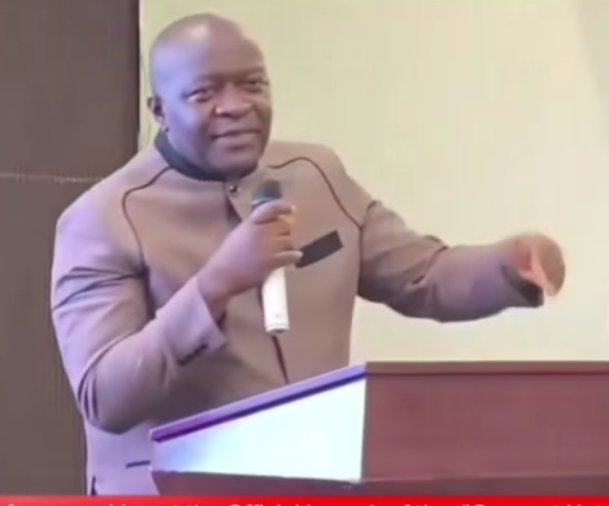
Officially launching the working group tasked with the development of the Concept Note, the Minister of State for Presidential Affairs, Hon. Samuel A. Stevquoah, on behalf of President Joseph Boakai, said the compact grants the government an opportunity to tackle one of the biggest challenges holding back growth—access to reliable and affordable electricity.
He framed the MCC Compact as a vital tool for the administration’s ARREST Agenda, focusing on infrastructure and institutional strengthening.
“The MCC Compact is not just about funding. It is about partnership, discipline, and most importantly, results,” the Minister of State noted.
Min. Stevquoah pleaded for collaboration in the implementation of the MCC Compact, drawing from a simple Liberian proverb: “One hand cannot tie a bundle.” The Minister of State reminded stakeholders in the hall that “success comes from working together, with purpose and with trust.”
“Let us be rigorous in our analysis, united in our approach, and clear about what we are trying to achieve,” Min. Stevquoah concluded.
The Road Ahead
The launch of the Concept Note development marks a critical step in securing actionable projects for MCC funding. The government’s stance is clear: the focus remains on building an economy that works for all Liberians through reliable, affordable electricity.
As the team enters the “technical working rooms,” the mandate from the leadership remains firm—be rigorous, be united, and move with the speed of a sprinter to light up Liberia’s future.
About the Author