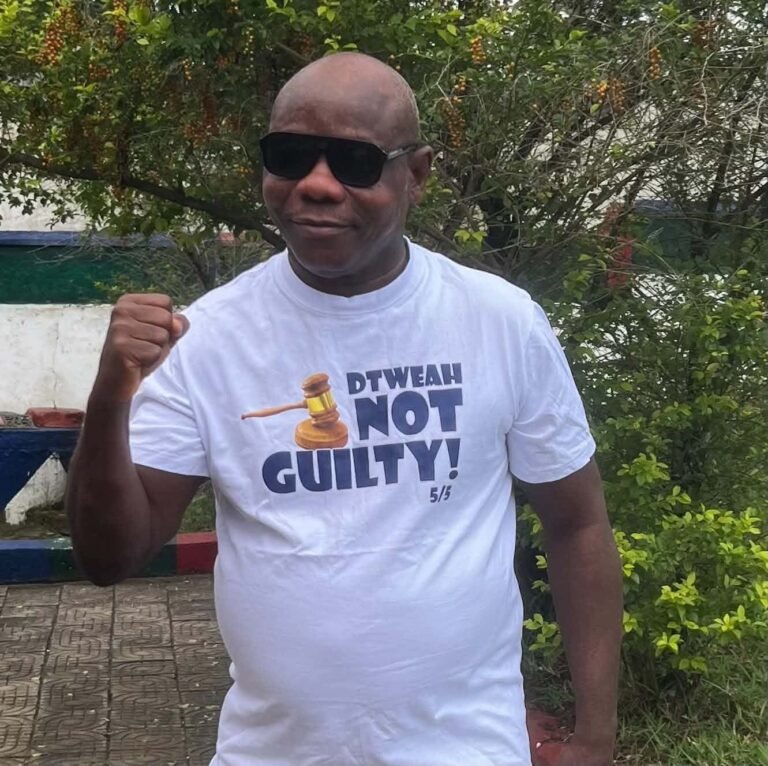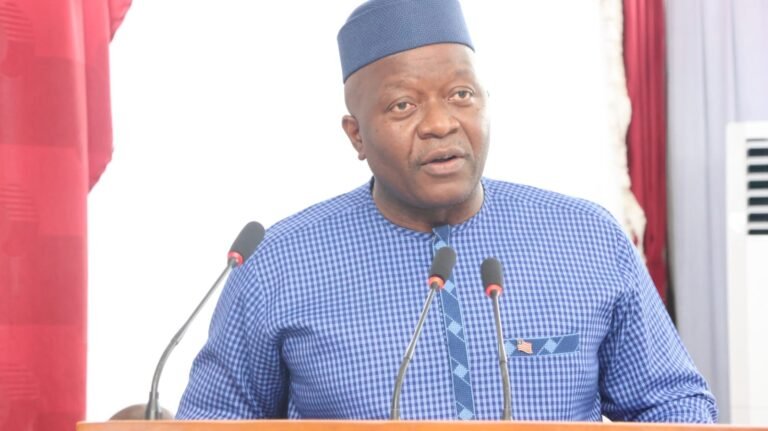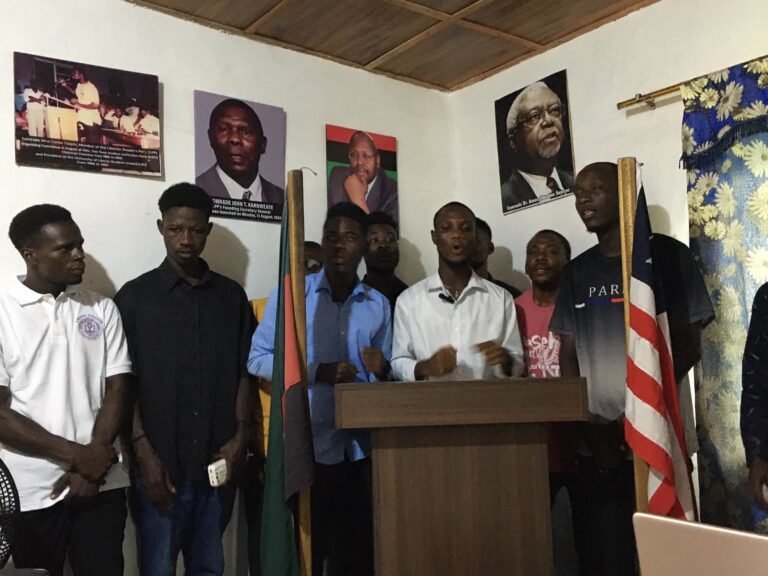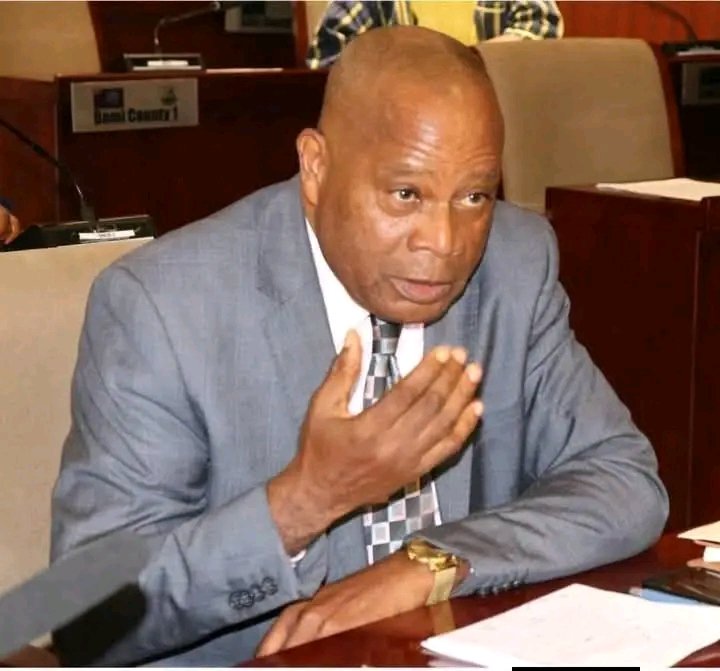
Monrovia Liberia — Sinoe County Senator Augustine Chea has weighed in on the controversial ruling involving former Finance Minister Samuel D. Tweah Jr. and former National Security Advisor Jefferson Kanmoh, arguing that Tweah’s acquittal is legally final while insisting Kanmoh has strong grounds for appeal.
In a detailed legal commentary released following the verdict, Senator Chea stated that public arguments suggesting Tweah could face another trial are “fundamentally mistaken,” maintaining that the former minister’s acquittal is fully protected under Liberia’s double jeopardy laws.
According to the Sinoe County lawmaker, once a properly constituted jury returns a not guilty verdict, the matter is ordinarily settled and cannot be reopened through appellate proceedings involving co-defendants.
“A jury acquittal is normally final,” Chea wrote, citing Section 3.2 of Liberia’s Criminal Procedure Law, which provides that a defendant who has been acquitted cannot later be indicted or retried for the same offense.
The senator further referenced Liberian Supreme Court opinions, including Koffa v. Republic and U.S. Trading Co. v. Johnson-Morris, arguing that double jeopardy protections remain one of the strongest safeguards within criminal law.
Chea emphasized that even if appellate courts later review convictions against other defendants, such proceedings would not ordinarily affect Tweah’s acquittal because he is not before the court as an appellant.
“Once the jury acquitted Tweah, double jeopardy precludes any retrial or appeal by the prosecution. It’s a done deal,” he asserted.
Turning to the conviction of Jefferson Kanmoh for criminal facilitation, Senator Chea argued that prosecutors failed to establish beyond reasonable doubt that the former National Security Advisor knowingly aided any unlawful diversion of the alleged US$6.2 million at the center of the case.
He contended that the prosecution relied heavily on inference rather than direct evidence of criminal intent.
Chea pointed to allegations that Kanmoh assigned a security code to the Financial Intelligence Agency (FIA) and communicated information regarding emergency electoral security funds, arguing that such actions were consistent with his official duties and not proof of criminal conduct.
“Knowledge that emergency funds existed is not equivalent to knowledge that the funds were unlawfully sourced, illegally disbursed, or criminally converted,” the senator argued.
He further maintained that administrative coordination within national security institutions should not automatically be interpreted as felony participation without proof of unlawful intent.
Citing several Supreme Court precedents, including Hans Caperhat Williams v. Republic of Liberia, Nyazee Barway v. Republic of Liberia, Jappa v. Republic of Liberia, and Raynes v. Republic of Liberia, Chea argued that criminal convictions cannot rest on speculation, mere association, or uncorroborated testimony.
According to him, the evidence presented against Kanmoh established only official awareness and administrative involvement tied to emergency security operations during a sensitive electoral period.
He concluded that the conviction “cannot stand” under the constitutional standard requiring proof beyond reasonable doubt and argued that Kanmoh possesses “a compelling and well-founded appeal.”
The ruling in the high-profile economic sabotage case continues to generate intense public debate across Liberia, with legal analysts, political observers, and civil society groups divided over both the acquittals and convictions handed down by the jury.
About the Author