The Global Environment Facility (GEF) has committed US$3.1 million to support the Government of Liberia’s efforts to strengthen forest conservation, improve land governance, and enhance livelihoods in Northwest Liberia through the Guinean Forests Integrated Program (GFIP).
The initiative is being implemented by the Environmental Protection Agency (EPA) and the Forestry Development Authority (FDA), in partnership with the Society for the Conservation of Nature of Liberia (SCNL), Partners in Development (PADEV), The Nature Compact (TNC), and other stakeholders.
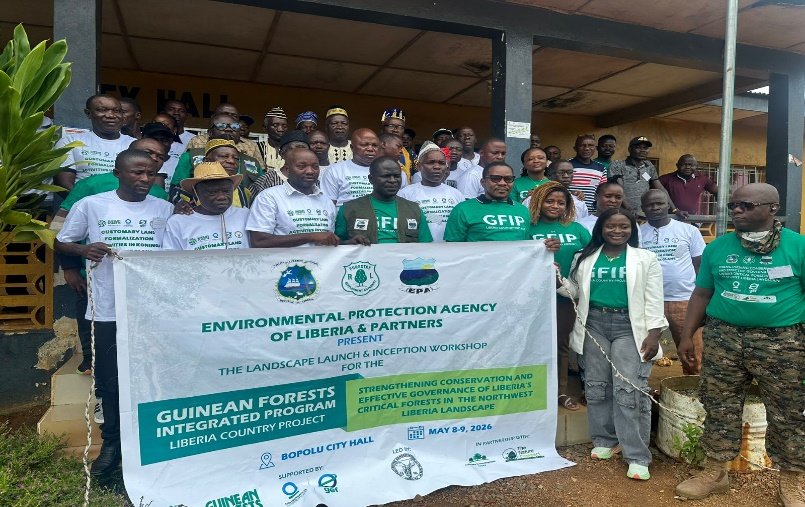
The commitment was reaffirmed during the official landscape launch and inception workshops of the GFIP Child Project held in Voinjama, Lofa County, and Bopolu, Gbarpolu County. The project, titled “Strengthening Conservation and Effective Governance of Liberia’s Critical Forests in the Northwest Liberia Landscape,” seeks to improve ecosystem services while creating sustainable economic opportunities for communities living within and around critical forest ecosystems.
The GFIP is part of a broader regional conservation initiative covering Liberia, Sierra Leone, Guinea, Guinea-Bissau, and Togo. The program promotes a landscape-wide approach to forest governance, biodiversity conservation, watershed protection, and climate resilience across the Guinean Forest ecosystem, one of the world’s most important biodiversity hotspots.
Opening the event, representatives of local government welcomed participants and emphasized the importance of collaboration among communities, government institutions, and conservation partners. Project officials stressed that local communities remain central to the success of the initiative, particularly in the areas of customary land rights, forest governance, and sustainable resource management.
Speaking on behalf of the EPA, Acting Deputy Executive Director Anthony Kollie described the project as a major opportunity for communities to strengthen ownership of their natural resources while benefiting from sustainable development interventions. He noted that community participation would be critical to ensuring successful implementation and long-term conservation outcomes.
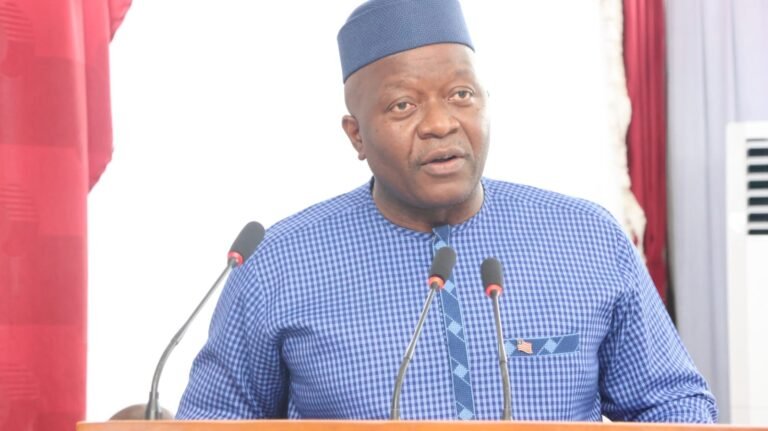
Lofa County Superintendent J. Lavalah Massaquoi called on beneficiaries to view the project as a transformative development opportunity rather than a short-term financial benefit. He encouraged residents to actively participate in conservation-friendly livelihood activities such as livestock production, cooperative development, and sustainable agriculture. According to him, these interventions will help reduce pressure on forest resources while improving household incomes and food security.
The Superintendent also urged implementing partners to focus on meaningful capacity-building programs that equip communities with practical skills and knowledge that will remain useful long after the project concludes. Similar messages of support were echoed by county authorities from Gbarpolu, Grand Cape Mount, and Bomi Counties, as well as representatives of the FDA, Ministry of Agriculture, Liberia Land Authority, and traditional leaders.
Providing a technical overview, GFIP Technical Lead Sylvia Diamond Dorbor disclosed that the project is supported by US$3.1 million from the GEF and will focus on protecting critical forest landscapes in Northwest Liberia, particularly the Gbarlo area in Lofa County, formerly known as the Foya Proposed Protected Area. She explained that one of the project’s flagship interventions is Customary Land Formalization, which will support communities in securing legal ownership of their customary lands at no cost.
Under the land formalization process, communities will receive technical support to complete boundary harmonization, governance establishment, land surveys, and deed registration. Upon completion, communities will receive verified legal deeds recognizing their ownership rights. Project officials emphasized that secure land tenure will strengthen local governance, reduce land-related conflicts, and encourage responsible management of natural resources.
The project will be implemented through five major components: the establishment and effective management of protected areas; promotion of climate-resilient and conservation-friendly livelihoods; strengthening transboundary watershed and forest landscape management; capacity building and knowledge sharing; and a comprehensive monitoring and evaluation framework. These components are designed to deliver both environmental and socio-economic benefits to participating communities.
Participants also received presentations on the project’s Accountability and Grievance Mechanism, which provides a transparent process for reporting and addressing concerns during implementation. Organizers stressed that accountability, inclusion, and community participation will remain guiding principles throughout the project lifespan.
The launch concluded with strong commitments from government institutions, development partners, traditional leaders, and local communities to work together in safeguarding Liberia’s forests while improving livelihoods. Stakeholders expressed confidence that the GEF-funded initiative will contribute significantly to biodiversity conservation, climate resilience, sustainable land governance, and community development in Northwest Liberia.
About the Author