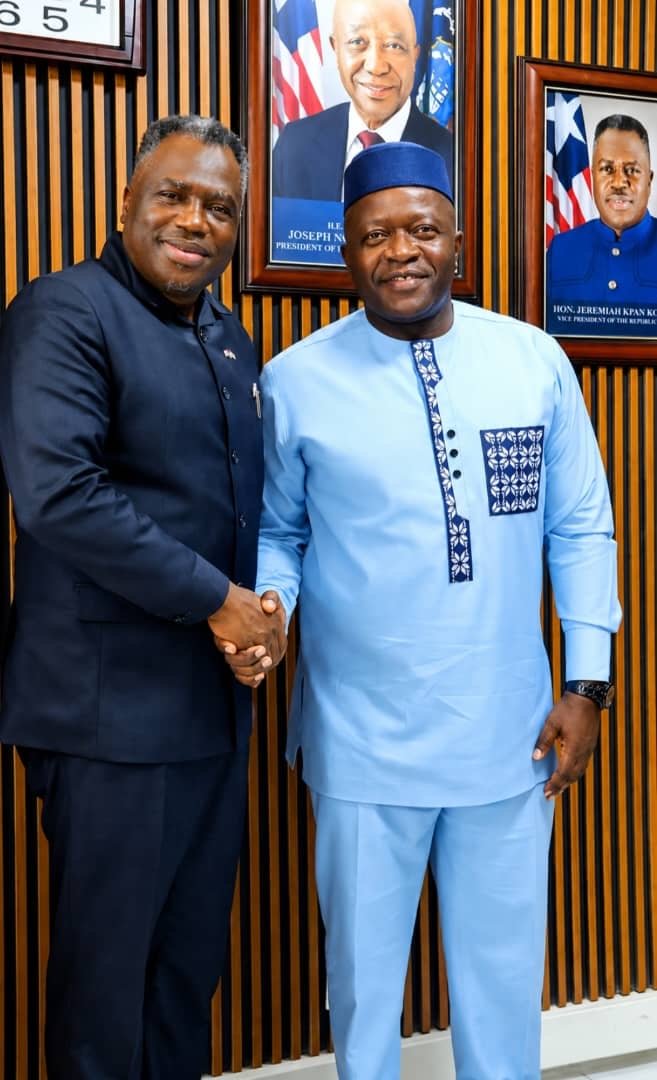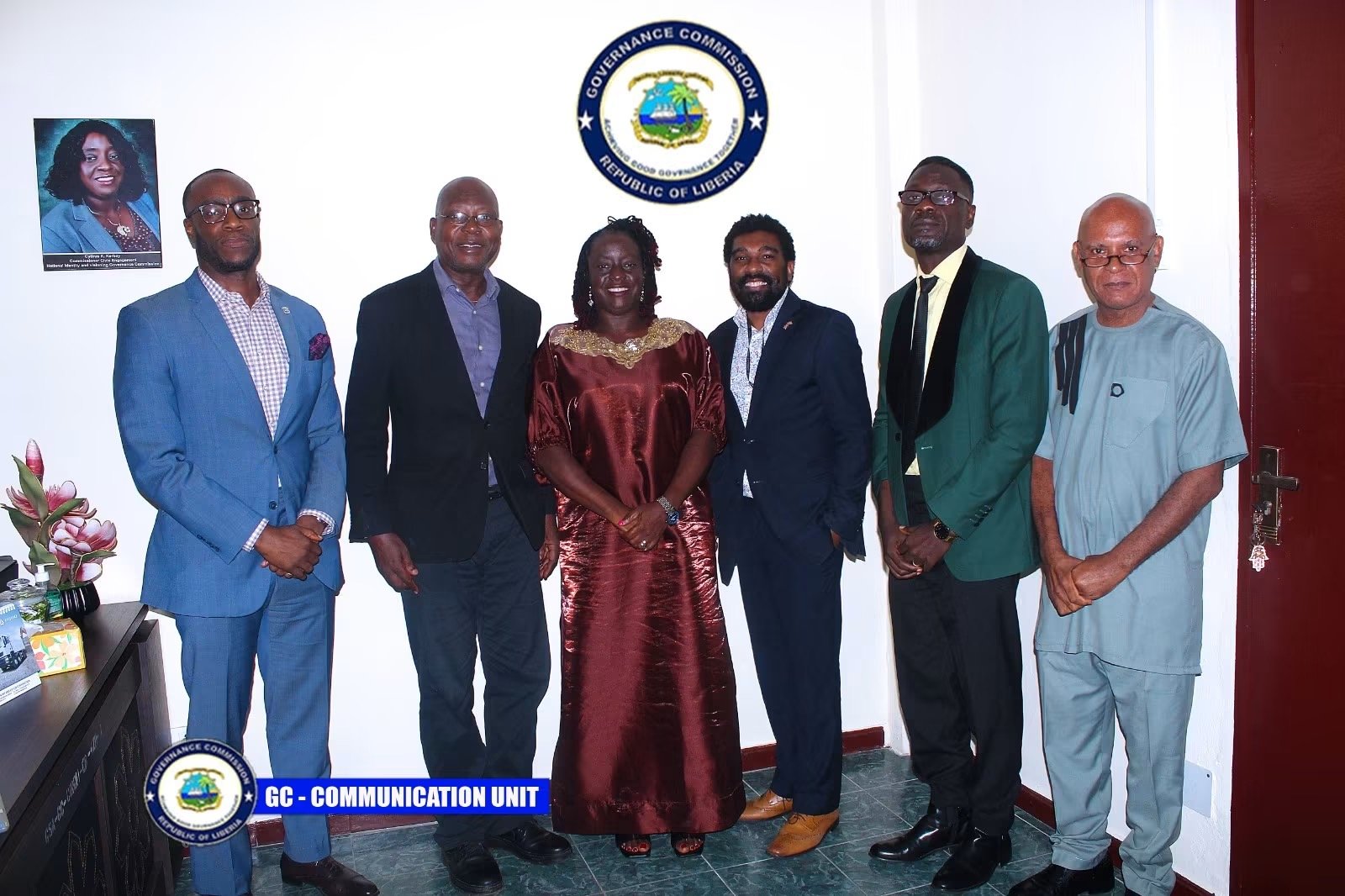
MONROVIA, Liberia — The Governance Commission (GC) met with representatives from the United States Embassy in Monrovia on August 12, 2026, to discuss sustainable, policy-driven solutions to the growing solid waste management challenges affecting Monrovia and nearby communities.
The bilateral discussions, hosted at the Commission’s offices in Sinkor, brought together GC leadership and Jullion Cooper, Head of the Political and Economic Section at the U.S. Embassy.
Public-Private Partnerships and Health Concerns
During the meeting, Acting GC Chairman Prof. Alaric Tokpa emphasized the Commission’s recent engagement with the Liberia Chamber of Commerce to explore Public-Private Partnerships (PPPs) as a viable model for urban waste disposal. Tokpa stressed that coordinated international and local support is vital to establishing a permanent cleanup strategy for the capital.
Echoing these concerns, U.S. Embassy representative Jullion Cooper pointed out the gap between waste generation and collection in the capital. He noted that while Monrovia generates massive volumes of solid waste daily, only a small fraction reaches the official landfill in Whein Town.
Cooper warned that widespread illegal dumping across the city presents severe public health and environmental hazards, increasing exposure to waterborne and vector-borne diseases such as typhoid and malaria.
“Illegal dumping occurs throughout various parts of Monrovia, creating serious public health and environmental risks… [however], significant economic potential lies within the waste management sector, particularly its capacity to generate employment,” said Jullion Cooper, Head of Political & Economic Section, U.S. Embassy.
Moving Away from Donor Dependency
Commission leaders highlighted the need to transform waste collection from an expensive municipal burden into a self-sustaining enterprise.
On the policy front, Commissioner Cytirus Kerbay confirmed that the Governance Commission is collaborating with the Monrovia City Corporation (MCC) to translate research into actionable, policy-backed municipal solutions. To ensure a structured approach, Commissioner Mathew B. Kollie Jr. advised establishing a unified framework among key public institutions before onboarding private investors.
Meanwhile, GC Executive Director Jallah C. Kesselly emphasized financial viability, calling for a decisive shift away from donor-dependent funding models toward a profitable framework that naturally attracts private capital and reduces the financial strain on the government.
To translate the discussion into concrete action, the Governance Commission and the U.S. Embassy outlined key next steps, including refining the core waste management concept note and reviewing Liberia’s current PPP regulatory framework, conducting comprehensive stakeholder consultations across public and private sectors and launching a localized pilot waste project in a selected Monrovia neighborhood to test the financial and operational viability of the model before scaling it citywide.
The Governance Commission reiterated that this initiative aligns with its broader mandate to enhance public service delivery and drive sustainable governance reforms across Liberia.
Credit: Governance Commission
About the Author