By Pewu Y. Sumo
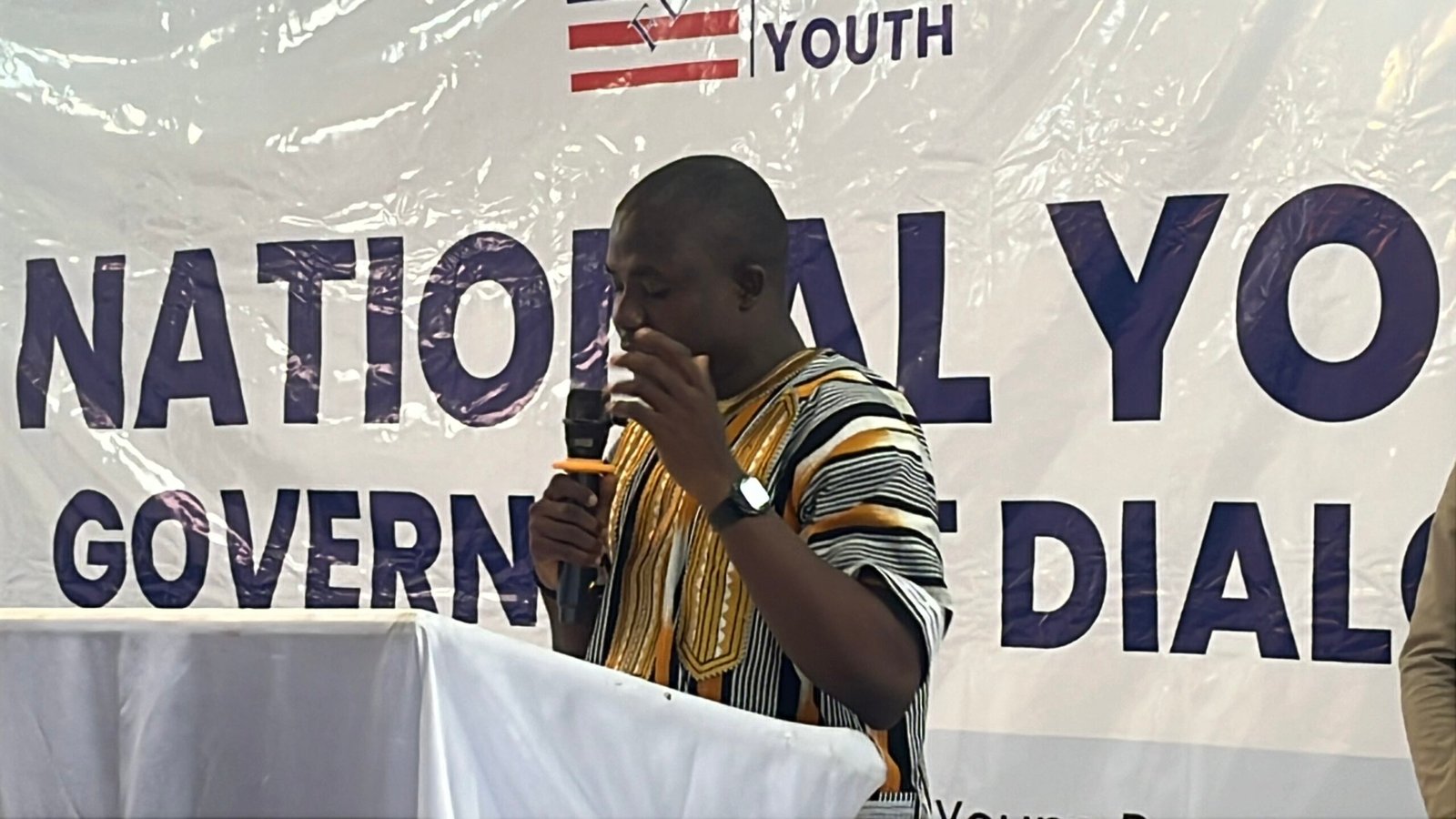
MONROVIA — In observance of International Youth Day, the Federation of Liberian Youth (FLY) today convened the National Youth–Government Dialogue at Monrovia City Hall, focused on bridging gaps and rebuilding trust between the nation’s youth population and public institutions.
Centered on the theme “Closing the Gap: Building Trust Between Young People and Government,” the event assembled youth representatives, civil society advocates, and government leaders to transform civic engagement from sporadic confrontation into structured policy dialogue.
In a direct call for systemic governance reform, Ernest Duku Jallah, President of FLY, declared that the era of treating young Liberians as passive observers in national decision-making must end.
Speaking at the opening of the National Youth-Government Dialogue to mark International Youth Day 2026, Jallah framed the gathering not as a symbolic ceremony, but as a working session designed to enforce institutional accountability across Liberia’s 15 counties.
Root Cause of Youth Crises
Addressing government ministers, state representatives, and youth delegates, Jallah argued that Liberia’s recurring socioeconomic crises—including soaring youth unemployment driving perilous irregular migration, community mob violence, and a lack of career pathways for graduates—are interconnected manifestations of a single root cause.
“None of these are separate problems. They are one problem, wearing different faces: a broken relationship between young people and the institutions meant to serve them,” the FLY President was quoted as saying.
Jallah noted that while past advocacy campaigns and billboard demands addressed immediate symptoms, long-term stability requires treating the root cause: systemic exclusion and institutional distrust.
Institutional Engagement Starting with Infrastructure
The Dialogue initiated direct working sessions between youth leaders and state entities, beginning with the National Road Fund.
Discussions focused on how infrastructure policies directly dictate young people’s mobility and access to education, healthcare, markets, and employment.
Jallah insisted that closing the gap between youth and state institutions requires actionable timelines, named responsibilities, and public accountability rather than generic communiqués or photo opportunities.
Institutionalizing Sustained Dialogue
Highlighting that young Liberians comprise the majority of the national population, FLY emphasized that youth participation must become a permanent, expected feature of how Liberia operates. Jallah concluded by calling on both government partners and young citizens across all 15 counties to earn trust through repeated, honest engagement and kept promises.
Meanwhile, during a panel session, the Chief Executive Officer and Manager of the National Road Fund (NRF), Hon. Joseta Neufville-Wento, urged young Liberians to actively seek out and capitalize on existing state resources rather than viewing government institutions as inaccessible.
Highlighting education and skills development as primary pathways for youth advancement, Hon. Neufville-Wento pointed directly to government-funded and institutional scholarship programs designed to build technical capacity among Liberia’s young population.
Background: “Up to Us”
The Federation of Liberian Youth’s (FLY) “Up to Us” National Youth Agenda serves as a multi-year strategic framework designed to shift young Liberians from passive beneficiaries of aid to active co-architects of national governance, economic policy, and peacebuilding.
Rooted in the principle that Liberia’s recurring socioeconomic crises stem from an institutional disconnect, the agenda establishes key priority pillars, core policy objectives, and execution mechanisms.
About the Author