Monrovia, Liberia — Liberia’s police force continues to be viewed as the country’s most corruption-prone public institution, according to the latest State of Corruption Report (SCORE 2025) released by the Center for Transparency and Accountability in Liberia (CENTAL), even as public perception of corruption nationwide shows signs of improvement.
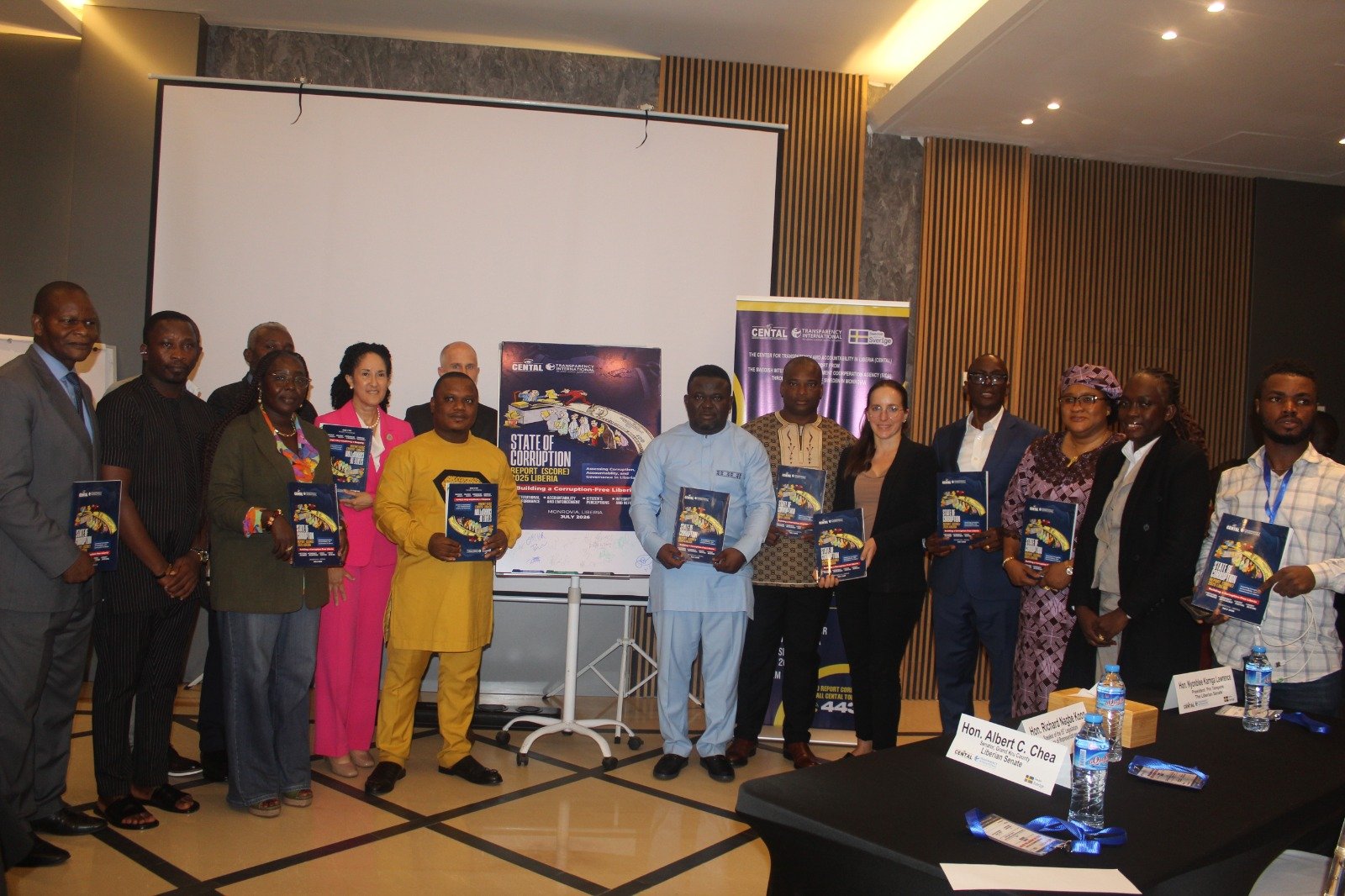
The report, launched on Wednesday, July 8, 2026, presents a mixed assessment of Liberia’s anti-corruption efforts. While fewer citizens believe corruption is as widespread as in previous years, concerns remain high about corrupt practices within institutions that provide critical public services, including law enforcement, healthcare, the judiciary, and education.
Findings from the nationwide survey show that 59 percent of respondents rated corruption as high in 2025, down from 83 percent in 2024. The decline suggests growing public confidence in ongoing governance reforms and anti-corruption initiatives, although corruption continues to be regarded as a major national challenge.
The survey also found improved public confidence in the government’s commitment to fighting corruption. Twenty-seven percent of respondents rated the government’s commitment as high, compared with 20 percent in 2024 and 12 percent in 2023. Meanwhile, the percentage of respondents who viewed the government’s efforts as poor declined from 48 percent to 25 percent, while 37 percent described the commitment as moderate.
Despite these encouraging trends, the report indicates that corruption remains deeply rooted in key public institutions.
The Liberia National Police (LNP) emerged once again as the institution most vulnerable to corruption, with 75 percent of respondents identifying the police as the public institution where corrupt practices are most common, an increase from 71 percent recorded in the previous survey.
The healthcare sector ranked second, with public concern over corruption increasing from 46 percent in 2024 to 57 percent in 2025. The report attributes the rise to growing public concerns about unethical practices affecting the delivery of health services.
The judiciary and education sector were also identified as areas where corruption continues to undermine public confidence, highlighting the need for stronger oversight and institutional reforms.
CENTAL noted that while national perception of corruption appears to be improving, many Liberians continue to encounter or observe corrupt practices in institutions responsible for justice, public safety, education, and healthcare.
The organization warned that corruption continues to weaken public institutions, erode trust in government, and hinder national development. It called on the Government of Liberia and key integrity institutions, including the Liberia Anti-Corruption Commission (LACC), the General Auditing Commission (GAC), the Financial Intelligence Agency (FIA), and the Ministry of Justice, to strengthen enforcement, promote transparency, and accelerate reforms aimed at reducing corruption.
CENTAL also encouraged citizens, civil society organizations, development partners, and the media to remain actively engaged in promoting integrity and holding public officials accountable.
The SCORE 2025 report was prepared under CENTAL’s National Integrity Building and Anti-Corruption Program (NIBA) with financial support from the Swedish International Development Cooperation Agency (SIDA).
The study drew on nationwide surveys, desk reviews, media monitoring, key informant interviews, and field research conducted between November 2025 and March 2026, involving 772 respondents across nine counties.
About the Author