By Pewu Y. Sumo
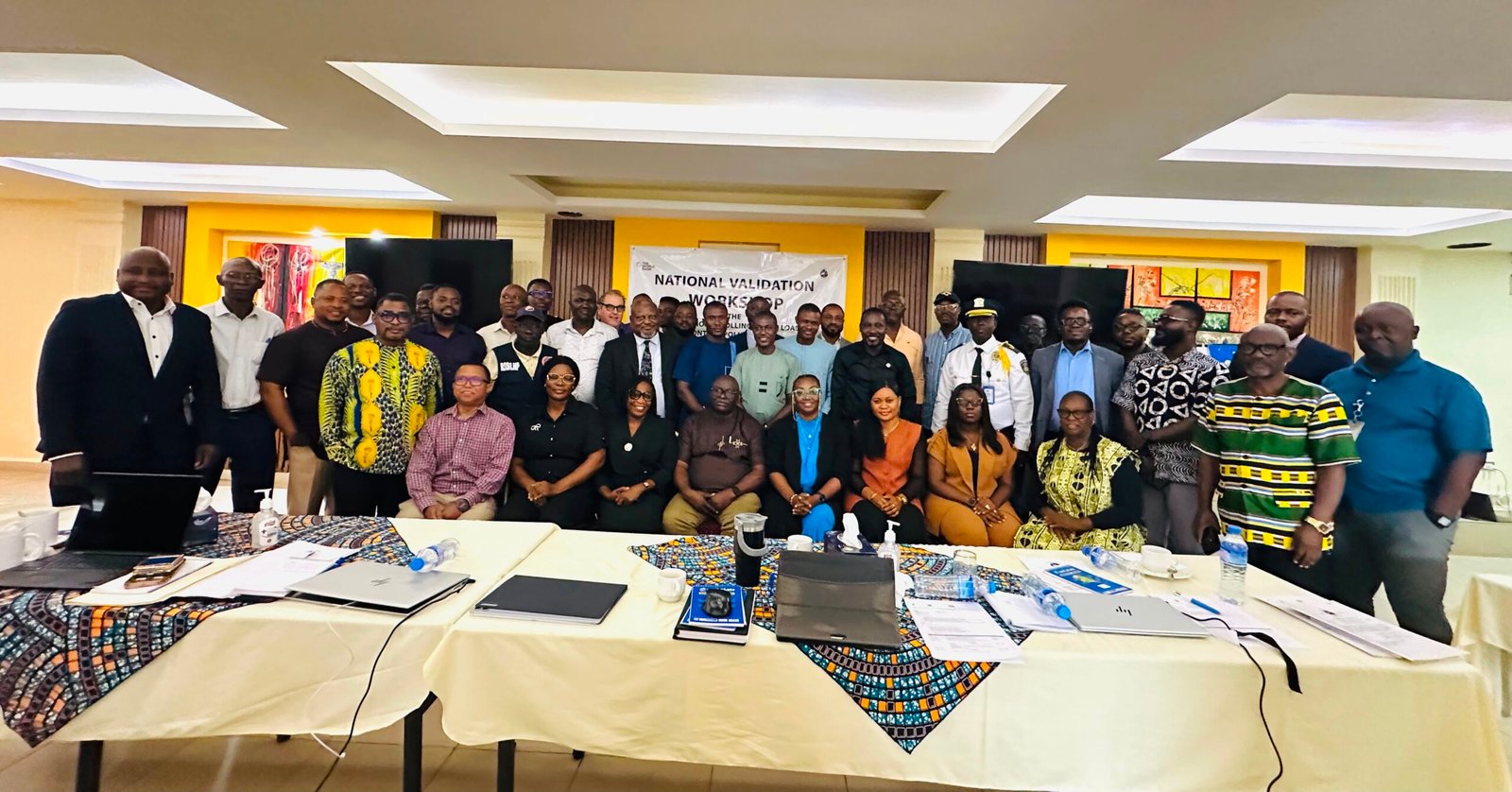
Cape Hotel, Monrovia, Liberia — Key players in Liberia’s transport including the Ministry of Transport (MoT) and the National Road Funds (NRF) have successfully concluded a pivotal two-day validation workshop in Monrovia. The gathering finalized the draft National Tolling and Axle Load Control Policy and Practical Guidance Note, marking a major leap forward in the country’s quest to protect and sustainably finance its road infrastructure.
Supported by the World Bank, the joint initiative led by the Ministry of Transport (MoT), the Ministry of Public Works (MPW) and the National Road Fund (NRF) of Liberia seeks to establish a permanent regulatory and economic framework to manage the country’s heavily trafficked corridors.
Over the last decade, Liberia has made substantial investments in upgrading its key regional corridors, however, the lack of strict enforcement on vehicle weight limits has historically led to rapid pavement deterioration.
At the core of the newly validated policy are the Axle Load Control, which will establish dedicated weighbridge stations along key transport routes to prevent heavy-duty freight trucks from carrying cargo exceeding regional limits and the National Tolling which aims to develop a structured cost-recovery mechanism by placing toll plazas on high-volume routes.
The generated revenues will go directly to the National Road Fund to secure a continuous, predictable budget for road maintenance.
“We cannot continue to invest millions in constructing roads only to watch them degrade prematurely due to overloaded vehicles,” remarked Mr. David D. Wounuah, one of the technocrats behind the initiative. “This validation marks our commitment to turning roads into self-sustaining assets.”
During day two of the workshop, participants pushed for cashless payment service at tolling centers for a more reliable and transparent means of handling revenues.
The practical guidance note validated during the session aligns Liberia with the Economic Community of West African States (ECOWAS) Supplementary Act on Axle Load Control. This alignment is crucial for facilitating cross-border trade along the Trans-West African Coastal Highway, ensuring that freight transport remains seamless yet regulated.
Rather than relying on criminal penalties, the draft framework prioritizes decriminalized administrative fines for overloading, ensuring that compliance is met with commercial accountability rather than prolonged legal battles.
Following the validation of this draft policy and the practical guidance note, the documents will be submitted to the cabinet and legislature. Once formalized into law, the Ministry of Transport and the National Road Fund will begin identifying private-sector partners (through Public-Private Partnerships) to deploy digital e-tolling systems and automated weighbridge networks across Liberia.
About the Author