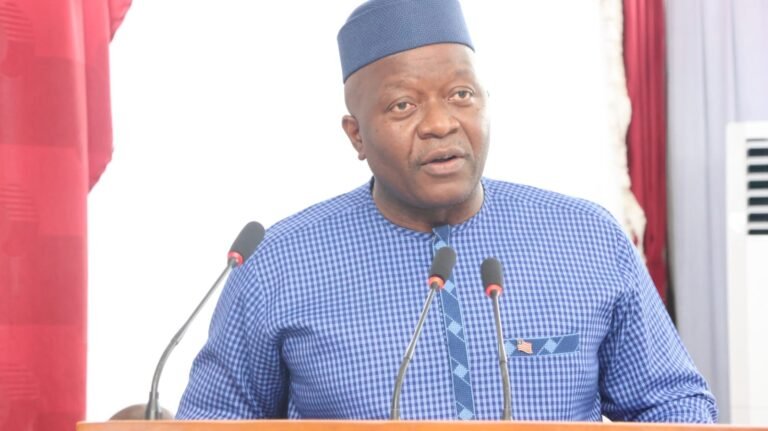
Monrovia, Liberia — Finance and Development Planning Minister, Hon. Augustine Kpehe Ngafuan, has called for stronger accountability, faster project implementation, and a shift in national mindset.
Speaking at the opening of the Government and AfDB 2026 joint review session of the AfDB Country Portfolio Performance Review (CPPR), a day long event, Minister Ngafuan stressed that development projects funded by international partners should not be seen as charity, but as investments owned by the Liberian people
“These are not just partner projects; they are Liberian people’s projects,” he said. “When the projects succeed, the Liberian people succeed. When they fail, the Liberian people fail.
He emphasized that most of the projects under review are financed through concessional loans that must be repaid, cautioning against any sense of detachment from externally funded initiatives.
“Whether it takes 30 or 40 years, we will repay,” he noted, adding that Liberia is already committing significant portions of its national budget to servicing debts owed to institutions such as the World Bank and the AfDB.
According to the Finance Minister, Liberia is expected to pay approximately $25 million to the World Bank and no less than $5 million to the AfDB in 2026.
Liberia’s AfDB-funded portfolio, valued at around $350 million, covers critical sectors including roads, agriculture, and energy. While acknowledging progress—particularly a drop in underperforming projects from 47 percent to about 32 percent—Minister Ngafuan said the figure remains higher than desired.
“We must work to bring it within acceptable limits,” he said, pointing to ongoing delays in project startup, legislative ratification, and meeting effectiveness conditions.
A key focus of his remarks was the need for accountability across all levels of project execution. He urged ministries, implementing agencies, and project managers to take full responsibility for delays and inefficiencies.
“We will all be held accountable for delays and problems,” he warned.
Minister Ngafuan also proposed the introduction of performance-based incentives for project managers and technical staff, arguing that aligning personal motivation with project timelines could significantly improve results.
“Let’s incentivize performance,” he said. “Those who deliver on time should be rewarded, while those who do not should face consequences.”
He further called for stricter handling of “ineligible expenditures”—funds deemed improperly used—insisting that responsibility must be traced to individuals rather than broadly assigned to institutions or projects.
“Let there be consequences,” he stressed. “When responsibility is clearly assigned, accountability improves.”
In his opening remarks, AfDB Country Manager Reese Mwasambili described the CPPR as more than a routine exercise, calling it “a moment of collective reflection and renewed commitment.”
He explained that the review is intended to take a deep, project-by-project look at performance, identify implementation challenges, and agree on concrete, time-bound solutions.
“We must be honest about what is working and what is not,” Mwasambili said, noting that many infrastructure projects initially designed to last two to five years often stretch to eight or nine years, reducing value for money.
The overarching goal of the CPPR, he added, is to accelerate development results and improve the quality of life for Liberians.
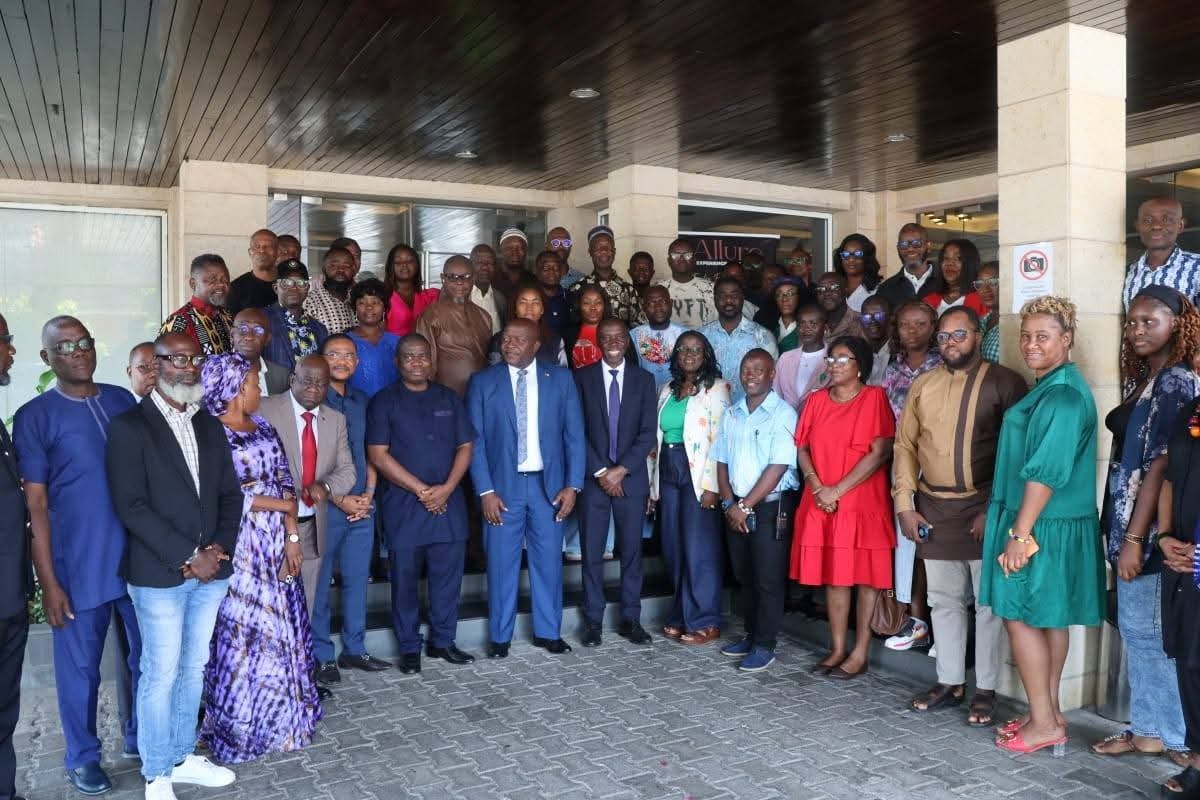
The one-day review brings together government officials, AfDB staff, project coordinators, and implementing agencies to assess the performance of 17 ongoing projects and chart a path toward more efficient delivery.
The session is expected to conclude with practical, action-oriented recommendations aimed at strengthening Liberia’s development portfolio and ensuring that projects deliver tangible benefits to citizens.
About the Author