By Desmond Gbeleh Wion/contributing writer
Monrovia, Liberia — The emergence and growing visibility of Israel United in Christ (IUIC) in Liberia has ignited intense theological debate, raising broader questions about religious doctrine, identity, and social cohesion within one of West Africa’s most religiously diverse societies.
With newly established branches in Monrovia and Grand Gedeh County, the group’s teachings which are delivered through interviews, street outreach, and organized gatherings have drawn both curiosity and concern among religious leaders, scholars, and the general public.
Origins and Global Establishment of IUIC
IUIC is part of the wider Black Hebrew Israelite movement, a loosely connected set of religious groups that emerged in the late 19th and early 20th centuries, primarily in the United States. These movements generally assert that people of African descent, along with certain other minority groups, are the true descendants of the biblical Israelites.
IUIC itself was formally established in 2003 in the United States, under the leadership of Bishop Nathanyel Ben Israel. Since its founding, the organization has grown into a structured international body with branches across:
The United States (its largest base), The United Kingdom, several countries in West Africa, including Ghana and Nigeria, Parts of the Caribbean and some Selected regions in Europe and Latin America.
Unlike loosely organized sects, IUIC operates under a centralized male leadership structure with a clear chain of command, standardized teachings, and coordinated outreach strategies.
Purpose Vision and Mandate
IUIC describes its core mission as the restoration of what it considers the true identity of the biblical Israelites. Its broader objectives include:
Religious Reawakening
The group seeks to “awaken” people, particularly those of African descent—to what it interprets as their biblical heritage.
Scriptural Reinterpretation
IUIC emphasizes a strict and literal reading of the Bible, often diverging from mainstream Christian interpretations. Its teachings heavily draw from the Old Testament while reinterpreting New Testament doctrines.
Community Discipline and Moral Code
Members are expected to adhere to structured behavioral guidelines, including dress codes, dietary laws, and observance of specific commandments.
Global Outreach
Through organized street preaching, digital media, and public engagement, IUIC aims to expand its message worldwide.
Core Values and Belief System
IUIC’s doctrine is built around several defining principles:
Identity-Based Theology : The belief that biblical Israelites were Black and that their descendants exist today among African and diaspora populations.
Commandment Observance : Emphasis on strict adherence to the Ten Commandments and other Old Testament laws.
Separation from Mainstream Christianity : Rejection of certain widely accepted Christian doctrines, including interpretations of universal salvation.
Structured Authority : A hierarchical leadership system that governs doctrine and practice across all branches.
IUIC Teachings and Controversial Claims in Monrovia
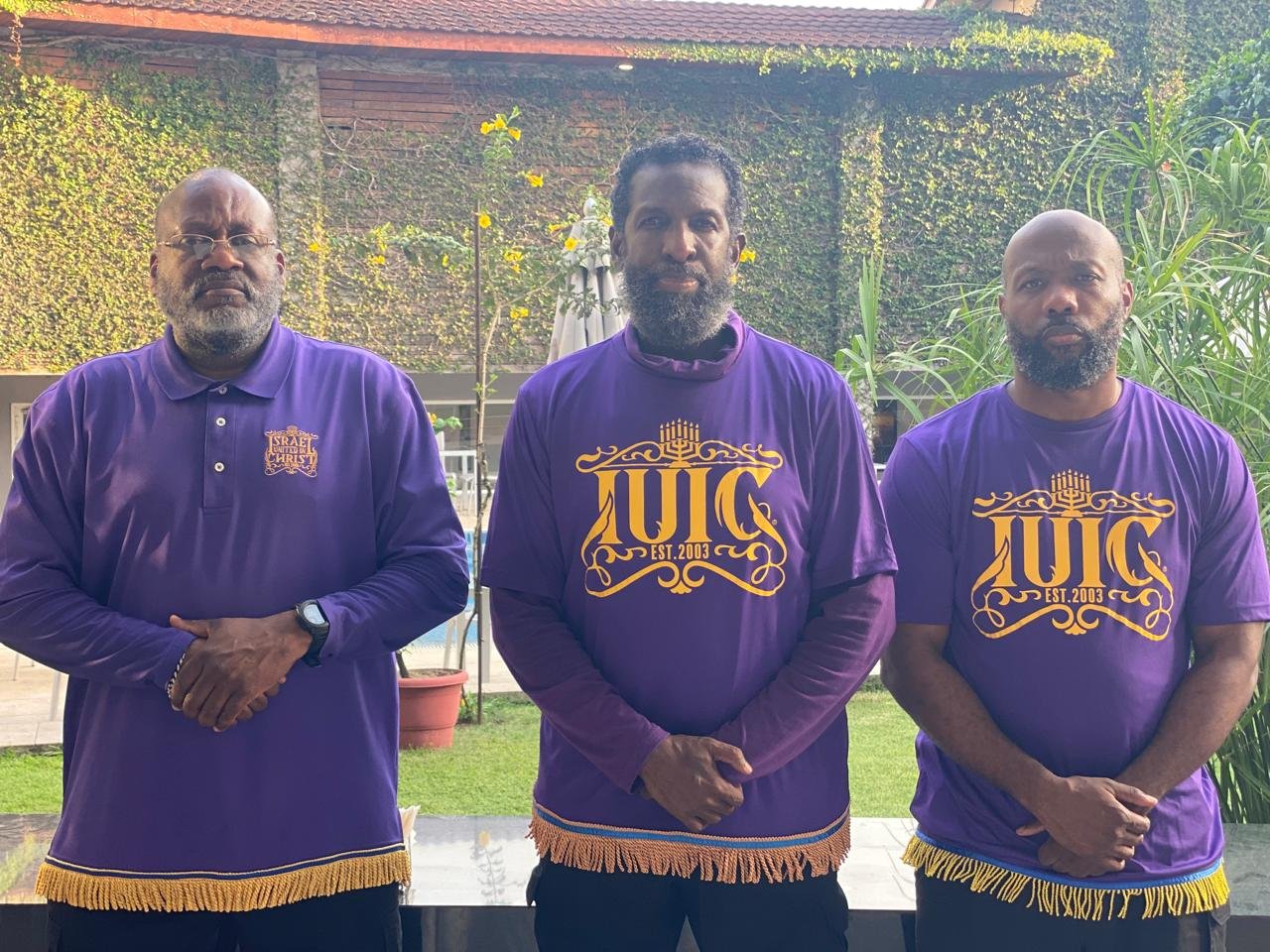
During a recent Media engagement in Mamba Point, Monrovia, IUIC leaders presented doctrinal positions that have since fueled public discourse.
Bishop Nathanyel asserted that God, Jesus Christ, angels, and the biblical Israelites are Black, framing this as a correction to what he described as centuries of misrepresentation.
He also challenged the widespread Christian practice of tithing, arguing—based on his interpretation of the Book of Malachi—that modern churches have misapplied biblical teachings for financial gain.
Other leaders, including Bishop Yawasap, went further by criticizing established denominations. He accused: The Roman Catholic Church, The Baptist, The Methodist, The Zion, The Pentecostal etc, of what he described as historical moral failures and misrepresentation of God’s pure words.
He moreover accused The Methodist Church of accommodating practices he described as inconsistent with biblical laws.
Meanwhile, Deacon Issac introduced theological interpretations rejecting the notion of universal salvation, asserting instead that Christ’s sacrifice was intended for a specific group rather than all humanity.
Differences from Mainstream Christianity
Religious scholars in Liberia note that IUIC’s teachings diverge sharply from widely held Christian beliefs in several key areas:
Salvation
Mainstream Christianity teaches that salvation is available to all who believe in Jesus Christ. IUIC, however, teaches a more restricted interpretation that explains on how Salvation is only for the Israelites decents.
Equality
Traditional Christian doctrine emphasizes spiritual equality before God. IUIC teachings, as expressed by its leaders, challenge this notion, stating that everyone is not equal in the sight of God and Christ did not die for all sins.
Biblical Interpretation
IUIC adopts a literalist and identity-centered interpretation of scripture, often rejecting centuries of theological scholarship, though they believe in both the old and new testament of the holy Bible.
Public Reaction in Liberia
The group’s arrival has generated mixed reactions:
Supporters view IUIC as offering a bold reexamination of history, identity, and faith.
Critics warn that some teachings could foster division in a country known for its religious tolerance.
Liberia has long maintained a relatively harmonious coexistence between Christians and Muslims, with Christianity—particularly Protestant denominations—playing a dominant role in national life.
Religious observers caution that introducing highly exclusivist doctrines into such an environment could challenge that balance.
Legal and Institutional Context
Like all religious organizations operating in Liberia, Bishop Nathanyel announced IUIC’s legal status, stating they are in full compliance under the laws of the land. However, IUIC is still expected to maintain compliance with all national regulations, including registration and oversight requirements typically coordinated through government institutions such as the Ministry of Internal Affairs.
Failure to maintain these requirements could raise questions about legitimacy, accountability, and operational transparency.
IUIC Outreach Strategy
IUIC is widely recognized for its distinctive outreach style, which includes: Organized street preaching campaigns, use of uniformed attire to establish identity and discipline, heavy reliance on social media and digital platforms, structured teaching sessions and internal training, organized gathering, media engagements etc.
This approach has helped the group expand rapidly, particularly among younger audiences seeking alternative religious narratives.
Presence in Africa and Expansion into Liberia
IUIC’s expansion into Africa reflects a broader strategy of reconnecting with what it considers the historical roots of biblical Israelite identity.
In Liberia, the establishment of branches in Monrovia and Grand Gedeh signals a growing footprint.
Analysts suggest that the country’s deeply religious population and openness to new denominations make it a fertile ground for such movements.
Concerns from Religious Scholars
Experts in theology and religious studies highlight several concerns:
Doctrinal Polarization : The potential for sharp divisions between IUIC followers and traditional Christian communities.
Social Cohesion : Risks associated with teachings perceived as exclusionary
Youth Influence : The appeal of identity-based narratives among younger populations.
However, scholars also emphasize that freedom of religion remains a fundamental right, and that theological debate is not uncommon in evolving religious landscapes.
Balancing Freedom and Responsibility
Liberia’s Constitution guarantees freedom of worship, allowing groups like IUIC to operate and express their beliefs. At the same time, analysts stress the importance of:
Responsible messaging , Respect for diversity
Adherence to national laws.
These factors are seen as critical in ensuring that religious expression does not lead to social tension.
Meanwhile, as IUIC continues to establish more branches of itself in Liberia, key questions remain:
How will the group integrate into the country’s broader religious ecosystem?
Will its teachings gain widespread acceptance or remain on the fringes?
Can it balance doctrinal distinctiveness with social harmony?
For now, IUIC’s presence has undeniably added a new dimension to Liberia’s religious discourse—one that is likely to evolve as the organization expands its activities and engages further with the public.
Hence, the rise of Israel United in Christ (IUIC) in Liberia underscores the dynamic nature of global religious movements and their ability to transcend borders.
Whether viewed as a spiritual awakening or a source of controversy, the Leadership remains ready for any formal biblical debate with theological scholars. Nothwithstanding, the IUIC’s teachings have already succeeded in one respect: they have sparked a national conversation about faith, identity, and the interpretation of scripture.
As that conversation continues, the challenge for Liberia will be to uphold its tradition of religious tolerance while critically engaging with new and emerging belief systems shaping the spiritual landscape.
About the Author