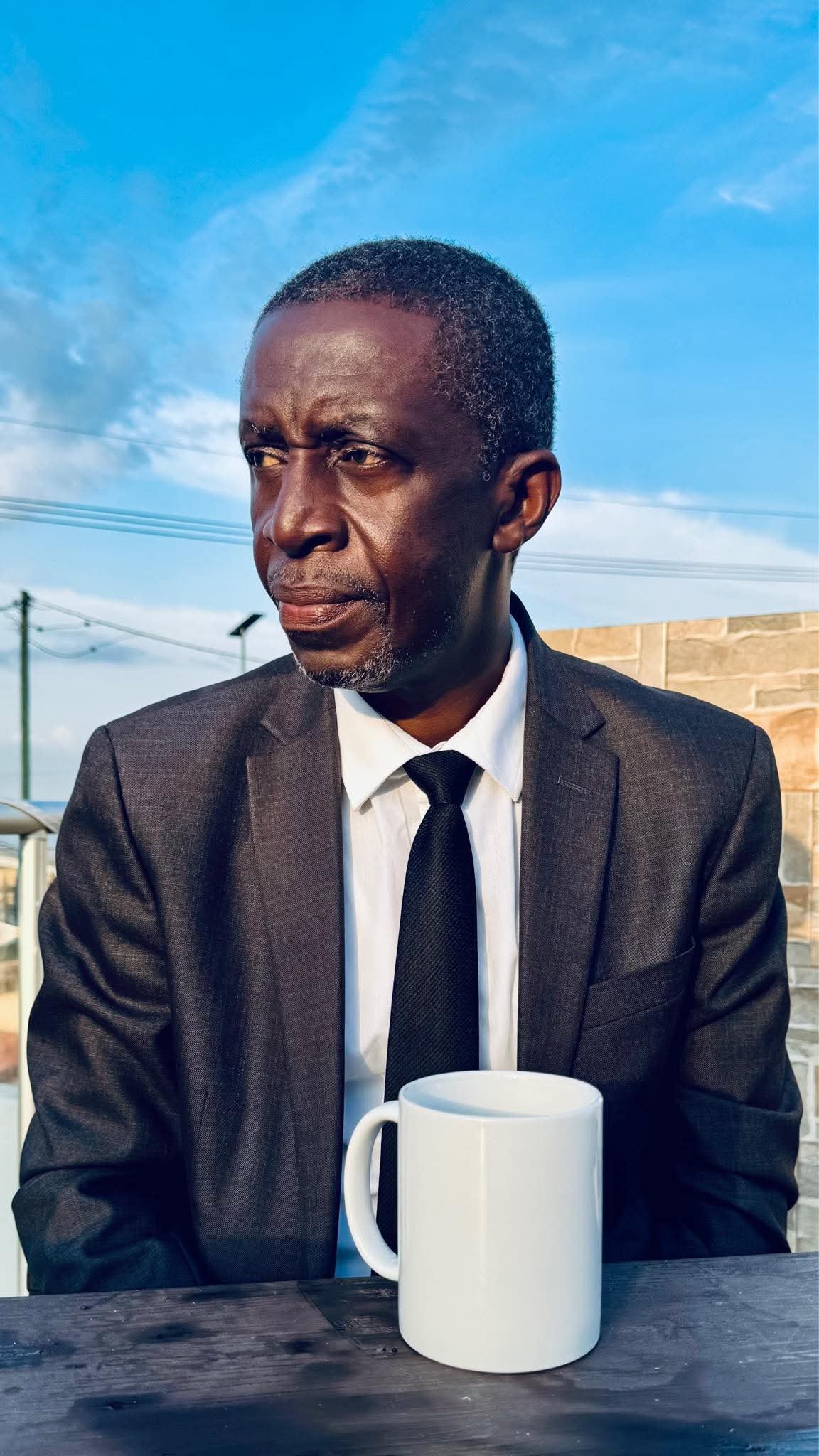
By Tiawan Saye Gongloe, Assistant Professor of Law, Louis Arthur Grimes School of Law and the Liberia School of Law, the first lecturer of the course: Law and Politics at the Louis Arthur Grimes School of Law, Human Rights Lawyer, Former President of the Liberian National Bar Association, Former Solicitor General of Liberia, Former Labor Minister, Former Presidential candidate on the ticket of the Liberian Peoples’ Party, 2023.
The expulsion of Yekeh Kolubah for expressing a view on the Makona River boundary dispute is not merely an internal disciplinary action. It is a profound constitutional error—one that raises a fundamental question for our Republic: shall Liberia be governed by law, or by political emotion?
At stake is not whether Hon. Kolubah was right or wrong. At stake is whether Liberia remains a constitutional democracy where law governs political action.
All political actions must be within the scope of the Constitution. This is the foundation of constitutional governance and the essence of the rule of law.
The 1986 Constitution of Liberia speaks with clarity. Article 14 guarantees freedom of thought and conscience and prohibits any interference with the enjoyment of those rights. Article 15(a) guarantees freedom of expression, while Article 15(b) protects the right to hold opinions without interference. Article 11(c) guarantees equal protection of the law. These provisions bind every branch of government, including the Legislature.
The House of Representatives is therefore not above the Constitution. It is subject to it.
This principle has been affirmed by the Supreme Court of Liberia. In Wolo v. Wolo, the Court emphasized the supremacy of constitutional protections. In Morlu v. House of Representatives, the Court made clear that legislative authority over internal affairs must not be exercised in violation of fundamental rights.
The lesson is unmistakable: legislative power is limited by law.
Hon. Kolubah is reported to have stated, in substance, that he had information indicating that the disputed area around the Makona River belongs to Guinea. That statement may be controversial. It may be unpopular. It may even be offensive to many Liberians. But it is not criminal.
It does not constitute treason. It does not incite violence. It does not amount to espionage. It violates no provision of the Penal Law of Liberia or any other statute.
The answer to the critical legal question is therefore clear: no law was violated.
This means the action of the House of Representatives was purely political and not based upon any law. But beyond legality lies a question of common sense and constitutional logic: can a statement by a single lawmaker change the geographic boundary between Liberia and Guinea? The answer is obviously no.
National boundaries are determined by treaties, historical agreements, international law, and diplomatic processes—not by the opinion of one legislator. To treat a mere statement as a threat to territorial integrity is to exaggerate its effect and misunderstand the nature of sovereign boundaries.
In a democracy, speech must counter speech, not punishment. If Hon. Kolubah’s statement was wrong, then his colleagues had the constitutional right, and indeed the duty, to respond. They could have publicly disagreed with him. They could have corrected him with facts. They could have reassured the Liberian people.
Indeed, every one of the lawmakers who voted for his expulsion could have spoken out against his statement.
Or are they suggesting that his voice carries more weight than all of theirs combined?
If one statement can override the collective voice of an entire Legislature, then the problem is not the statement. It could be something else. Comparative democratic practice reinforces this principle. In the United States, Congressmen J. William Fulbright opposed the Vietnam War and Ron Paul criticized U.S. foreign policy as a cause of hostility. Congress woman Ilhan Omar has made controversial statements on foreign policy. None of them was expelled.
In the United Kingdom, Jeremy Corbyn, a parliamentarian, challenged national security policies. In France, Jean-Luc Mélenchon, a parliamentarian criticized France’s international alliances. In South Africa, Julius Malema, a parliamentarian has made provocative statements on sovereignty and land.
In India, Shashi Tharoor, a parliamentarian has openly disagreed with government policy.
None of these lawmakers was expelled for expressing opinions. That is because constitutional democracies understand a fundamental truth: disagreement is not, disloyalty. Disagreement is the foundation of democracy.
There is an even more fundamental legal issue. Hon. Kolubah’s statement was not made on the floor of the Legislature. It was made in the public sphere. When a lawmaker speaks outside the Legislature, he speaks as a citizen exercising constitutional rights.
Even it had been made on the legislative floor, it would have been protected by article 42 of the Constitution of Liberia because it provides, amongst other things, “All official acts done or performed and all statements made in the Chambers of the Legislature shall be privileged, and no Legislator shall be held accountable or punished therefor.”
If such speech violates the law, it becomes a matter for the Executive Branch. If it is offensive but lawful, it becomes a matter for the voters. It is not a matter for punishment by fellow lawmakers. By acting against him, the House of Representatives acted ultra vires—beyond its constitutional authority. It also raises serious concerns under Article 11(c), where equal protection requires that similar conduct be treated alike.
This action sets a dangerous precedent. Today, a member is expelled for expressing an opinion. Tomorrow, another may be expelled for exposing corruption. Soon, dissent itself becomes punishable, thereby making the Kamara A. Kamara Law irrelevant. The Kamara A. Kamara Law repealed sedition, criminal malevolence and Criminal Libel Against the President, all the laws that criminalized speaking against government officials.
The expulsion of Hon. Kolubah contravenes Article 15c, which provides “there shall be no limitation on the public right to be informed about the government and its functionaries” and the Kamara A. Kamara Law, laws that protect free expression.
This is how democratic erosion begins. Liberian lawmakers and all public officials must never forget the painful truth that one of the key factors that led to the military coup of April 12, 1980, and the fourteen years of civil conflict that followed, was the suppression of free speech and the failure to tolerate dissent.
When people are denied the right to speak, they eventually lose faith in lawful means of expression. That path must never be repeated. In order to avoid confusion over competing views on the Makona River boundary dispute, I earlier suggested that President Joseph Nyumah Boakai establish a Special Commission of Inquiry to determine all relevant facts, including the verified geographic boundary, and to present its findings to the Government.
I volunteered to serve on such a Commission.
The absence of such a mechanism has created a vacuum now filled by competing opinions, some of which may inflame public sentiment. The establishment of such a Commission remains the most sensible and lawful course of action.
The Legislature is not merely a political body. It is a constitutional institution. Its actions must be guided by law, not emotion.
The House of Representatives must now make a choice: persist in this unconstitutional action or correct it.
The decision against Hon. Kolubah should be reversed.
Not as an act of weakness, but as an act of constitutional strength.
Great institutions are not those that never err, but those that have the courage to correct their errors.
In the final analysis, the issue is simple: does a lawmaker in Liberia have the right to express an opinion, however controversial, without fear of punishment by his colleagues?
If the answer is no, then no lawmaker is safe. And if no lawmaker is safe, then no democracy is secure.
This is the constitutional advice:
Law must be above politics.
And Liberia must never allow it to be otherwise, again.
About the Author