By Pewu Y. Sumo
MONROVIA — In a vibrant display of patriotism and historical preservation, the Center for National Documents and Records Agency (CNDRA), widely known as the National Archives, hosted a successful day-long public exhibition at the Monrovia City Hall on Wednesday, July 22, 2026.
Held in collaboration with the Office of the Director General of the Cabinet, the event was organized in commemoration of Liberia’s upcoming 179th Independence Day under the theme: “Showcasing Our Past for National Progress.”
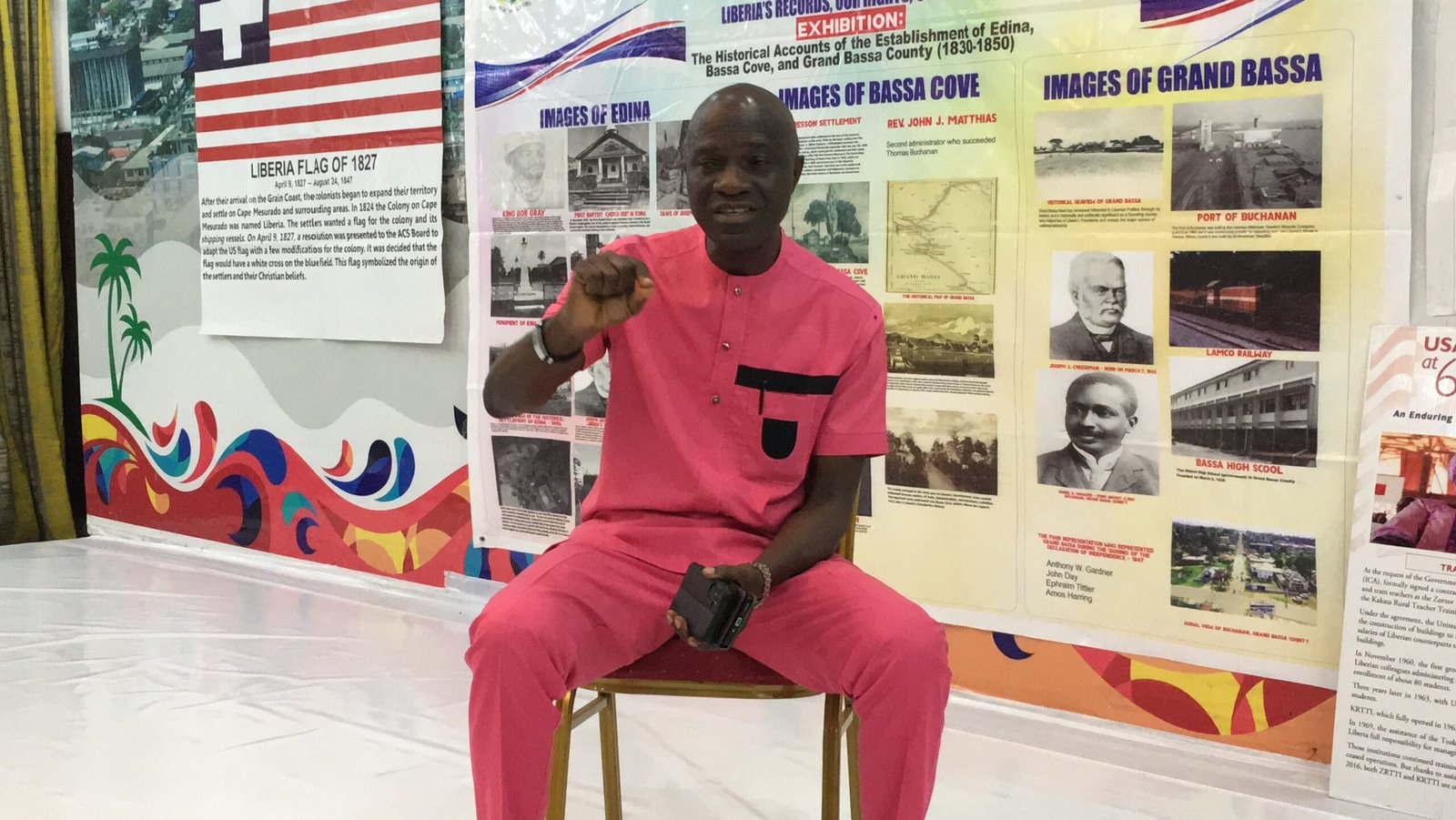
The exhibition offered hundreds of citizens, students, and international guests a rare, front-row seat to the empirical evidence of Liberia’s founding and historical evolution. The venue was adorned with highly detailed informational banners tracing the timelines of early settlements, including a featured segment dedicated to the historical accounts of the establishment of Edina, Bassa Cove, and Grand Bassa County between 1830 and 1850.
Providing details on the significance of the exercise, the Director General of CNDRA, D. Nelson Bearngar, highlighted that the primary goal of the exhibition was to bring history closer to the public, particularly the younger generation.
“A country without a history is bound to fall because, as a people, you must know where you come from and where you are going,” Bearngar emphasized. “By utilizing multimedia, historical records, and interactive displays, these exhibits showcase the historicity and uniqueness of Liberia’s founding to our foreign guests and educate younger generations about the chronology of events that led to the declaration of our independence.”
He warned, however, that the road ahead requires urgent funding to establish a specialized facility equipped to prevent these centuries-old documents from deteriorating. He made specific reference to the critical need for advanced preservation environments to safeguard the original 1847 Constitution and the original Declaration of Independence.
Among the primary items displayed during the exhibition were the original copies of Liberia’s 1847 Declaration of Independence and the 1847 Constitution—serving as the ultimate symbols of the nation’s sovereignty—alongside photographs and historical maps documenting the Trans-Atlantic Slave Trade, abolitionist movements, early European contact, and the repatriation of freed slaves.
Visitors also caught a rare glimpse of early colonization societies at Providence Island and Cape Mesurado, portraits of historic local kings and colonial governors, and a close look at regional histories featuring early accounts of Grand Bassa, the LAMCO Railway, the Port of Buchanan, and images of Reverend John J. Matthias, the second colonial administrator who succeeded Thomas Buchanan.
Furthermore, the exhibition showcased vital sovereign documents, including the original 1911 and 1914 Boundary Readjustment Agreements between the Republic of Liberia and the neighboring British Colony of Sierra Leone.
The Director General noted that as Africa’s oldest independent republic, Liberia bears a unique and sacred responsibility to safeguard its documentary heritage. The exhibition served as a community-oriented focal point meant to evoke shared emotions, bolster a collective sense of patriotism, and strengthen cultural identity across the country.
He expressed gratitude to the project sponsor, the National Port Authority (NPA), and the public for their exceptional conduct throughout the day-long event. Bearngar reaffirmed his institution’s unwavering commitment to continuing the modernization of the archives, ensuring that Liberia’s rich history remains securely preserved and accessible to all citizens as the nation marches forward in progress.
About the Author