By Pewu Y. Sumo
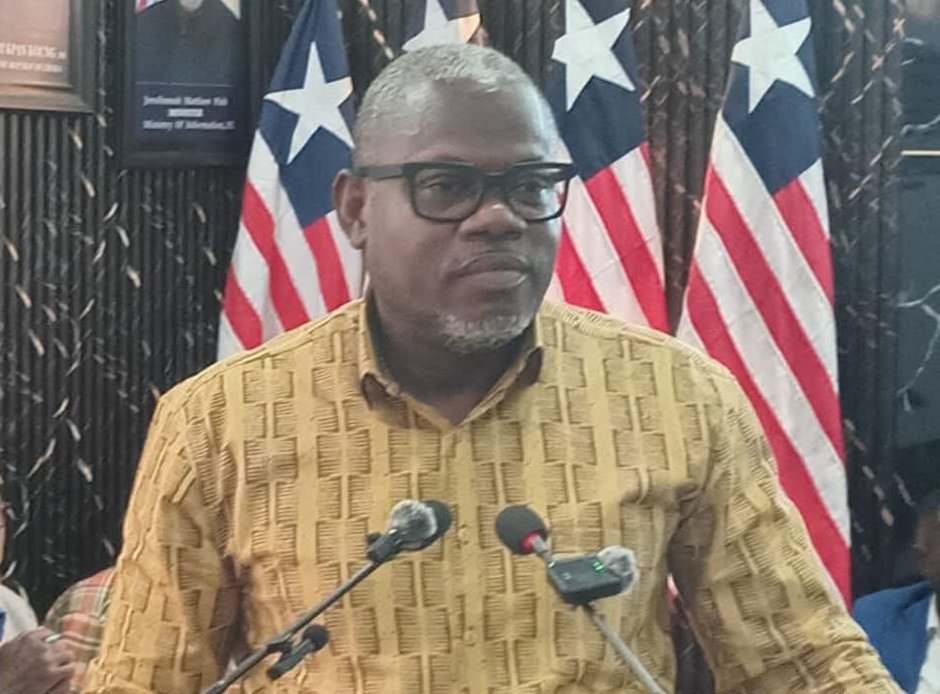
MONROVIA – In a significant boost to Liberia’s agricultural sector, Information Minister Jerolinmek Matthew Piah has announced that the Government of Liberia has procured a specialized fleet of 304 agricultural machines aimed at enhancing productivity and food security across the country.
Making the announcement at the Ministry of Information, Cultural Affairs and Tourism (MICAT) regular press briefing on Thursday, July 23, 2026, Piah stated that this new fleet is part of a synchronized effort to overhaul both the nation’s infrastructure and its farming capacity.
The agricultural machinery comes on the heels of the government’s earlier success in securing 285 earth-moving pieces of equipment (yellow machines), earmarked for road construction across all 15 political sub-divisions of Liberia.
According to Piah, all 285 yellow machines are already in the country, with nationwide deployment expected to commence soon.
While the road-building equipment is already on the ground, the minister gave a reassuring update on the delivery status of the farming implements.
“The government has purchased 304 agriculture machines which have already been loaded on a ship in China and are currently en route to Liberia,” Piah stated.
The simultaneous arrival of road-building assets and incoming agricultural machinery points to a deliberate “twin-engine” development strategy by the administration.
Piah noted that the 285 yellow machines will play a crucial role in rehabilitating deplorable farm-to-market roads. By fixing these vital transit corridors, the government aims to solve a long-standing bottleneck: ensuring that the increased crop yields generated by the incoming 304 agricultural machines can actually reach local markets without spoiling.
For decades, Liberian agriculture has been dominated by manual, subsistence farming. The introduction of 304 specialized farming units—including tractors, harvesters, and land-clearing implements—signals a major shift toward large-scale, mechanized cultivation.
These equipment, if properly managed and distributed, the fleet could significantly reduce Liberia’s heavy reliance on food imports, particularly rice, and empower local farming cooperatives.
Though the Government’s Spokesman did not confirm how the distribution framework and training schedule for local operators once the vessel bringing the 304 machines docks at the Free Port of Monrovia later this late.
About the Author