By Pewu Y. Sumo
Capitol Hill, Monrovia — In a startling revelation that highlights severe vulnerabilities at Liberia’s primary aviation gateway, the Liberia Drug Enforcement Agency (LDEA) has admitted that it currently possesses “zero equipment” to detect narcotics at the Roberts International Airport (RIA).
The admission comes on the heels of a massive joint security operation on June 8, 2026, which intercepted 198 compressed plates of cocaine—valued at over $19.2 million USD—concealed inside cargo boxes destined for export via Brussels Airlines.
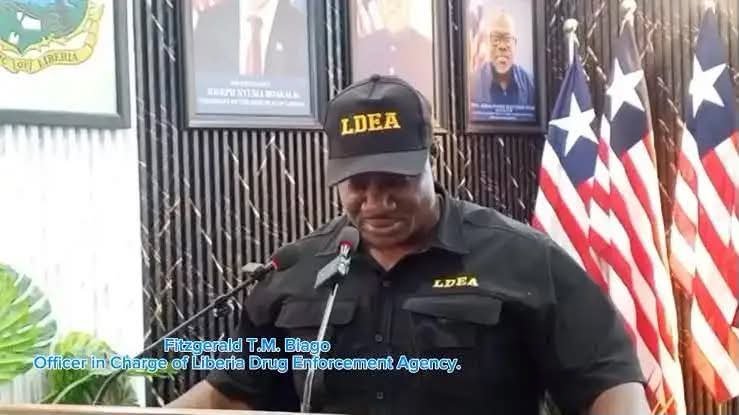
Speaking on the operational challenges plaguing the gateway, DCP Fitzgerald T.M. Biago, the Officer-in-Charge of the LDEA, pointed directly to chronic funding shortfalls in previous fiscal periods as the root cause of the technology deficit.
“Currently, we have zero equipment to detect drugs at RIA because of the lack of funding in previous budgets,” Biago stated. “But there is money in the 2026 budget, and we are going through the procurement process to get the necessary equipment,” the LDEA Chief told Senators today at a Special Hearing on the US$19.2 million cocaine case.
Intelligence Over Technology
The June 8 multi-million-dollar bust stunned the public and triggered an intense national conversation regarding the security of Liberia’s borders. While civil society organizations and lawmakers have raised serious concerns about how such vast quantities of illicit substances could reach an airport warehouse undetected by hardware, Biago emphasized that recent successes have relied heavily on human intelligence and inter-agency collaboration rather than technical sweeps.
The lack of specialized scanners, drug-sniffing K9 units, and advanced chemical trace detectors has historically left LDEA agents at a massive disadvantage against sophisticated transnational cartels trying to exploit the country’s transport infrastructure.
Turning the Tide in 2026
The funding landscape has shifted significantly following President Joseph Boakai’s declaration of drug abuse as a national security and public health emergency.
According to the LDEA leadership, the approved 2026 national budget includes a dedicated capital allocation specifically intended to modernize border security infrastructure. The agency confirms that the competitive procurement process has officially commenced to purchase advanced detection systems, which will be permanently deployed to RIA and other high-risk border posts, such as Bo-Waterside.
Until the new hardware arrives and is fully calibrated, the LDEA says it will remain on high alert, relying on 24/7 manual surveillance, tight intelligence networks, and cooperation with the Liberia National Police (LNP) and National Security Agency (NSA) to keep cartels from turning Liberia into a transit hub.
About the Author