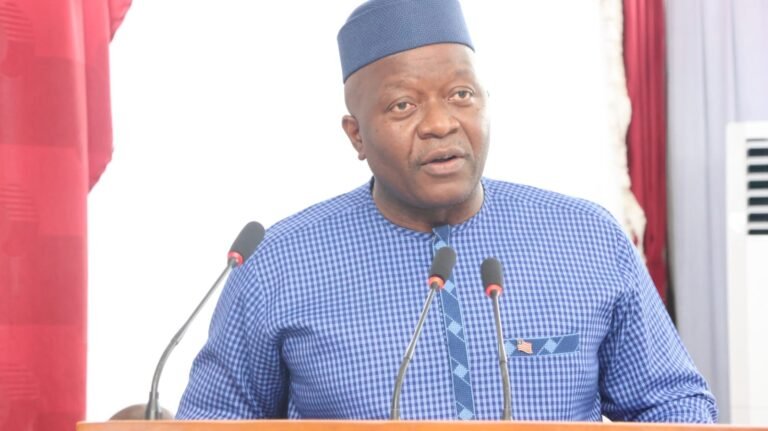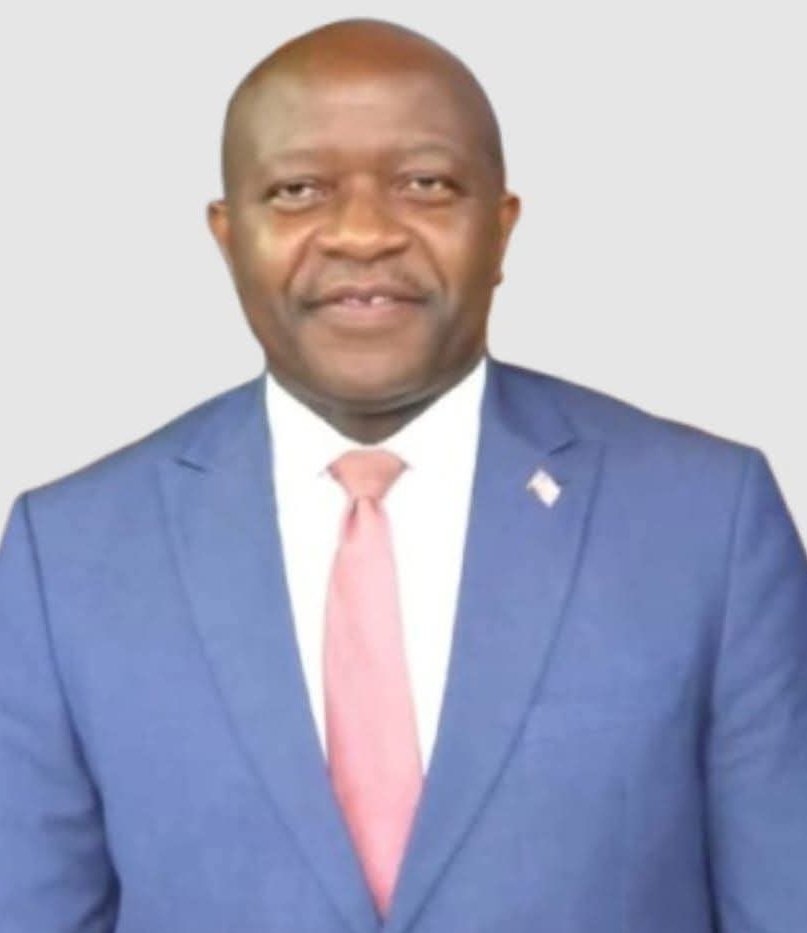
Monrovia – Finance and Development Planning Minister, Hon. Augustine Kpehe Ngafuan, has reflected on his personal journey from humble beginnings to national leadership.
Speaking during his appearance on OK FM Tuesday morning, which coincided with his 56th birthday celebration, Minister Ngafuan delivered a message of humility and gratitude, emphasizing the importance of reflection and faith. He noted that each passing year is not a guarantee of strength or intellect, but rather a testament to divine grace, urging Liberians to remain thankful and purposeful in their pursuits.
Minister Ngafuan shared a deeply personal account of his upbringing, tracing his roots to Logan Town in Monrovia and rural Lofa County. Raised by parents with limited formal education but strong values, he credited their sacrifices and commitment to education as the foundation of his success.
From attending A.B. Tolbert Elementary School to graduating from Booker Washington Institute and later enrolling at the University of Liberia, the Minister described a journey marked by perseverance, discipline, and faith.
He recalled formative experiences during Liberia’s turbulent history, including the 1980 coup, which sparked his early interest in national affairs and shaped his sense of civic responsibility. As a student leader at the University of Liberia, he demonstrated courage and conviction by speaking out on national issues, including holding leadership accountable during critical moments in the country’s history.
Meanwhile, Minister Ngafuan highlighted Liberia’s robust economic performance in 2025, noting that despite significant external shocks, the country recorded a growth rate of 5.1 percent and achieved its highest-ever domestic revenue generation of over US$840 million. This milestone surpassed the previous record of approximately US$700 million in 2024 and contributed to the country crossing the historic US$1 billion national budget threshold.
Minister Ngafuan pointed to the abrupt withdrawal of more than US$300 million in aid, following the closure of multiple USAID-funded programs, as a major test of the government’s fiscal resilience. Critical sectors such as agriculture, education, healthcare, and school feeding programs were impacted.
“Rather than succumb to pessimistic projections, the government regrouped, recalibrated, and pressed forward,” the Minister stated, crediting President Joseph Nyuma Boakai’s leadership and the collective efforts of the economic management team.
“I usually say that a good captain doesn’t tell you there will be no turbulence, but assures you that, in spite of the turbulence, he or she will pilot the plane to its destination. That’s what happened. In fact, by February and March, people predicted doom and shortfalls. I also say that you don’t determine the result of a match after 30 minutes—wait for the full 90 minutes. It is at the end of the match that you will know the result. Remarkably, we caught up, and it was on account of robust domestic revenue,” he said.
Minister Ngafuan further commended the Liberia Revenue Authority and all revenue-generating institutions for their commitment, noting that enhanced domestic resource mobilization was central to stabilizing the economy during this turbulent period.
Looking ahead, the Minister disclosed that Liberia’s economy is projected to grow by 5.6 percent in 2026, supported by a national budget of approximately US$1.2 billion. However, he cautioned that emerging global developments, particularly geopolitical tensions in the Middle East, pose significant risks.
Describing the situation as an “exogenous shock,” the Minister explained that rising global oil prices, influenced by instability in the Strait of Hormuz, are already impacting Liberia as a net importer of petroleum products. He acknowledged that recent fuel price adjustments were necessary to ensure the continued availability of supply.
The government, he said, is actively implementing mitigation measures, including financial support mechanisms for the Liberia Petroleum Refining Company (LPRC) and targeted interventions to cushion the impact on public transportation and essential services.
“Our goal is to maintain stability in transport fares and ensure that critical institutions, including hospitals, continue to function effectively,” he emphasized, adding that the government is “hoping for the best, but preparing for the worst.”
Minister Ngafuan reaffirmed his dedication to prudent fiscal management, transparency, and national development. He stressed that the government remains focused on safeguarding economic stability, strengthening domestic revenue systems, and protecting vulnerable populations amid global uncertainties.
About the Author