—Historic CAN University Turnover Ignites New Hope, Opportunity, and National Development Across Lofa County
FESSIBU TOWN, Lofa County, Liberia — Beneath the bright skies of northern Liberia, history quietly unfolded in the resilient town of Fessibu as thousands of dreams, long delayed by poverty and distance, suddenly moved closer to reality.
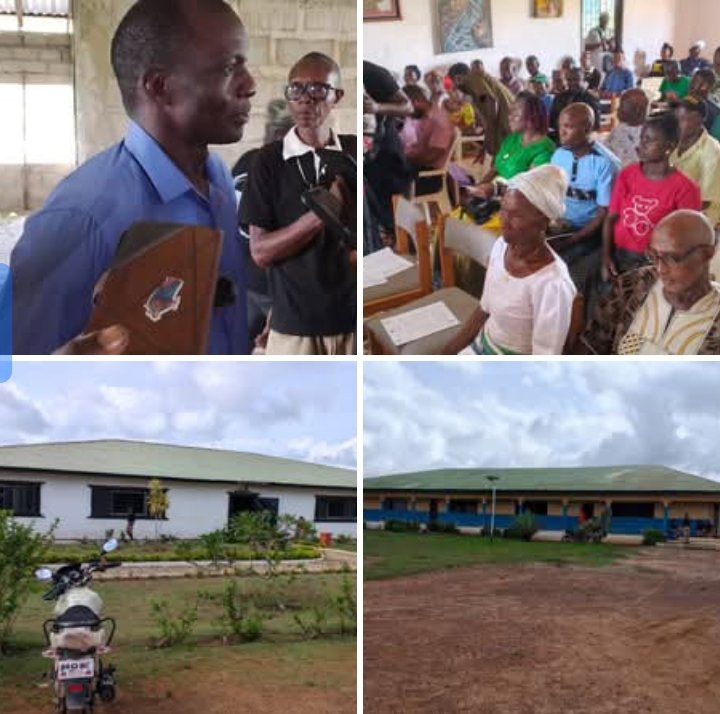
Citizens, students, elders, educators, government officials, and community leaders gathered to witness what many described as one of the most transformative educational developments in recent memory for rural Liberia.
What took place was far more than a ceremonial turnover of buildings. It was the transfer of possibility, the restoration of opportunity, and a bold declaration that the children and young people of rural Liberia matter.
In a landmark and deeply patriotic act, Opportunity Network Liberia officially turned over the Change Agent Network University facility to the Government of Liberia through Lofa County University, paving the way for the institution to function as a full annex campus serving the people of Salayea, Zorzor, and surrounding communities across Lofa County.
Estimated at nearly US$400,000 in value, the campus now rises prominently from the soil of Fessibu as a symbol of vision, sacrifice, faith, and national transformation.
For decades, countless young people in the region watched their dreams of higher education fade because access to university education remained geographically distant and financially impossible.
For many families, the nearly 75–80 kilometer journey to Voinjama represented more than transportation — it represented barriers, hardship, uncertainty, and often the end of educational ambitions altogether.
Brilliant students were left behind not because they lacked intelligence or potential, but because poverty and distance stood in their way.
But now, a new chapter has begun.
“This is not simply about buildings,” many residents expressed emotionally during the ceremony. “This is about changing the future of our children and our country.”
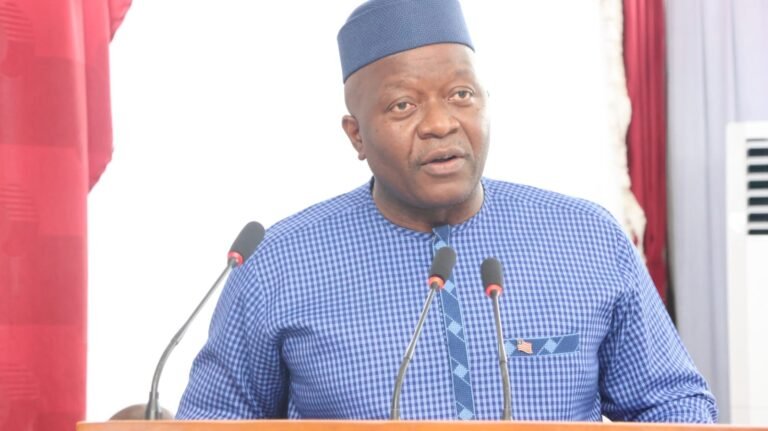
At the center of this historic movement stood Eric W. Wowoh, Founder and Chief Executive Officer of ONL Inc., whose remarks transformed the occasion into a powerful moment of reflection about education, equality, service, and nation-building.
“When the young people came to me,” Mr. Wowoh stated passionately, “they were not asking for luxury. They were asking for a chance. They were asking for access. They were asking for the opportunity to become who God created them to be.”
He spoke about parents selling belongings just to send one child to school, about gifted students forced to abandon their dreams because the cost of reaching Voinjama had become unbearable, and about communities longing for educational opportunities that many urban areas often take for granted.
“We did not build this institution for ourselves,” he continued. “We built it for Liberia. We built it for the next generation. We built it because we believe that every Liberian child — whether born in Monrovia, Fessibu, Salayea, or Zorzor — deserves access to quality education and the opportunity to succeed.”
Mr. Wowoh further emphasized that ONL Inc. received no financial gain from the turnover and remains committed to partnering alongside the university and the Government of Liberia to secure additional support and development opportunities for the institution.
“This turnover does not mean we are walking away,” he affirmed. “It means we are stepping into a greater partnership for national development.”
The announcement generated overwhelming excitement across the region, especially among young people who now see higher education becoming more accessible, affordable, and attainable.
Yanquoi Dolo described the initiative as “one of the greatest educational breakthroughs our district has witnessed in years.”
“For too long,” Mayor Dolo said, “our students have suffered simply because education was too far away. Many had the intelligence to succeed but not the financial ability to survive the cost of travel and accommodation in Voinjama. Today, opportunity has come closer to our people.”
“When education moves closer to the people,” he added powerfully, “development follows.”
The President of Lofa County University, Dr. Isaac P. Podah, called the event “a transformational moment for higher education in Liberia.”
Dr. Podah praised ONL Inc. and Eric Wowoh for what he described as visionary patriotism and servant leadership, noting that meaningful national transformation can only happen when citizens and institutions work together for the common good.
“There are too many young people in rural Liberia whose dreams have been interrupted — not because they lack ability, but because they lack access,” Dr. Podah declared. “This annex is not simply an extension of the university. It is an extension of opportunity, progress, and national advancement.”
He emphasized that decentralizing higher education is essential to rebuilding Liberia and ensuring that no region or community is left behind in the nation’s development journey.
Also speaking at the event was Augustine B. Chiewolo, who praised the initiative as an extraordinary example of practical leadership and nation-building.
“What we are witnessing today is true patriotism in action,” Representative Chiewolo stated. “This is leadership that goes beyond politics. This is leadership that creates opportunities that will outlive all of us.”
He encouraged citizens to protect, preserve, and support the institution for generations to come.
“Too often we focus on what Liberia lacks,” he added. “But today, we are witnessing what becomes possible when Liberians believe in Liberia and invest in Liberia.”
Many observers expressed optimism that this partnership model could inspire similar educational expansion initiatives across underserved regions of Liberia, helping bridge the long-standing gap between urban and rural access to higher education.
Indeed, the ceremony reflected a larger truth about the future of the nation: Liberia’s transformation will not only happen in government offices or political speeches, but also in classrooms, rural communities, and through courageous individuals willing to sacrifice for the next generation.
Many in attendance described the moment as a testimony of what God can do when vision, sacrifice, partnership, and national unity come together for the good of the people.
For the people of Fessibu, Salayea, Zorzor, and beyond, this moment represented more than infrastructure.
It represented dignity.
It represented possibility.
It represented the promise that no Liberian child should ever be denied education because of where they were born.
As the applause echoed across the campus grounds and students walked through classrooms filled with renewed dreams, one thing became undeniably clear:
A new future is rising in rural Liberia.
And through faith, partnership, sacrifice, and visionary leadership, that future has already begun.
About the Author