By Darius David Sumo/Guest Writer
A careful glimpse of the 2024 and 2025 National Budget, the Ministry of Finance and Development Planning Debt Management Unit’s Annual Report, and the Central Bank of Liberia’s Annual Report reveals significant unreconciled differences and myriad discrepancies in Liberia’s public debt stock.
Let’s take a look at them:
i. FY2024 – $189 Million Unexplained Increase
In the 2024 budget, the government projected a funding gap or deficit of US $42 million (check page 24 of the 2024 budget) and needed to borrow said amount to close the gap. The 2024 Annual Public Debt Management Report confirms the actual debt stock for the year as 49 million, 40 million from external sources, particularly the World Bank, and 9 million from domestic sources.
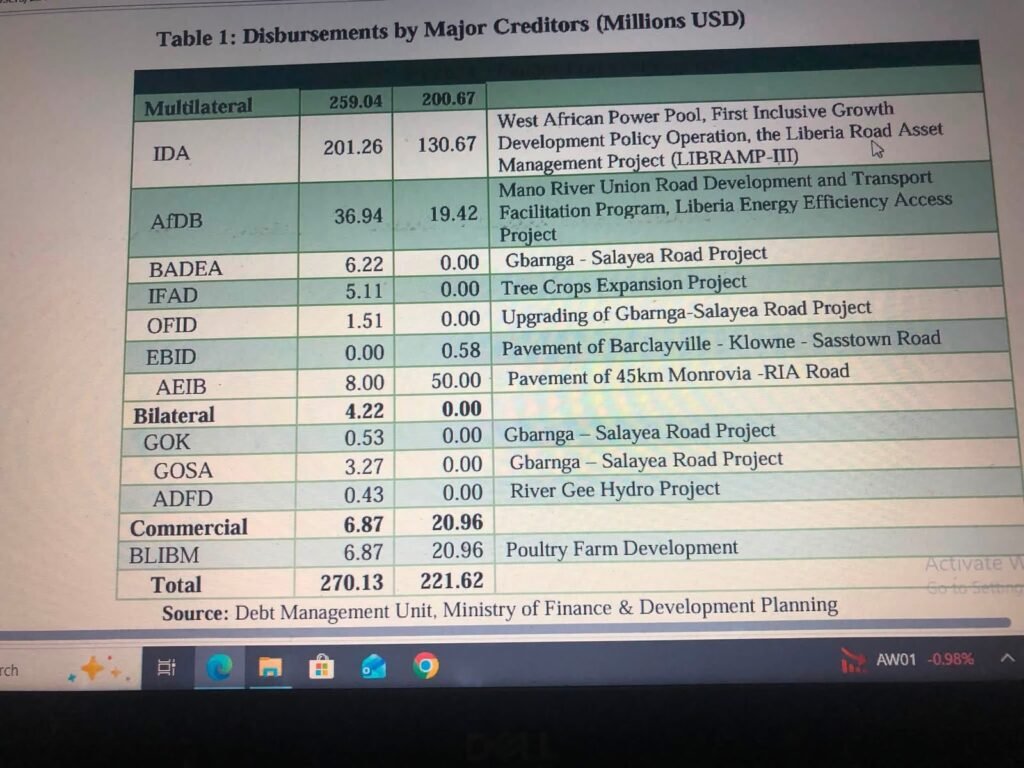
Here is the contradiction: the CBL 2024 Annual Report states total public debt increased from US$2.30 billion in 2023 to US$2.64 billion in 2024 — a 9.5% increase of US$238 million. After accounting for the US$49 million in new borrowing, US$189 million remains unexplained. Until the government can publish the public debt stock reconciliation, the fundamental questions remain:
Who is accounting for the US$189 million?
Was it spent, and if so, on what?
Was it due to exchange rate valuation, or the inclusion of guaranteed/SOE debt?
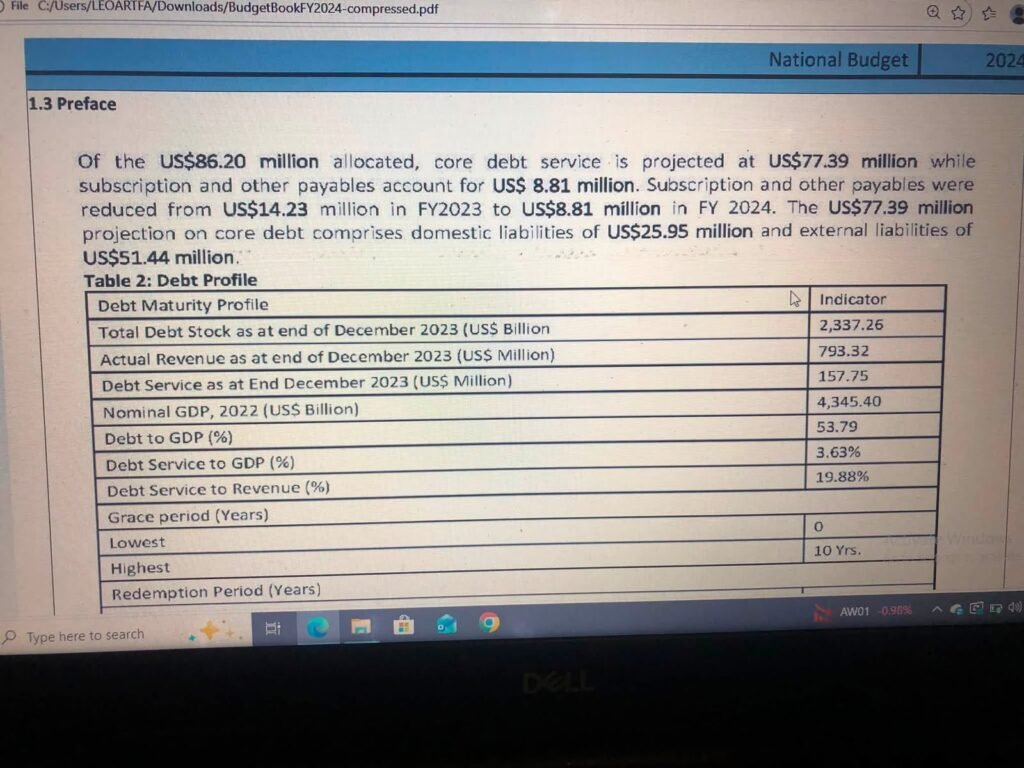
Did the government report the $49M instead of the actual $234M in order to meet the ECOWAS Single Currency requirement of 3% revenue shortfall?
The actual debt of $234M is the actual amount borrowed to meet the revenue shortfall in 2024, which is 26% ($234M debt divided by total revenue of 800M).
Without this disclosure, we cannot rule out reporting these inconsistencies.
ii: FY2025 – $172 Million Increase vs $12.5 Million Reported Borrowing
In the FY 2025 budget, a total borrowing projection of 195 million concessional loans (179.7 million in external financing and 16.04 million in domestic financing) was made. The government of Liberia’s FY 2025 Financial Report indicates that projected borrowing wasn’t achieved due to a substantial $13.4 million surplus in domestic revenue and other fiscal consolidation to limit new debt.
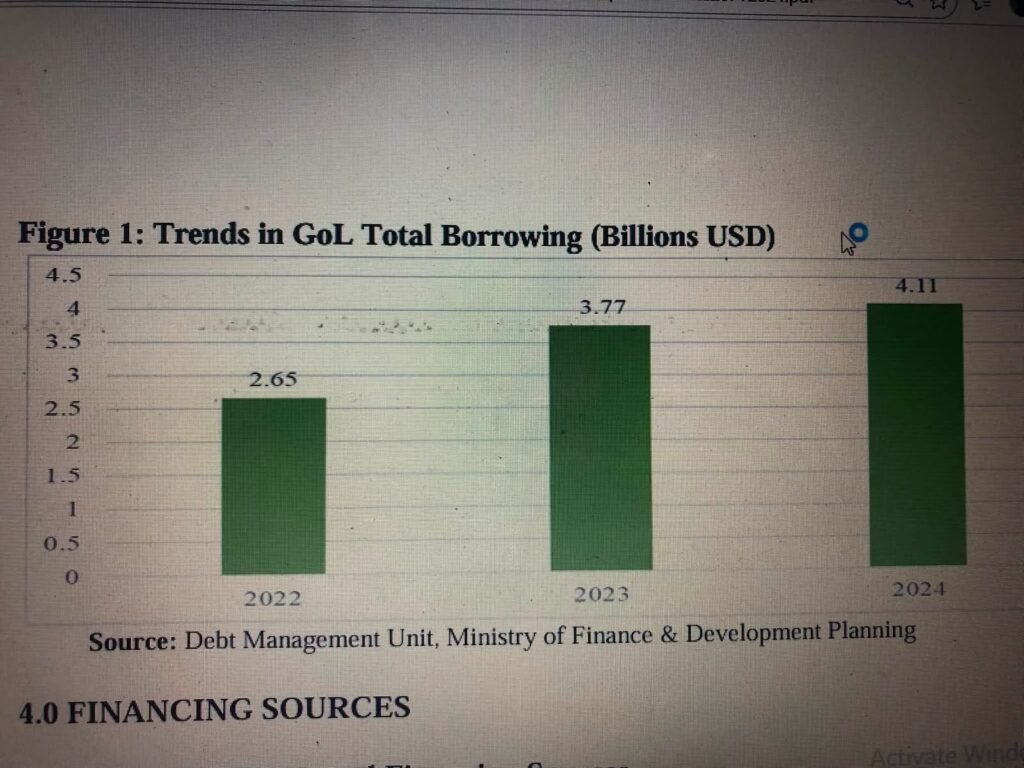
Nevertheless, in GOL financial statements for 2025, it is cataloged that Liberia received US $12.50 million from the IMF external credit facility. This is a variance of US$37.00 million from 2024, which suggests low borrowing for FY 2025. Here is the contradiction: CBL data shows total public debt rose from US$2.6 billion in 2024 to US$2.8 billion in 2025 — an increase of US$172 million. That is US$159.5 million more than the IMF disbursement alone, and US$182.5 million below the budget projection.
Again, without a reconciliation, it is unclear whether the variance reflects other disbursements, valuation adjustments, arrears recognition, or reporting scope differences.
Why is only US$12.5 million highlighted when the debt stock increased by US$172 million?
Who is accountable for explaining the difference?
To conclusion, these unexplained variances and discrepancies raise serious questions about accountability and transparency, which is stipulated in the ARREST Agenda, precisely Pillars 3 and 4, Strategic Policy 15. It becomes difficult to argue about good governance when transparency and accountability turn out to be a taboo. An open, accurate, and timely disclosure of government financial obligations is imperative.
A better Liberia is Possible!
Government is a place to serve, not to steal.
About the Author