By Pewu Y. Sumo
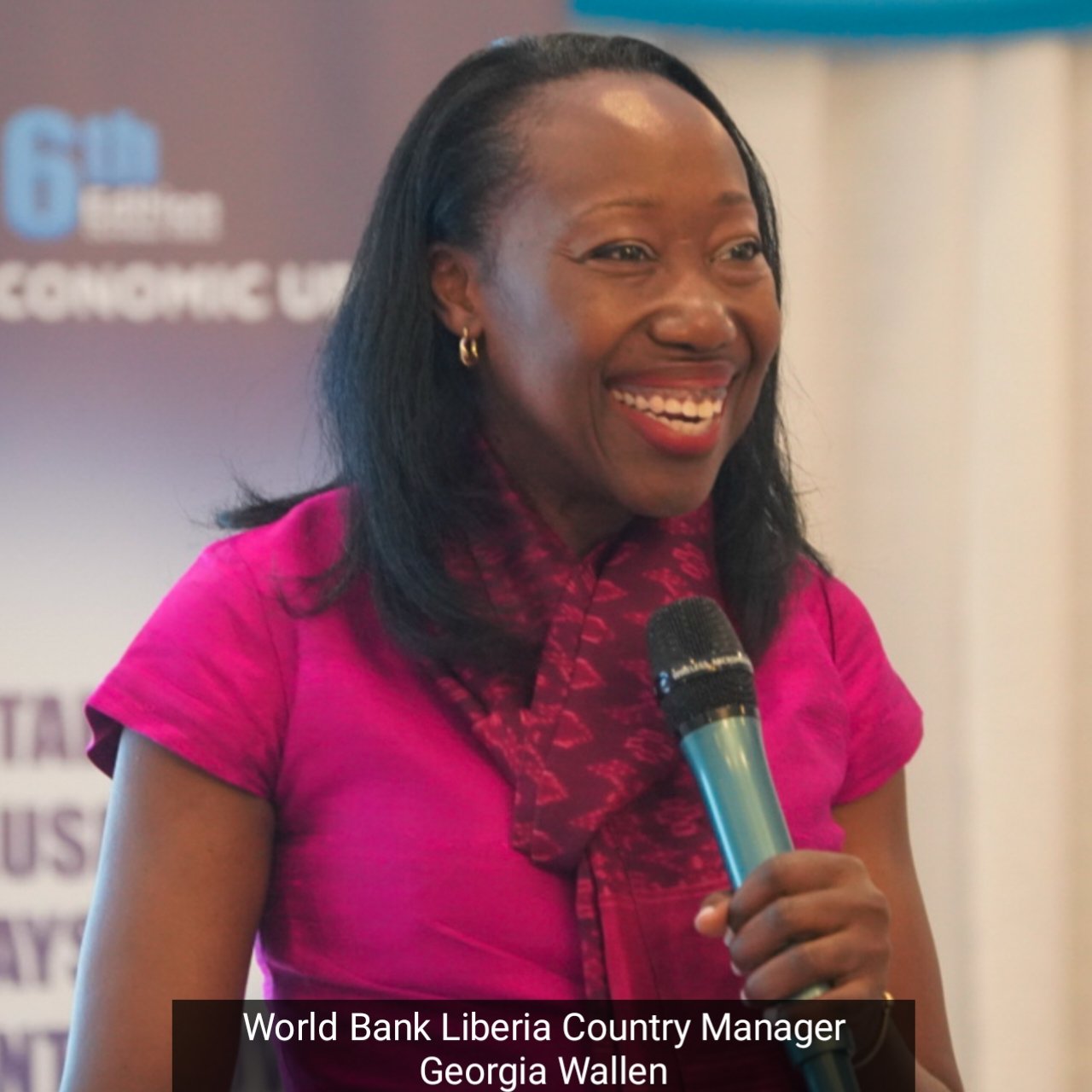
MONROVIA — Achieving full gender parity and advancing women’s financial inclusion could expand Liberia’s Gross Domestic Product (GDP) by up to 30%, World Bank Group Country Manager Georgia Wallen revealed on Wednesday.
Speaking at the National Conference on Women’s Financial Inclusion in Monrovia on July 29, Wallen emphasized that while women form the backbone of the national economy, massive disparities in asset ownership and financial access continue to hold back the country’s full economic potential.
“In Liberia, women produce 93% of the country’s food yet own just 27% of businesses and significantly lag men in account ownership,” Wallen stated. She noted that closing this gap could elevate women’s overall contribution to national economic activity to 53%, driving robust job creation and poverty reduction.
The World Bank chief underscored that the economic empowerment of women is a critical prerequisite for the successful delivery of the government’s ARREST Agenda for Inclusive Development and the overarching Vision 2030 framework.
Wallen affirmed that the World Bank Group remains deeply committed to these goals through its new Country Partnership Framework, which focuses on building foundations for new and better jobs. The strategy relies on leveraging digital technologies to bridge the gap for rural women, connecting remote communities to formal financial services and broader markets.
To demonstrate the tangible impact of targeted financial interventions, the World Bank Country Manager highlighted two major ongoing initiatives yielding positive results across the country.
The first initiative, the Liberia Women Empowerment Project (LWEP), is implemented by the Ministry of Gender, Children, and Social Protection. Over the past three years, LWEP has supported hundreds of female entrepreneurs across more than 450 communities by tackling structural barriers like gender-based violence and a lack of traditional collateral. By collaborating with Village Savings and Loan Associations (VSLAs) and introducing mobile money platforms, the project has successfully transitioned rural, cash-only roadside vendors into the formal digital economy, enabling them to build credit and scale their operations.
In tandem with these efforts, the Liberia Investment, Finance and Trade (LIFT) Project is actively expanding low-cost credit lines and modernizing digital payment infrastructure for Small and Medium Enterprises (SMEs).
Jointly led by the Ministry of Commerce and Industry and the Central Bank of Liberia, the LIFT initiative is already showing strong gender-inclusive results.
Wallen disclosed that out of more than 200 SMEs currently benefiting from the project, roughly 60% (130 businesses) are female-owned or female-managed, spanning vital sectors including agriculture, trade, manufacturing, and health services.
Concluding her remarks, Wallen lauded the organizers for convening the timely national conference and reiterated the Bank’s continued partnership with the Government of Liberia and local stakeholders.
“Expanding women’s financial inclusion is integral to Liberia’s economic transformation and long-term prosperity,” Wallen concluded. “When Liberian women are positioned to save, borrow, invest, and grow businesses, Liberia’s economy will grow faster and more inclusively.”
About the Author