By Florence Flomo
GBARNGA, Bong County — For residents and businesses in Gbarnga, electricity is increasingly becoming a source of anxiety rather than relief, as voltage fluctuations, prolonged blackouts and equipment damage raise growing concerns about the safety and reliability of the city’s power supply.
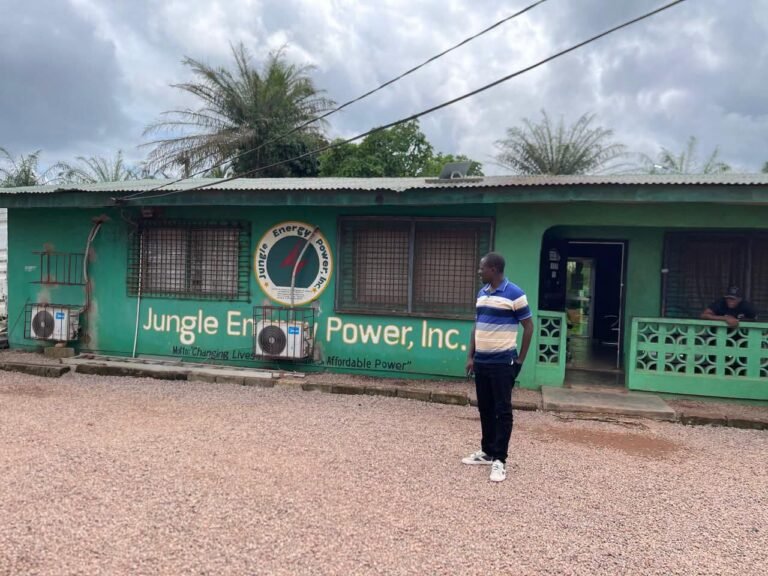
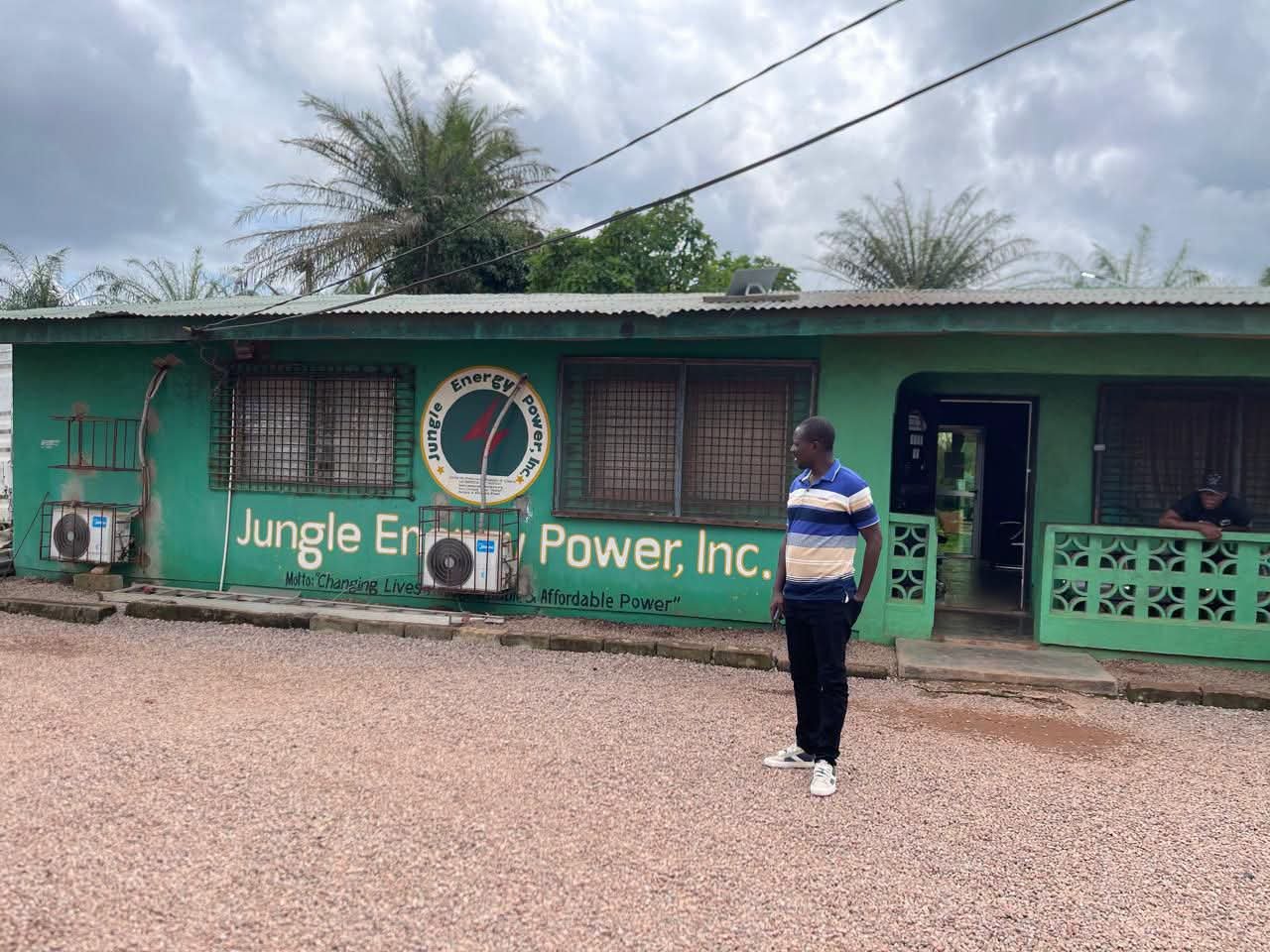
Jungle Energy Power (JEP), a Liberian-owned private electricity distributor operating in Bong and Nimba counties, was initially welcomed as a critical solution to the region’s long-standing dependence on expensive gasoline generators.
But rapid urban growth and the transition from electricity supplied through Côte d’Ivoire’s Compagnie Ivoirienne d’Électricité (CIE) to the regional TRANSCO CLSG network have brought new technical challenges, according to JEP officials and regulators.
For businesses, the consequences have been costly.
Emmanuel Mulbah, chief executive officer of The Place to Be Entertainment Center near Gbarnga’s Old Iron Gate, said unstable electricity has damaged equipment and disrupted his business operations.
Mulbah said employees routinely rush to unplug appliances whenever lights begin to dim or suddenly brighten, fearing that voltage surges could destroy sensitive electrical components.
On June 16, 2026, a transformer fire in the neighboring VI community sent a surge through the power lines to his facility, burning his electricity meter.
The meter was replaced three days later following intervention by Gbarnga City Mayor Gallah K. Varpilah.
“We are not asking for a favor; we are asking for good service delivery,” Mulbah said, urging JEP to improve the reliability of its electricity supply.
He also disputed suggestions that illegal connections or faulty internal wiring were responsible for some outages, saying JEP technicians inspect facilities before connecting customers.
JEP Branch Manager Abednego Koon said the company spent about US$380 to replace Mulbah’s meter and cover technician-related costs. He added that company records showed Mulbah’s last electricity purchase before the incident was made on June 14.
But Mulbah maintains that unused prepaid electricity credits associated with the destroyed meter were not fully restored.
McArthur Kehyee, a resident along the Ganta Highway, said power fluctuations in early June destroyed his family’s 36-inch television and water pump.
Kehyee said he attempted to report the damage but encountered difficulties accessing JEP’s official social media complaint platform.
The concerns over electrical instability became more serious on May 16, 2026, when a fire in the Pot Boiling area of Chief Compound killed two children, Clearance and Dennis.
The children were among 12 family members in a four-bedroom house when an overhead power line connected to a community transformer reportedly snapped at about 11 p.m., sending a surge into the residence.
Their grandfather, Sam Elliot, Bong County’s administrative officer, said the children were loving and dutiful.
Elliot said JEP technicians had visited his compound only hours before the incident to conduct an assessment following a request he had made.
He maintained that a massive surge from the community transformer struck the meter in his yard before the fire erupted.
Although Elliot said community members encouraged him to pursue legal action, he chose instead to recognize JEP’s support during the children’s funeral while urging the company to conduct proper technical assessments and install higher-grade infrastructure.
Regulator demands answers
The tragedy has also raised questions about regulatory oversight.
Abu Dekontee Sanso, director of technical regulations at the Liberia Electricity Regulatory Commission (LERC), said JEP submitted a preliminary report but failed to meet the required deadline for its complete findings.
According to Sanso, the regulator requested information on the root cause of the fire, including whether a breaker malfunction or flammable materials contributed to the disaster.
He said JEP was required to submit its final report within 10 working days but had not done so.
Under LERC’s distribution code, licensed electricity providers are required to submit preliminary assessments followed by final reports after serious electrical incidents.
JEP’s Koon acknowledged that the Chief Compound fire resulted from a technical electrical fault.
He explained that JEP operates both 19-kilovolt and 33-kilovolt lines, which he said created electrical feedback. According to Koon, a high-power surge bypassed the transformer’s protective grounding system and traveled through the wiring toward the residence.
Dispute over power capacity
JEP and LERC also disagree over the amount of electricity available to customers.
Koon attributed some of the fluctuations to limited power allocation received by the distributor.
But LERC’s Sanso disputed that explanation, saying JEP’s available supply had increased from 4 megawatts to 7 megawatts.
Koon said JEP does not generate electricity but distributes power received through the national system.
He explained that the company previously received electricity from Côte d’Ivoire through CIE, when a smaller customer base experienced relatively fewer fluctuations.
The transition to the higher-capacity TRANSCO CLSG regional network brought greater electricity availability but also created new distribution and management challenges, he said.
Koon said Liberia receives an allocation of about 25 megawatts through the regional network, while the Liberia Electricity Corporation (LEC) controls national distribution.
No operational fire truck in Bong
The electricity crisis is compounded by another major vulnerability: Bong County’s lack of operational firefighting equipment.
Liberia National Fire Service Director G. Warsuwah Barvoul Sr. confirmed that Bong County has no operational fire truck.
Although a regional fire station is reportedly under construction, the absence of mobile firefighting equipment leaves residents and businesses vulnerable when fires occur.
Human rights advocate Jessey B. Cole of the Delta Human Rights Foundation has urged county authorities to consider using County Development Funds to purchase municipal fire trucks and strengthen consumer protections for electricity users.
Gbarnga Mayor Varpilah, meanwhile, has promised to organize town hall meetings between residents, business owners and JEP officials.
The meetings are expected to provide a platform for residents to raise concerns about voltage fluctuations, blackouts, damaged equipment and service delivery.
But local leaders face limitations in addressing problems that extend beyond customer service and into national electricity infrastructure and regulation.
LEC remains silent
Questions sent to LEC Public Relations Officer Philip Farley regarding national grid management, electricity allocations, voltage regulation and infrastructure safety were initially acknowledged.
However, repeated calls and text messages seeking the corporation’s response went unanswered.
That silence leaves important questions unresolved about the national utility’s responsibility for the stability and management of electricity supplied to Bong County.
For Gbarnga residents, the issue is no longer simply about whether the lights will come on.
It is about whether they can safely leave their appliances plugged in, whether businesses can operate without relying on costly generators and whether families can trust the electrical infrastructure connected to their homes.
The May 16 tragedy in Chief Compound has made those concerns painfully tangible.
Until JEP, LEC and relevant regulators address the technical, safety and accountability gaps surrounding the electricity network — and until Bong County gains adequate emergency firefighting capacity — residents may continue paying for electricity with more than prepaid tokens.
They may also be paying with damaged property, lost livelihoods and, in the most tragic circumstances, lives.
About the Author