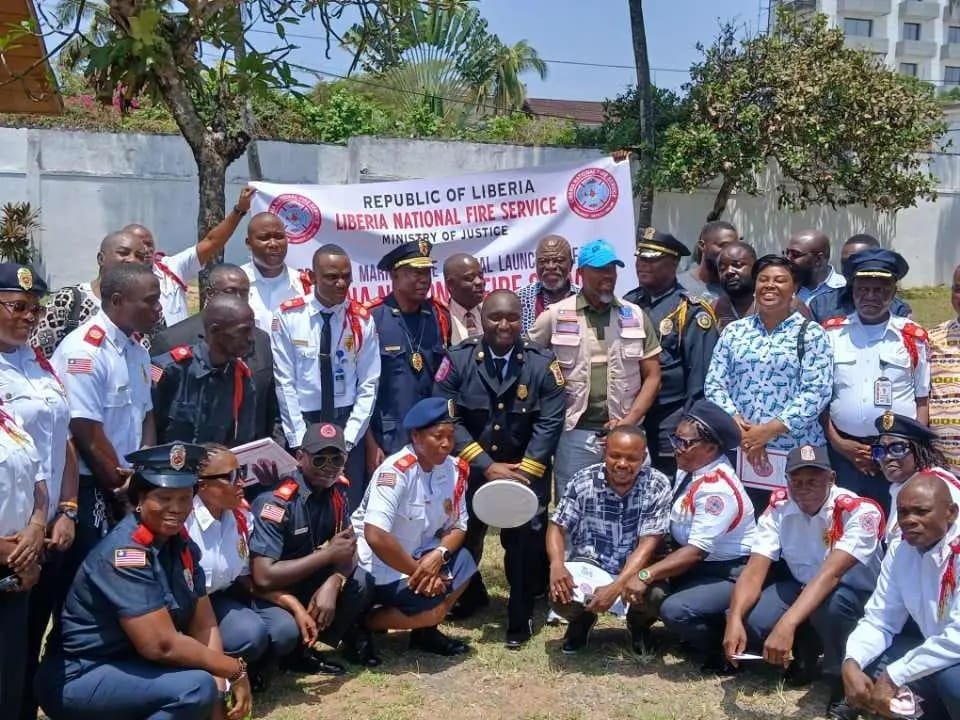
Monrovia — The Liberia National Fire Service has officially launched a comprehensive Five-Year Strategic Plan aimed at strengthening fire prevention, improving emergency response, and enhancing the overall capacity of the institution to better protect lives and property across the country.
The launch event, held Friday in Monrovia, brought together representatives from several government ministries and agencies, development partners, and other stakeholders who gathered to reaffirm their commitment to supporting national efforts toward improved fire safety and disaster preparedness.
Delivering remarks at the ceremony, Fire Service Director G. Warsuwah Barvoul Sr. described the new strategic document as a critical roadmap that will guide the institution’s activities and priorities over the next five years.
According to him, the plan was developed after careful assessment of the current challenges facing the Fire Service and outlines practical steps to modernize operations, strengthen prevention programs, and improve response time during emergencies.
Director Barvoul noted that the growing number of fire incidents in urban and rural communities in recent years has highlighted the urgent need for stronger institutional capacity, increased public awareness, and improved coordination among government agencies responsible for safety and infrastructure.
He explained that the strategic plan focuses on several key priorities, including expanding fire prevention education in communities, strengthening partnerships with relevant institutions, improving logistics and equipment for firefighters, and increasing the number of trained personnel across the country.
“The safety of our citizens and the protection of their properties remain our foremost responsibility,” Director Barvoul said. “This strategic plan provides us with a clear path to strengthen our preparedness, improve our operational efficiency, and ensure that we are better positioned to respond quickly and effectively whenever emergencies occur.”
The Fire Service Director emphasized that effective implementation of the plan will require strong collaboration among several institutions whose work directly impacts fire safety. Among those he highlighted were the Ministry of Public Works, the Liberia Electricity Corporation, the Liberia Water and Sewer Corporation, and the National Disaster Management Agency.
He pointed out that issues such as poor electrical wiring, weak infrastructure planning, blocked access roads, and lack of public knowledge about fire safety continue to contribute to fire outbreaks in many communities. Addressing these problems, he said, will require joint action and coordinated planning among government agencies and community leaders.
Director Barvoul also used the occasion to remind Liberians that fire prevention is not solely the responsibility of firefighters but a collective national duty that requires the active involvement of every citizen.
“Fire safety begins with awareness and responsibility at the community level,” he said. “If individuals, businesses, and institutions take the necessary precautions, many of these incidents can be prevented before they escalate into disasters.”
He further disclosed that the new strategic plan will guide the Fire Service in strengthening its nationwide presence through the gradual establishment of additional fire stations, improved training for firefighters, and the introduction of modern firefighting techniques and equipment.
In addition, the plan will place strong emphasis on community outreach programs aimed at educating the public on fire prevention, emergency preparedness, and safe practices in homes, markets, schools, and workplaces.
Officials believe that with sustained support from the government and cooperation from national stakeholders, the strategic plan will significantly enhance the capacity of the Liberia National Fire Service to respond effectively to emergencies and reduce the impact of fire disasters across the country.
The initiative marks another step toward strengthening Liberia’s disaster preparedness framework and ensuring that the country is better equipped to respond to emergencies while safeguarding lives, property, and critical national infrastructure.
About the Author