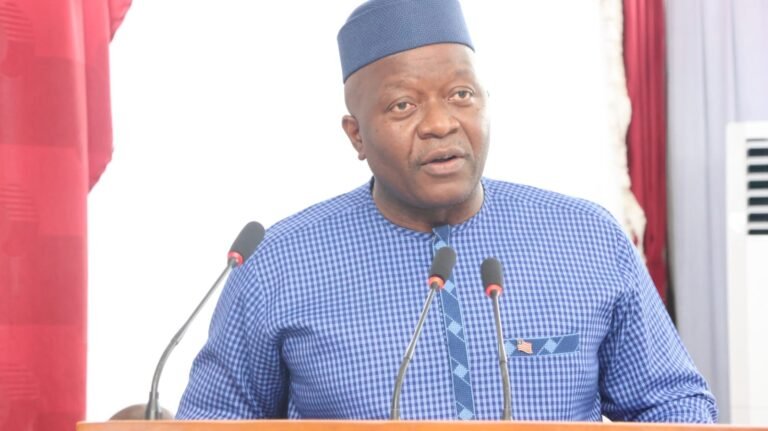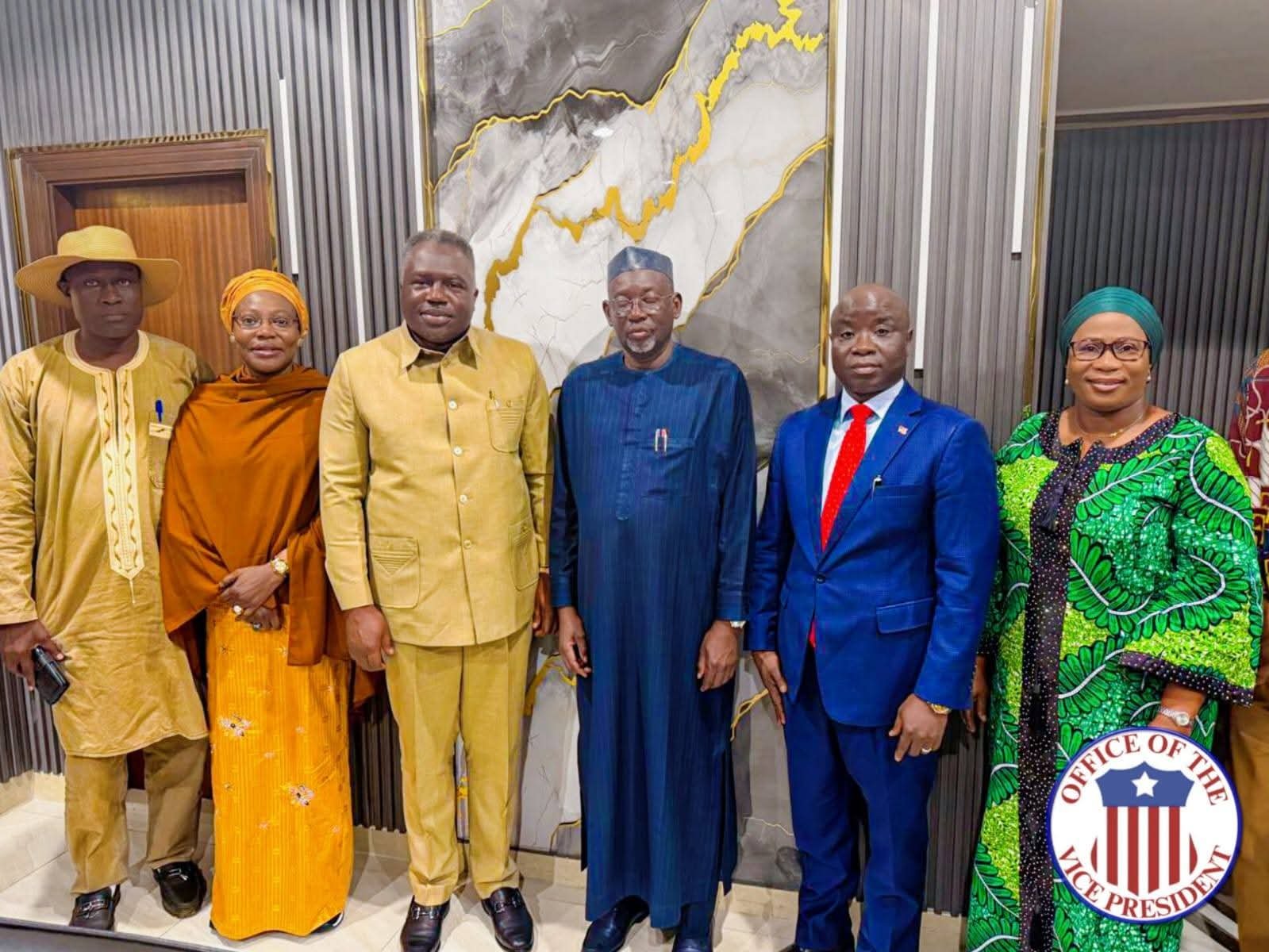
Monrovia, Liberia — The Vice President of the Republic of Liberia, Hon. Jeremiah Kpan Koung, Sr., on Tuesday, April 7, 2026, hosted a high-level bilateral meeting with His Excellency Umar Namadi, Executive Governor of Jigawa State of the Federal Republic of Nigeria, who is currently on an official visit to Liberia.
The meeting forms part of ongoing efforts to strengthen Liberia–Nigeria relations at the subnational level and to deepen cooperation in key sectors of national development, particularly agriculture, food security, and private sector investment.
The engagement brought together senior officials of the Government of Liberia, representatives of the Nigerian Embassy, development partners, and private sector actors to explore practical pathways for collaboration, knowledge exchange, and joint investment—especially within the rice value chain, which remains central to Liberia’s food security strategy.
Welcoming the visiting delegation, Vice President Koung emphasized the Government’s strong political will to transform Liberia’s agriculture sector and advance self-sufficiency in rice production.
“Rice is at the heart of Liberia’s food security and economic stability. We are committed to transitioning from heavy reliance on imports to increased domestic production. The experience of Jigawa State offers a valuable opportunity for learning, adaptation, and accelerated agricultural transformation,” the Vice President stated.
The Vice President further underscored Liberia’s comparative advantages, including the availability of arable land and access to regional markets within the Mano River Union, while encouraging Nigerian investors and agribusinesses to consider Liberia as a strategic destination for agricultural investment.
Also speaking, the Minister of Agriculture, Hon. Dr. J. Alexander Nuetah, highlighted ongoing government initiatives aimed at enhancing agricultural productivity and ensuring long-term food security.
“In Liberia, food security is closely linked to rice security. Our focus is on increasing production through improved land development, mechanization, irrigation, and value addition. Collaboration with Jigawa State provides an opportunity to accelerate these efforts by leveraging proven models and strengthening public-private partnerships,” Minister Nuetah noted.
He further emphasized the importance of structured support to smallholder farmers—including access to inputs, extension services, and market systems—as essential components of a sustainable agricultural transformation agenda.
In his remarks, Governor Umar Namadi expressed appreciation for the warm reception and reaffirmed his commitment to strengthening collaboration between Jigawa State and Liberia.
“Agriculture remains the backbone of Jigawa State’s economy, and our progress has been driven by deliberate policy actions, strong government support, and the empowerment of smallholder farmers. We are encouraged by Liberia’s vision and stand ready to share our experiences and work together toward mutual benefits,” Governor Namadi stated.
Governor Namadi highlighted key interventions implemented in Jigawa State, including the expansion of cultivated land, improved seed systems, the establishment of mechanization centers, irrigation development, and structured farmer support programs—all contributing to increased productivity and reduced dependence on imports.
Discussions during the meeting also focused on potential areas of collaboration, including technical exchanges, investment partnerships, and the development of a framework for sustained bilateral engagement.
Both sides expressed optimism about translating the outcomes of the discussions into concrete actions, including a possible bilateral cooperation agreement in the near term.
The Office of the Vice President notes that the engagement aligns with the Government of Liberia’s broader agenda to strengthen regional cooperation, attract investment, and implement policies that enhance national productivity and economic resilience.
The Office remains committed to supporting initiatives that promote sustainable development, improve livelihoods, and position Liberia as a competitive player within the regional agricultural economy.
About the Author