By Pewu Y. Sumo
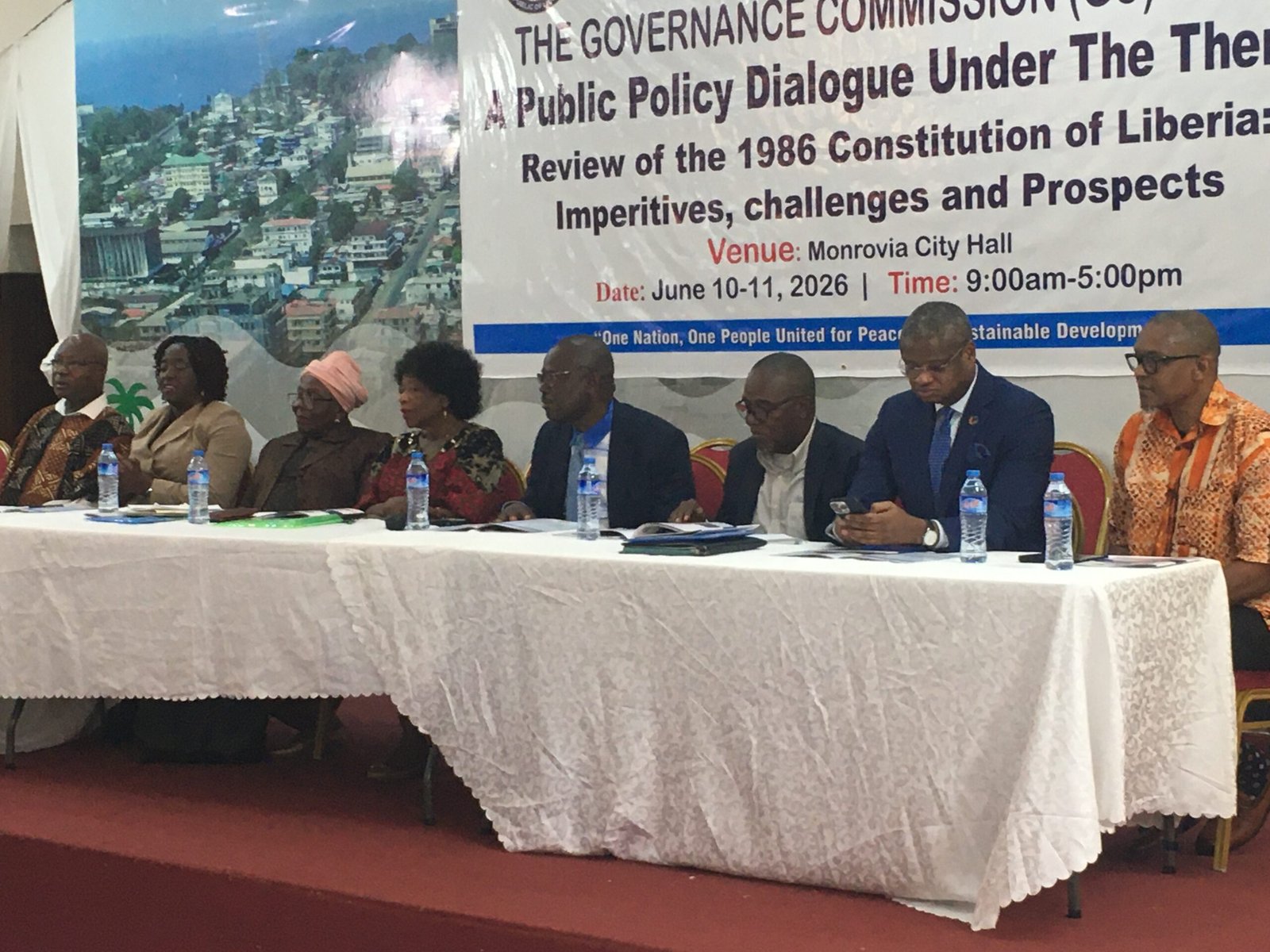
MONROVIA, LIBERIA — The Governance Commission (GC) on Wednesday, June 10, 2026, launched a crucial two-day National Public Policy Dialogue at the Monrovia City Hall to review Liberia’s 1986 Constitution.
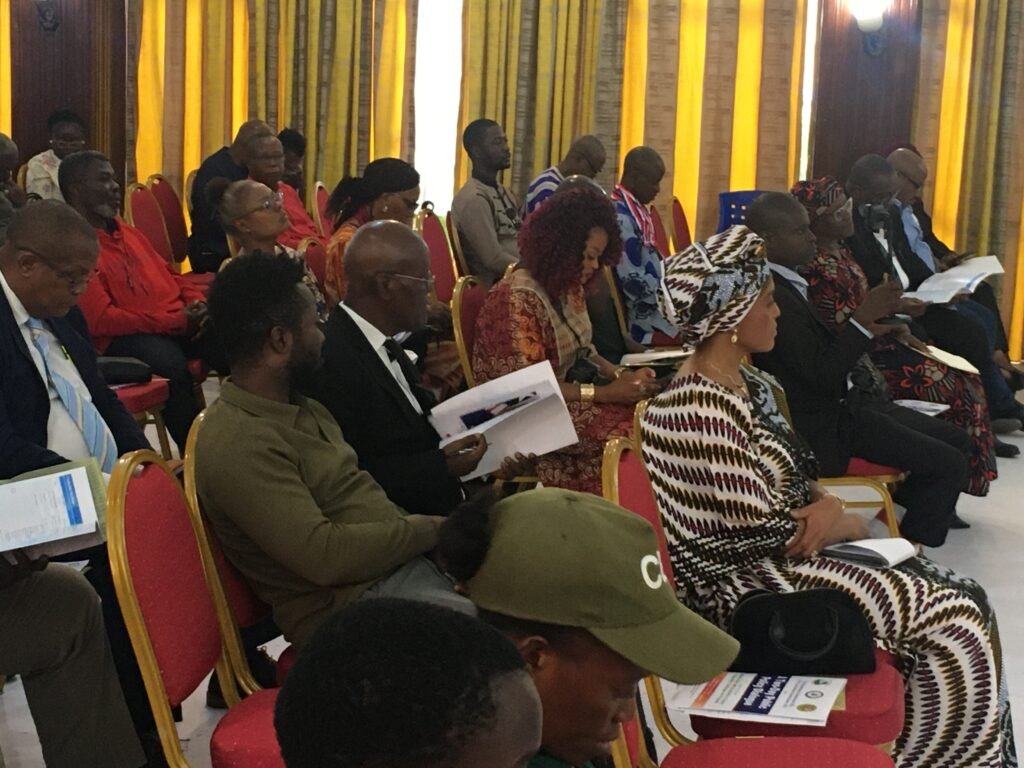
The high-level event brought together government officials, legal experts, civil society organizations, youth leaders, and international partners to deliberate on the future of the country’s supreme law.
Held under the theme, “Review of the 1986 Constitution of Liberia: Imperatives, Challenges, and Prospects,”* the dialogue aims to evaluate whether the 40-year-old document adequately addresses Liberia’s current socio-economic and political realities.
Key Objectives of the Review
Speaking during the opening session, the Acting Chairman of the Governance Commission, Professor Alaric Tokpah, outlined the core objectives of the dialogue. He noted that the discussions focus on: Addressing existing ambiguities and limitations within the current constitution.
Examining the historical and theoretical contexts and conditions for constitutional review.
Assessing the previous constitutional reform efforts, specifically the Cllr. Gloria Musu-Scott Committee report.
Examining systemic inadequacies, institutional constraints, and proposing specific suggestions for constitutional amendments.
“Today, we gather not merely as representatives of institutions or sectors of society, but as custodians of Liberia’s democratic future,” Prof. Tokpah stated. “Given the crucial place of the constitution in national life, every generation is called upon to examine whether that governing instrument and the institutions established by it remain fit for their purposes.”
A Living Document
Prof. Tokpah emphasized that a democratic society must periodically evaluate whether its foundational laws continue to reflect the needs, realities, challenges, and aspirations of its people.
Reflecting on the historical context of the document, the GC Boss noted that the 1986 Constitution emerged during a turbulent period in Liberia’s history. On one hand, it represented a transition from military rule to constitutional governance, seeking to establish a democratic framework that guaranteed fundamental rights, the separation of powers, and the rule of law. On the other hand, it contained provisions designed to protect the custodians of military power from accountability.
Despite those historical complexities, Prof. Tokpah acknowledged that, overall, the 1986 Constitution has served a useful purpose for the nation. However, he reminded stakeholders that legal frameworks must evolve.
“History has demonstrated that constitutions are not static documents, nor are they untouchable whenever the need arises to change them,” Prof. Tokpah concluded.
“Constitutions are living instruments that must respond to changing social realities, political developments, economic transformations, cultural dynamics, and evolving democratic expectations. Constitutions should be amended whenever they encounter unanticipated circumstances of great magnitude—such as the challenges induced by demographic shifts, technological advancements, and emerging environmental issues.”
The dialogue, which runs from June 10 to June 11, 2026, is expected to culminate in a comprehensive list of actionable recommendations.
Organizers expect that the resolutions generated over these two days will serve as a foundational roadmap for the Executive and Legislative branches to draft future constitutional amendment bills.
As deliberations continue, the Governance Commission is urging citizens across Liberia and in the diaspora to closely follow the proceedings, stressing that a vibrant, updated constitution is vital to supporting the government’s broader development agenda and securing lasting national stability.
About the Author