By Pewu Y. Sumo
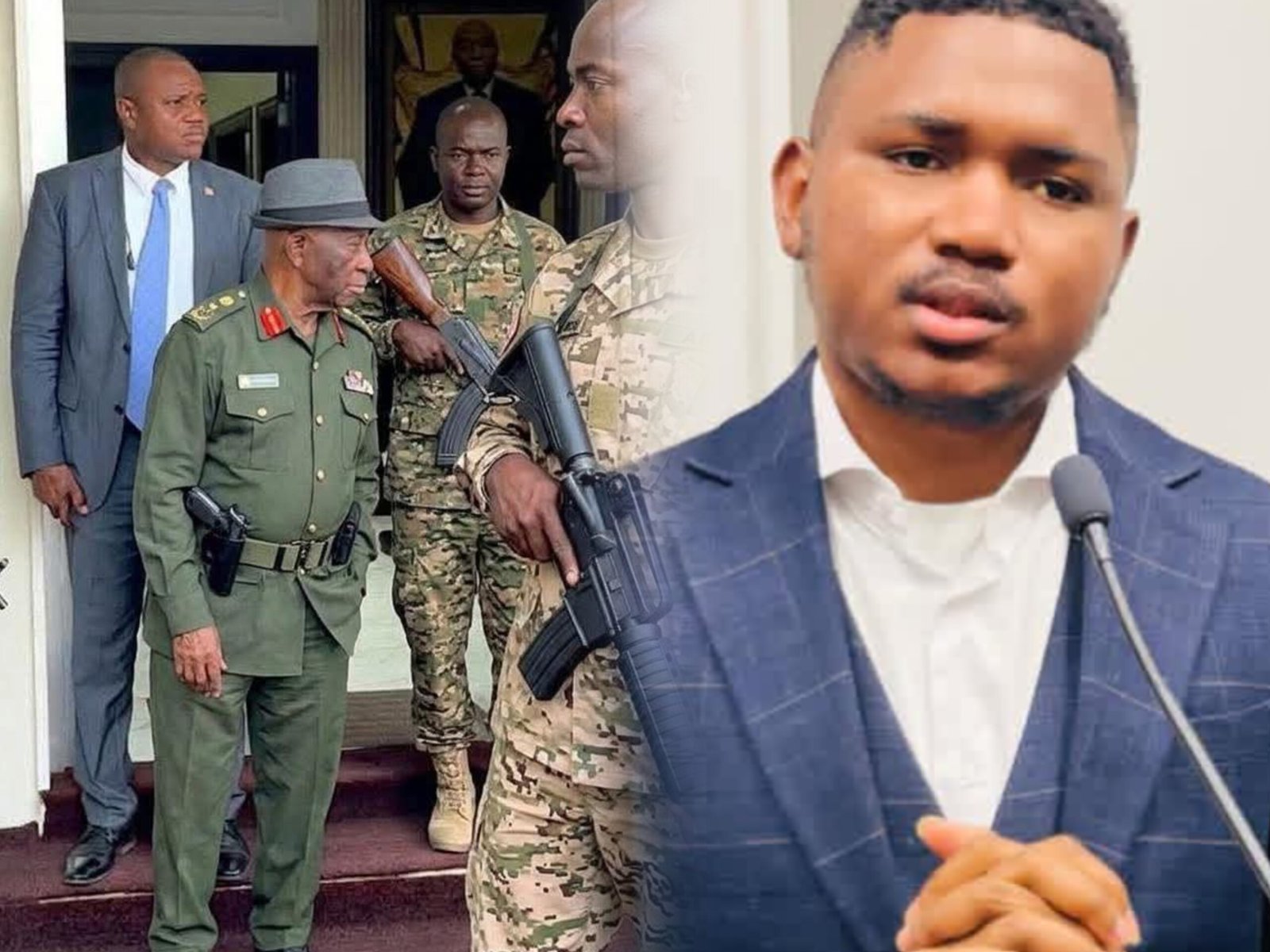
MONROVIA – Amidst a wave of social media “hysteria” surrounding a photo of President Joseph Boakai in military uniform, prominent Liberian scholar Wantoe T. Wantoe has claimed responsibility for the image’s circulation and defended Senator Edwin Melvin Snowe against mounting criticism for sharing the photo.
In a statement released via his official Facebook handle today, Wanto launched a scathing rebuttal to critics, dismissing the backlash as “the most idiotic thing circulating right now.” He argued that the public has fundamentally misinterpreted the role of the President as the Commander-in-Chief (CIC) of the Armed Forces of Liberia.
“The President of Liberia is the Commander-in-Chief of the Armed Forces. A Commander-in-Chief must project two things at the same time: strength and diplomacy. Strength to defend the Republic; diplomacy to preserve peace,” Wantoe wrote.
“The fact that Senator Snowe shared a photo of President Boakai in military attire should not trigger this level of hysteria. So what? A Commander-in-Chief must show readiness to defend the nation.”
Wantoe clarified that he was the original source of the image, posting it specifically to highlight the dual responsibilities of the presidency.
The Oxford scholar’s defense comes at a time of heightened regional sensitivity. Wanto pointed toward neighboring Guinea as an example of a state that successfully uses military signaling to protect its interests. He noted that Guinea’s “firmness” and military presence along the border are standard behaviors for states facing sovereignty questions, arguing that Liberia should not be shamed for projecting similar readiness.
“Liberia also has every right to demonstrate military readiness while still pursuing diplomatic dialogue,” Wanto added. “Showing strength does not mean choosing war. In fact, credible strength often protects peace.”
In his conclusion, Wantoe issued a stern warning regarding the relationship between military optics and political leverage, asserting that without the ability to project power, Liberia’s diplomatic efforts would be weakened on the global stage.
“A nation that cannot project strength cannot negotiate effectively,” Wanto wrote. “Liberia must pursue peace, but peace must stand on the foundation of strength.”
The controversy continues to spark debate across Liberian political circles, highlighting the tension between traditional diplomatic decorum and the necessity of national security signaling within the complex Mano River Union landscape.
About the Author